Department of Microbiology, University of Sao Paulo, Sao Paulo, Brazil.
ISME J. 2012 Feb;6(2):237-47. doi: 10.1038/ismej.2011.93. Epub 2011 Jul 28.
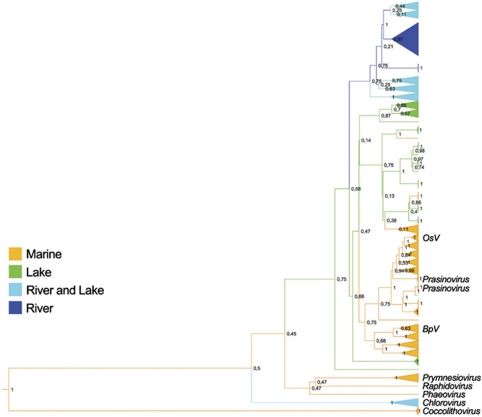
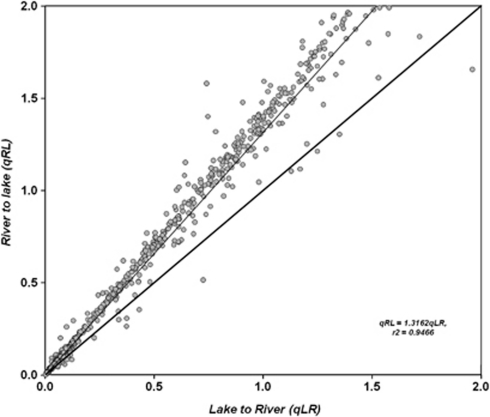
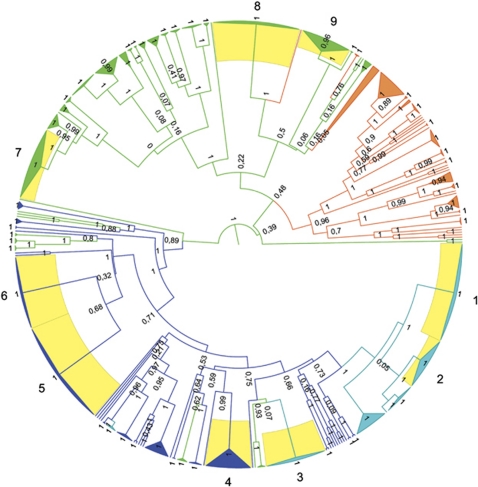
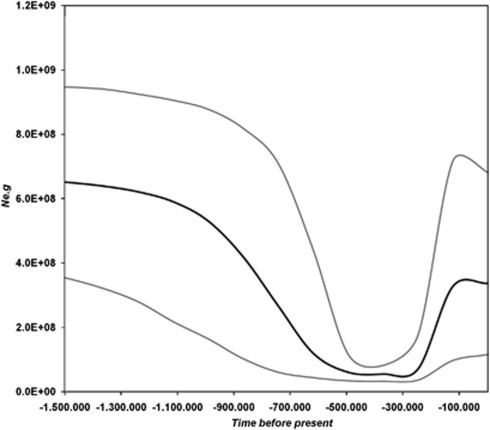
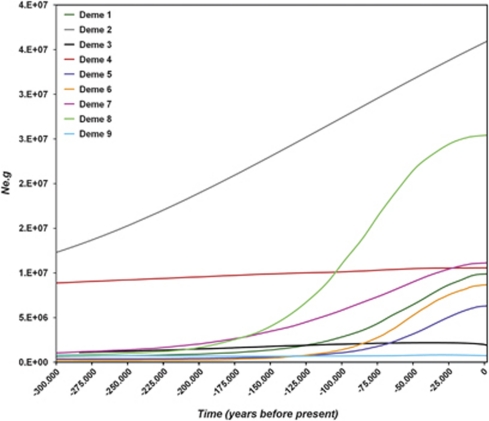
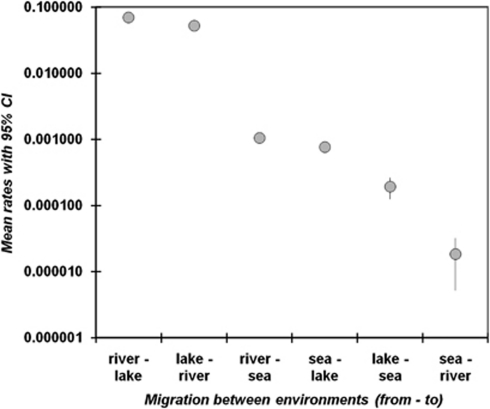
Phycodnaviruses have a significant role in modulating the dynamics of phytoplankton, thereby influencing community structure and succession, nutrient cycles and potentially atmospheric composition because phytoplankton fix about half the carbon dioxide (CO(2)) on the planet, and some algae release dimethylsulphoniopropionate when lysed by viruses. Despite their ecological importance and widespread distribution, relatively little is known about the evolutionary history, phylogenetic relationships and phylodynamics of the Phycodnaviruses from freshwater environments. Herein we provide novel data on Phycodnaviruses from the largest river system on earth--the Amazon Basin--that were compared with samples from different aquatic systems from several places around the world. Based on phylogenetic inference using DNA polymerase (pol) sequences we show the presence of distinct populations of Phycodnaviridae. Preliminary coarse-grained phylodynamics and phylogeographic inferences revealed a complex dynamics characterized by long-term fluctuations in viral population sizes, with a remarkable worldwide reduction of the effective population around 400 thousand years before the present (KYBP), followed by a recovery near to the present time. Moreover, we present evidence for significant viral gene flow between freshwater environments, but crucially almost none between freshwater and marine environments.
噬藻体病毒在调节浮游植物动态方面起着重要作用,从而影响群落结构和演替、营养循环,并可能影响大气成分,因为浮游植物固定了地球上大约一半的二氧化碳(CO(2)),而且一些藻类在被病毒裂解时会释放二甲基巯基丙酸酯。尽管它们具有生态重要性和广泛的分布,但对于淡水环境中的噬藻体病毒的进化历史、系统发育关系和系统发育动力学,人们知之甚少。本文提供了关于来自世界上最大的河流系统——亚马逊流域的噬藻体病毒的新数据,并与来自世界各地不同水生系统的样本进行了比较。基于使用 DNA 聚合酶(pol)序列进行的系统发育推断,我们表明存在不同的噬藻体病毒种群。初步的粗粒系统发育和系统地理推断表明,病毒种群规模存在复杂的动态变化,具有长期波动的特点,在距今约 40 万年前,有效种群数量显著减少,随后在近代时期又有所恢复。此外,我们还提供了证据表明淡水环境之间存在显著的病毒基因流动,但至关重要的是,淡水和海洋环境之间几乎没有基因流动。