Center for Behavioral Neuroscience, Department of Psychiatry and Behavioral Sciences, Yerkes National Primate Research Center, Emory University School of Medicine, 954 Gatewood Drive, Atlanta, GA 30329, USA.
Trends Neurosci. 2012 Jan;35(1):24-35. doi: 10.1016/j.tins.2011.06.007. Epub 2011 Jul 26.
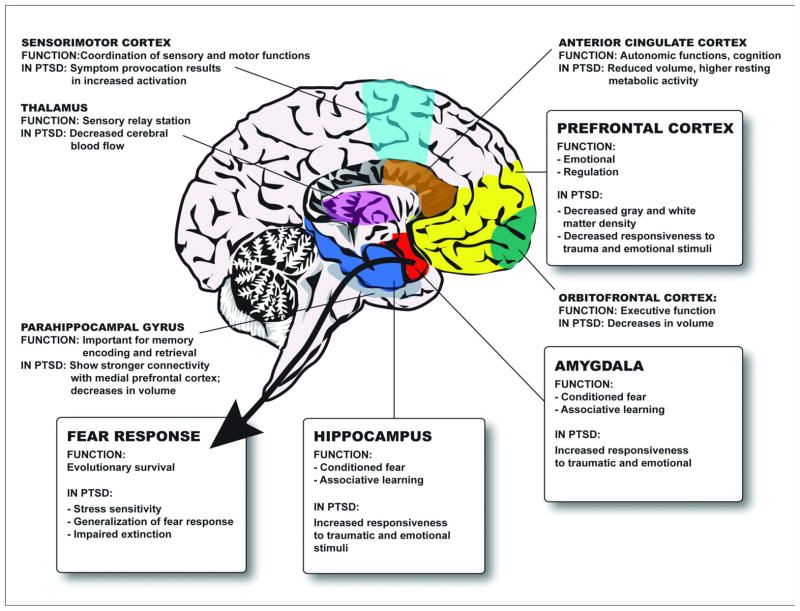
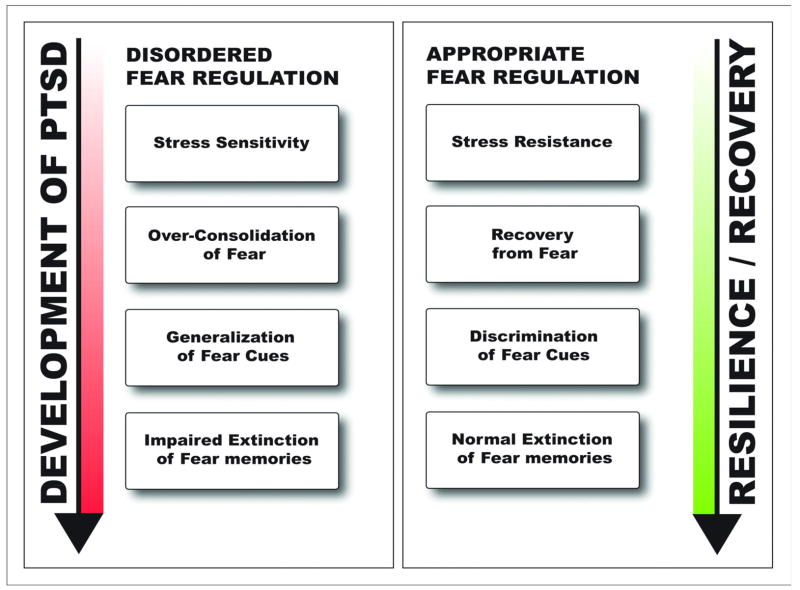
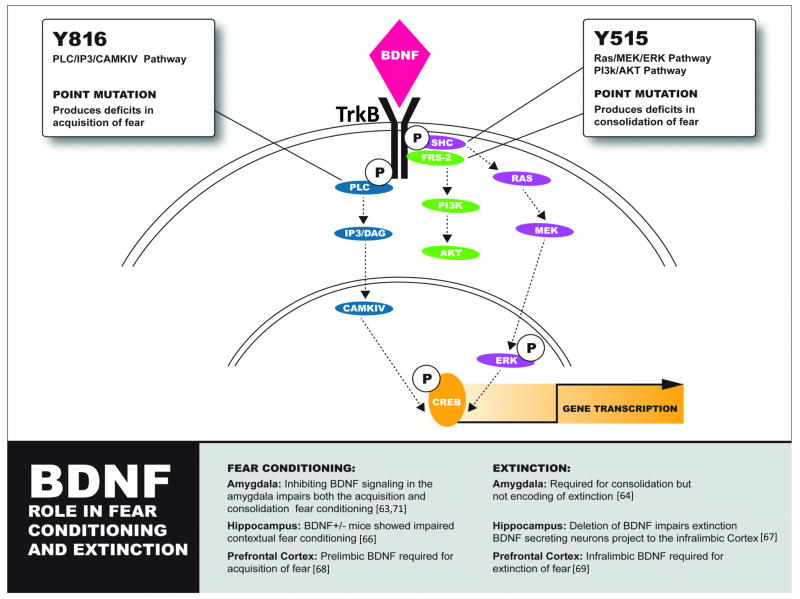
Posttraumatic stress disorder (PTSD) is an anxiety disorder that can develop after a traumatic experience such as domestic violence, natural disasters or combat-related trauma. The cost of such disorders on society and the individual can be tremendous. In this article, we review how the neural circuitry implicated in PTSD in humans is related to the neural circuitry of fear. We then discuss how fear conditioning is a suitable model for studying the molecular mechanisms of the fear components that underlie PTSD, and the biology of fear conditioning with a particular focus on the brain-derived neurotrophic factor (BDNF)-tyrosine kinase B (TrkB), GABAergic and glutamatergic ligand-receptor systems. We then summarize how such approaches might help to inform our understanding of PTSD and other stress-related disorders and provide insight to new pharmacological avenues of treatment of PTSD.
创伤后应激障碍(PTSD)是一种焦虑障碍,可在经历创伤后出现,例如家庭暴力、自然灾害或与战斗相关的创伤。这种疾病给社会和个人带来的代价是巨大的。在本文中,我们回顾了人类 PTSD 中涉及的神经回路与恐惧的神经回路之间的关系。然后,我们讨论了恐惧条件反射如何成为研究 PTSD 恐惧成分的分子机制的合适模型,以及恐惧条件反射的生物学,特别关注脑源性神经营养因子(BDNF)-酪氨酸激酶 B(TrkB)、γ-氨基丁酸能和谷氨酸能配体-受体系统。然后,我们总结了这些方法如何帮助我们理解 PTSD 和其他与压力相关的障碍,并为 PTSD 的新药物治疗途径提供见解。