Department of Medicine, Division of Cardiology, Emory University School of Medicine, Atlanta, Georgia 30322, USA.
Arterioscler Thromb Vasc Biol. 2011 Oct;31(10):2203-9. doi: 10.1161/ATVBAHA.111.233247. Epub 2011 Jul 28.
Myeloid lineage cells (MLCs) such as macrophages are known to play a key role in postischemic neovascularization. However, the role of MLC-derived reactive oxygen species in this process and their specific chemical identity remain unknown.
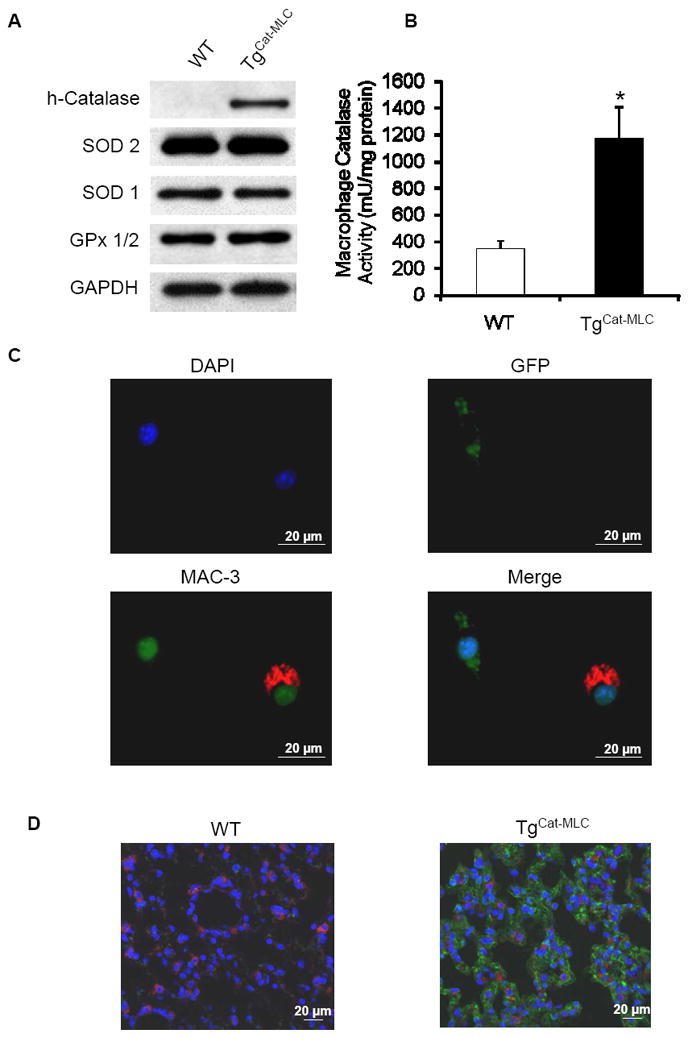
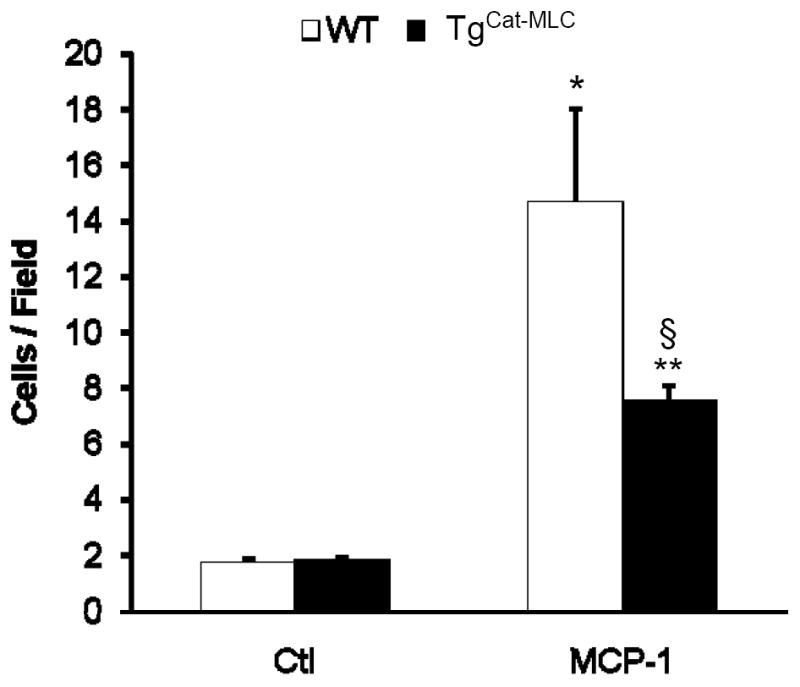
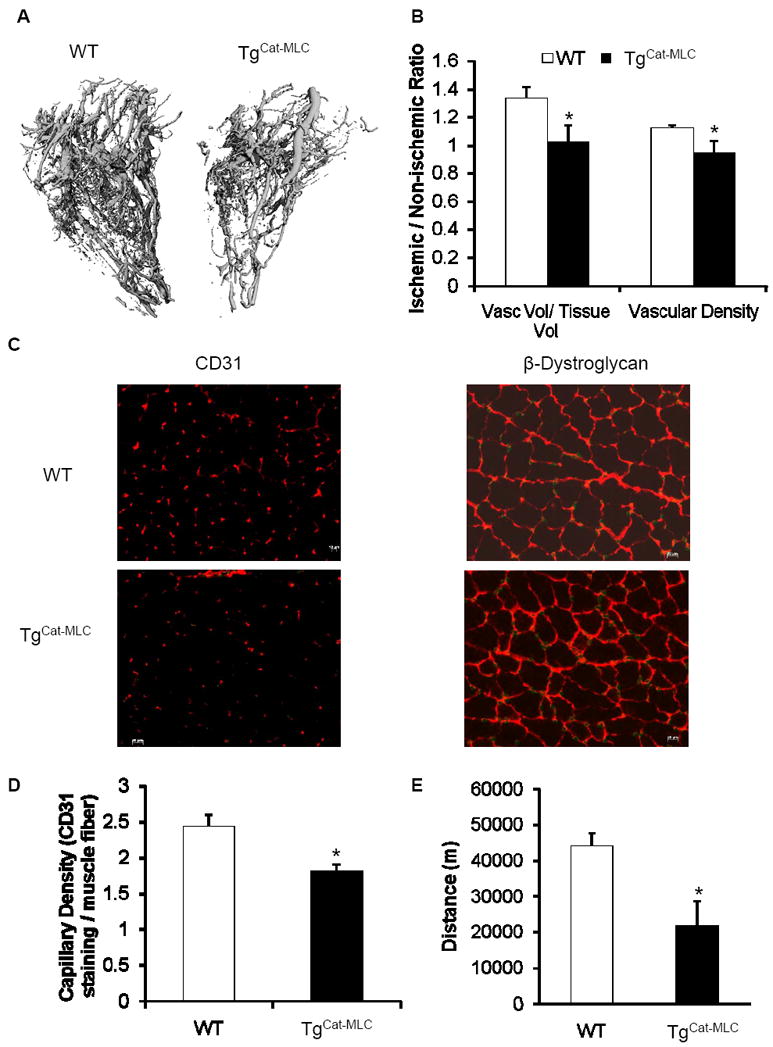
Transgenic mice with MLC-specific overexpression of catalase (Tg(Cat-MLC) mice) were created on a C57BL/6 background. Macrophage catalase activity was increased 3.4-fold compared with wild-type mice. After femoral artery ligation, laser Doppler perfusion imaging revealed impaired perfusion recovery in Tg(Cat-MLC) mice. This was associated with fewer collateral vessels, as assessed by microcomputed tomography angiography, and decreased capillary density. Impaired functional recovery of the ischemic limb was also evidenced by a 50% reduction in spontaneous running activity. The deficient neovascularization was associated with a blunted inflammatory response, characterized by decreased macrophage infiltration of ischemic tissues, and lower mRNA levels of inflammatory markers, such as tumor necrosis factor-α, osteopontin, and matrix mettaloproteinase-9. In vitro macrophage migration was impaired in Tg(Cat-MLC) mice, suggesting a role for H(2)O(2) in regulating the ability of macrophages to infiltrate ischemic tissues.
MLC-derived H(2)O(2) plays a key role in promoting neovascularization in response to ischemia and is a necessary factor for the development of ischemia-induced inflammation.
已知髓系细胞(如巨噬细胞)在缺血后新血管生成中起关键作用。然而,该过程中髓系细胞衍生的活性氧的作用及其特定的化学特性尚不清楚。
在 C57BL/6 背景下创建了髓系细胞特异性过表达过氧化氢酶的转基因小鼠(Tg(Cat-MLC)小鼠)。与野生型小鼠相比,巨噬细胞过氧化氢酶活性增加了 3.4 倍。股动脉结扎后,激光多普勒灌注成像显示 Tg(Cat-MLC)小鼠的灌注恢复受损。这与通过 microCT 血管造影评估的侧支血管较少以及毛细血管密度降低有关。缺血肢体功能恢复受损也表现在自发跑步活动减少 50%。缺血组织中巨噬细胞浸润减少,炎症标志物(如肿瘤坏死因子-α、骨桥蛋白和基质金属蛋白酶-9)的 mRNA 水平降低,表明新生血管化不足。Tg(Cat-MLC)小鼠中巨噬细胞迁移受损,表明 H2O2 在调节巨噬细胞浸润缺血组织的能力方面起重要作用。
MLC 衍生的 H2O2 在促进缺血反应中的新血管生成中起关键作用,是缺血诱导炎症发展的必要因素。