O'Grady Kristin P, Kavanaugh Taylor E, Cho Hongsik, Ye Hanrong, Gupta Mukesh K, Madonna Megan C, Lee Jinjoo, O'Brien Christine M, Skala Melissa C, Hasty Karen A, Duvall Craig L
Biomedical Engineering, Vanderbilt University, 1225 Stevenson Center Lane, 5824 Stevenson Center, Nashville, Tennessee 37235, United States.
Orthopaedic Surgery and Biomedical Engineering, University of Tennessee Health Science Center, Research Service 151, VA Medical Center, 1030 Jefferson Avenue, Memphis, Tennessee 38104, United States.
ACS Biomater Sci Eng. 2018 Apr 9;4(4):1251-1264. doi: 10.1021/acsbiomaterials.6b00804. Epub 2017 Apr 6.
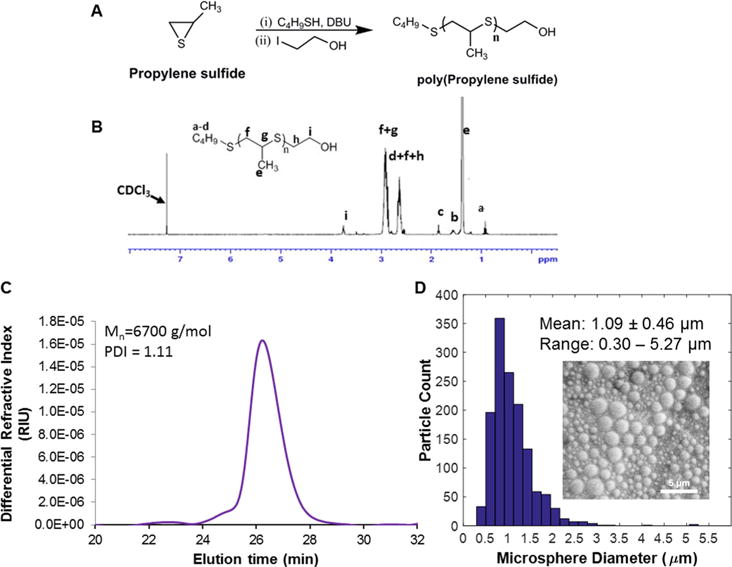
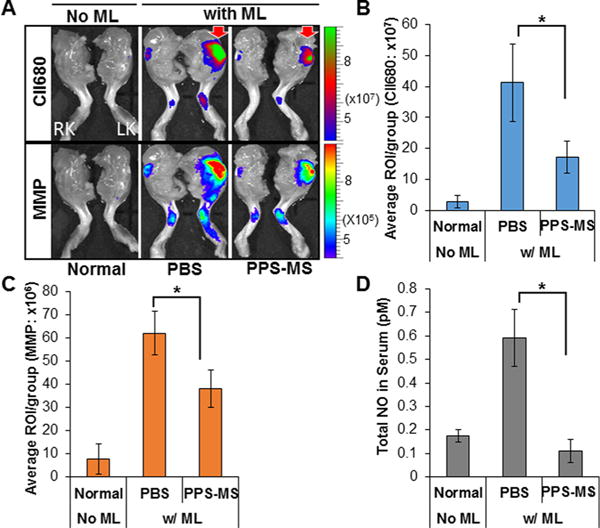
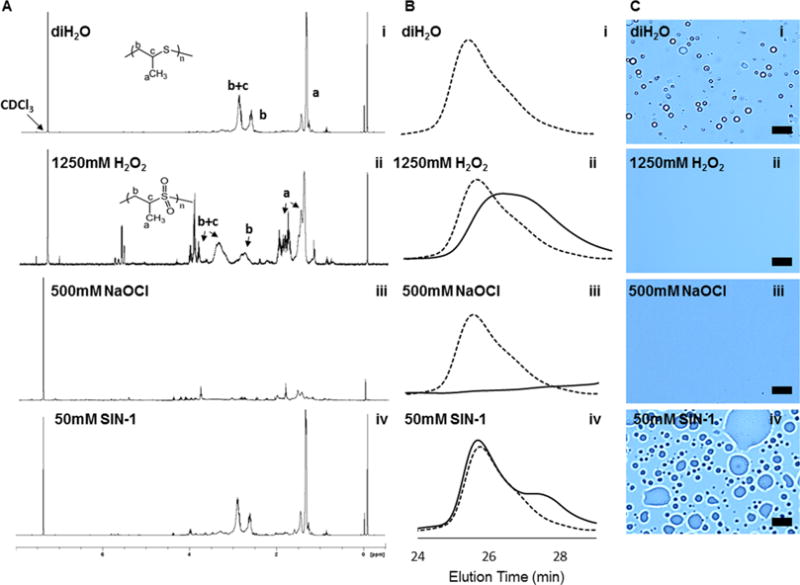
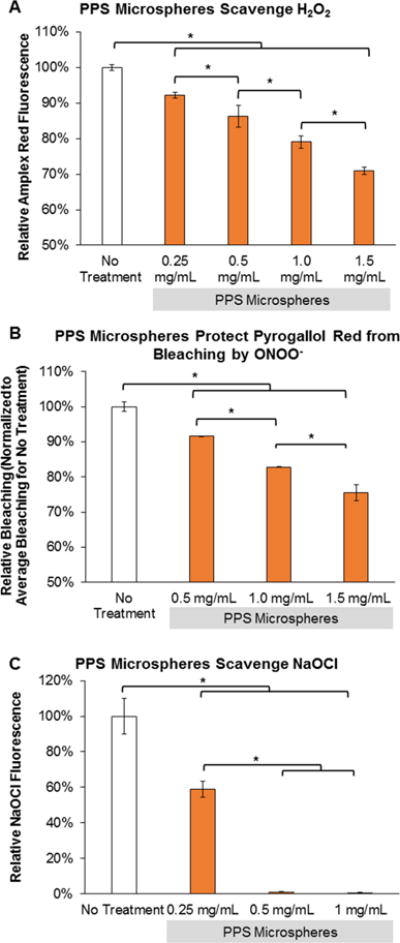
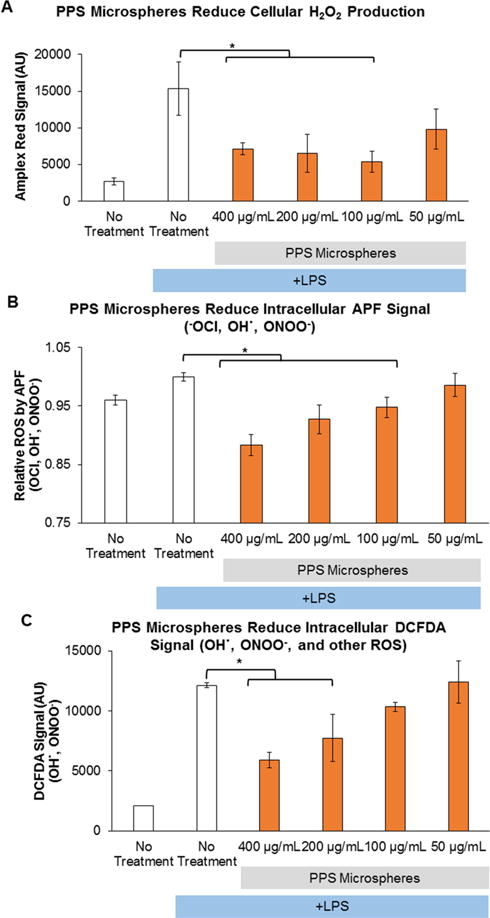
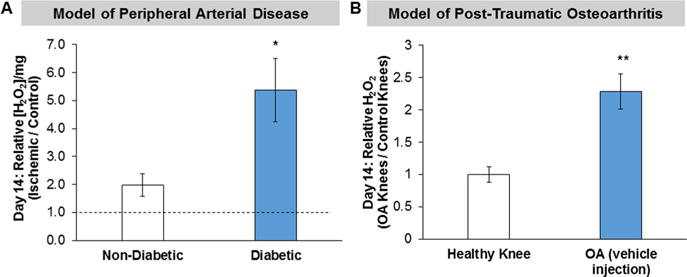
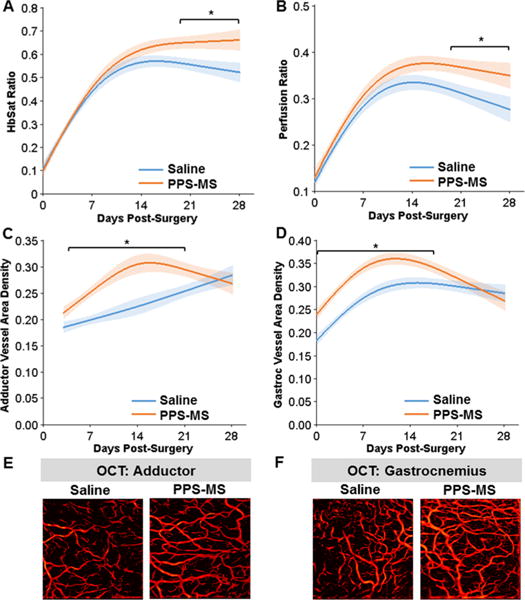
The inherent antioxidant function of poly(propylene sulfide) (PPS) microspheres (MS) was dissected for different reactive oxygen species (ROS), and therapeutic benefits of PPS-MS were explored in models of diabetic peripheral arterial disease (PAD) and mechanically induced post-traumatic osteoarthritis (PTOA). PPS-MS (∼1 m diameter) significantly scavenged hydrogen peroxide (HO), hypochlorite, and peroxynitrite but not superoxide in vitro in cell-free and cell-based assays. Elevated ROS levels (specifically HO) were confirmed in both a mouse model of diabetic PAD and in a mouse model of PTOA, with greater than 5- and 2-fold increases in HO, respectively. PPS-MS treatment functionally improved recovery from hind limb ischemia based on ∼15-25% increases in hemoglobin saturation and perfusion in the footpads as well as earlier remodeling of vessels in the proximal limb. In the PTOA model, PPS-MS reduced matrix metalloproteinase (MMP) activity by 30% and mitigated the resultant articular cartilage damage. These results suggest that local delivery of PPS-MS at sites of injury-induced inflammation improves the vascular response to ischemic injury in the setting of chronic hyperglycemia and reduces articular cartilage destruction following joint trauma. These results motivate further exploration of PPS as a stand-alone, locally sustained antioxidant therapy and as a material for microsphere-based, sustained local drug delivery to inflamed tissues at risk of ROS damage.
剖析了聚硫化丙烯(PPS)微球(MS)对不同活性氧(ROS)的固有抗氧化功能,并在糖尿病性外周动脉疾病(PAD)和机械诱导的创伤后骨关节炎(PTOA)模型中探究了PPS-MS的治疗益处。在无细胞和基于细胞的体外试验中,PPS-MS(直径约1μm)能显著清除过氧化氢(HO)、次氯酸盐和过氧亚硝酸盐,但不能清除超氧化物。在糖尿病性PAD小鼠模型和PTOA小鼠模型中均证实ROS水平升高(特别是HO),HO分别增加了5倍和2倍以上。基于血红蛋白饱和度和足垫灌注增加约15%-25%以及近端肢体血管更早重塑,PPS-MS治疗在功能上改善了后肢缺血的恢复情况。在PTOA模型中,PPS-MS使基质金属蛋白酶(MMP)活性降低了30%,并减轻了由此导致的关节软骨损伤。这些结果表明,在损伤诱导的炎症部位局部递送PPS-MS可改善慢性高血糖情况下对缺血性损伤的血管反应,并减少关节创伤后关节软骨的破坏。这些结果促使人们进一步探索将PPS作为一种独立的、局部持续的抗氧化疗法,以及作为一种用于基于微球的、持续局部药物递送的材料,用于递送药物至有ROS损伤风险的炎症组织。