Dhasan P Bharathi, Jegadeesan M, Kavimani S
Department of Environmental and Herbal Sciences, Tamil University, Thanjavur - 613 010, India.
Pharmacognosy Res. 2010 Jan;2(1):58-61. doi: 10.4103/0974-8490.60575.
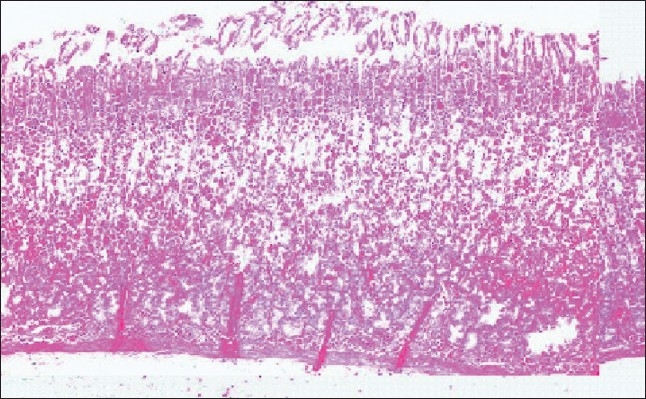
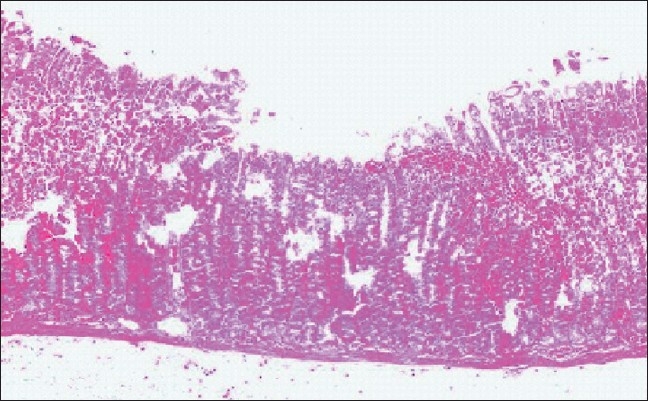
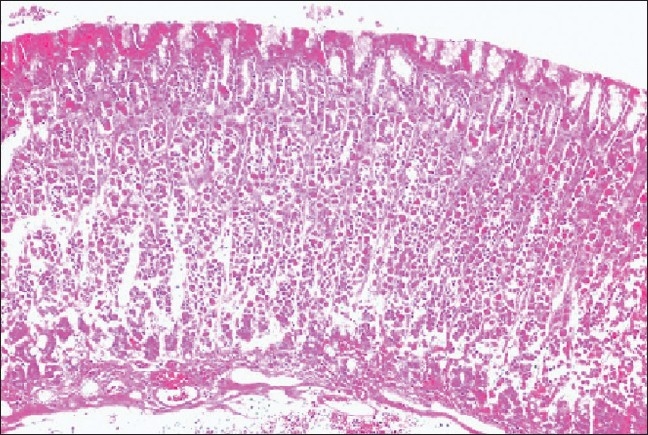
Gastric ulcer is one of the most prevalent gastrointestinal disorders, which affects approximately 5%-10% of people during their life. The ulcer is an open sore that develops on the inside lining of the stomach (a gastric ulcer) or the small intestine (a duodenal ulcer). Both types of ulcers are also referred to as peptic ulcer disease. The present study was carried out to investigate antiulcer activity of aqueous extract of fruits of Momordica cymbalaria Hook f. Initially the aqueous extract of M. cymbalaria was subjected to acute oral toxicity study according to the Organisation for Economic Co-operation and Development (OECD) guidelines, based on which, 500 mg/kg dose of aqueous extract was selected for the study. The animals were pretreated before inducing ulcer. For inducing ulcer in the rats, 80% ethanol was used. Various parameters such as area of gastric lesion, nonprotein sulfhydryls (NP-SH) concentration, gastric wall mucus concentration, total acidity and volume of gastric content; and histopathological parameters like hemorrhage, edema, erosion, ulceration were studied in the control group and pretreated groups with aqueous extract of fruits of Momordica cymbalaria (500 mg/kg) and standard drug lanzoprazole (30 mg/kg). Pretreatment with aqueous extract of M. cymbalaria fruits showed significant (P < 0.05) decrease in the total acidity and ulcer index. Improvements in all histopathological parameters were noticed in the M. cymbalaria-treated group. It also showed significant decrease in gastric lesion and NP-SH and gastric wall mucus concentrations in the M. cymbalaria-treated group. Overall the aqueous extract of M. cymbalaria fruits was shown to possess significant (P < 0.05) antiulcer property in rats. The polyphenols like quercetin reported from the plant may attribute to the antiulcer property of the extract.
胃溃疡是最常见的胃肠道疾病之一,一生中约有5%-10%的人会受到影响。溃疡是在胃(胃溃疡)或小肠(十二指肠溃疡)内表面形成的开放性溃疡。这两种类型的溃疡也被称为消化性溃疡病。本研究旨在调查葫芦科苦瓜果实水提取物的抗溃疡活性。最初,根据经济合作与发展组织(OECD)的指南,对苦瓜水提取物进行急性口服毒性研究,并在此基础上选择500mg/kg剂量的水提取物进行研究。在诱导溃疡之前对动物进行预处理。使用80%乙醇诱导大鼠溃疡。在对照组以及用苦瓜果实水提取物(500mg/kg)和标准药物兰索拉唑(30mg/kg)预处理的组中,研究了各种参数,如胃损伤面积、非蛋白巯基(NP-SH)浓度、胃壁黏液浓度、总酸度和胃内容物体积;以及组织病理学参数,如出血、水肿、糜烂、溃疡。用苦瓜果实水提取物预处理后,总酸度和溃疡指数显著降低(P<0.05)。在苦瓜处理组中,所有组织病理学参数均有改善。苦瓜处理组的胃损伤、NP-SH和胃壁黏液浓度也显著降低。总体而言,苦瓜果实水提取物在大鼠中显示出显著的(P<0.05)抗溃疡特性。该植物中报道的如槲皮素等多酚类物质可能是提取物具有抗溃疡特性的原因。