Department of Biology, University of Fribourg, Fribourg, Switzerland.
PLoS Pathog. 2011 Jul;7(7):e1002148. doi: 10.1371/journal.ppat.1002148. Epub 2011 Jul 28.
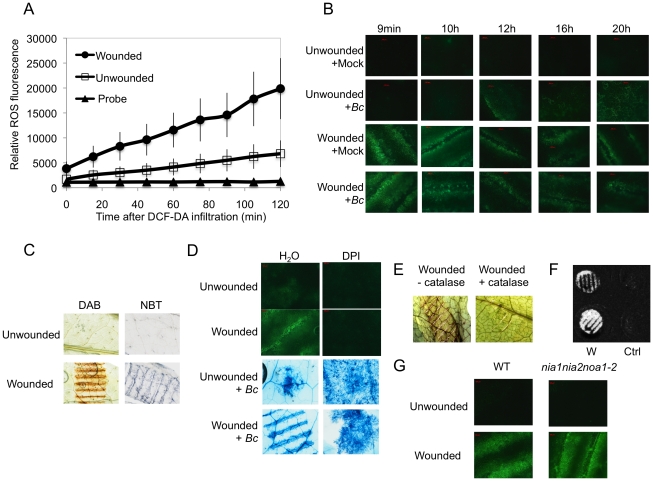
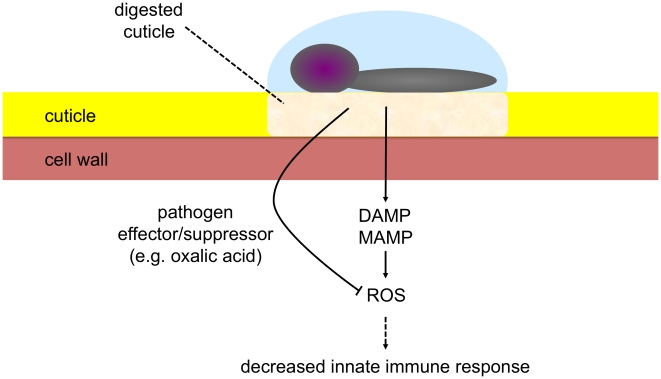
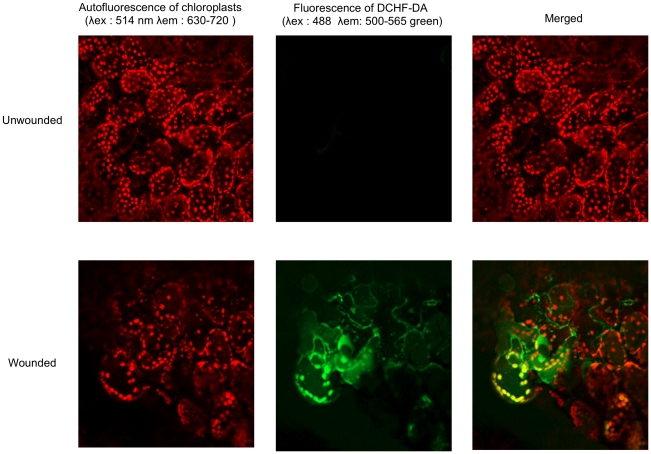
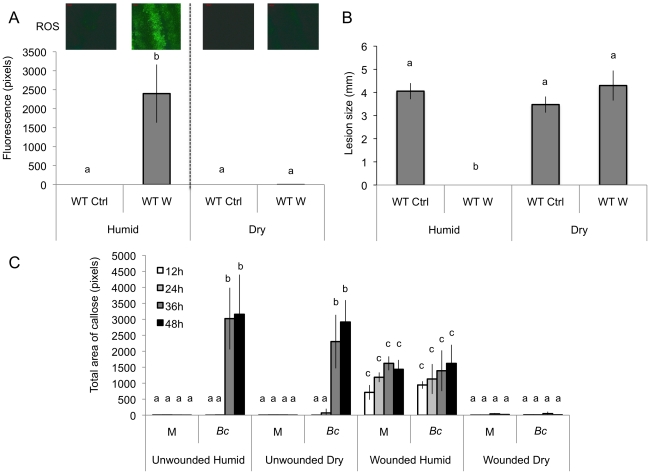
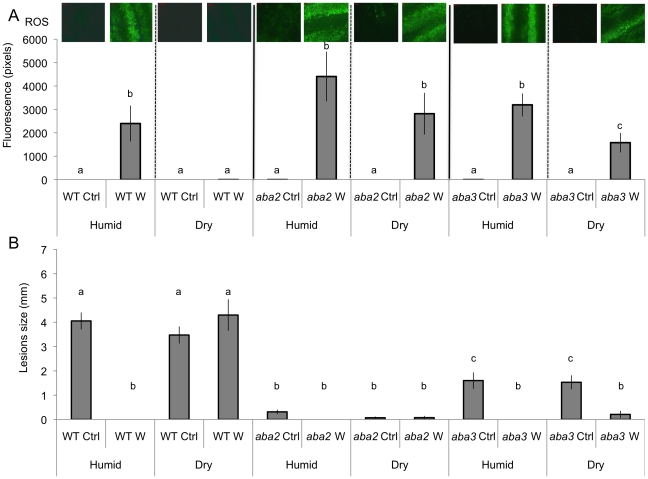
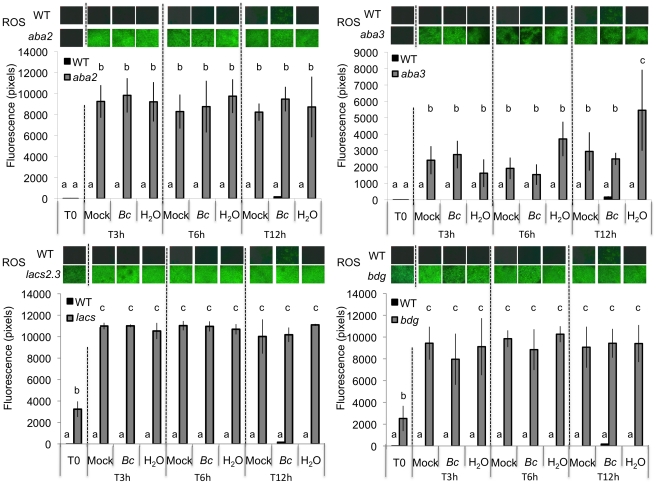
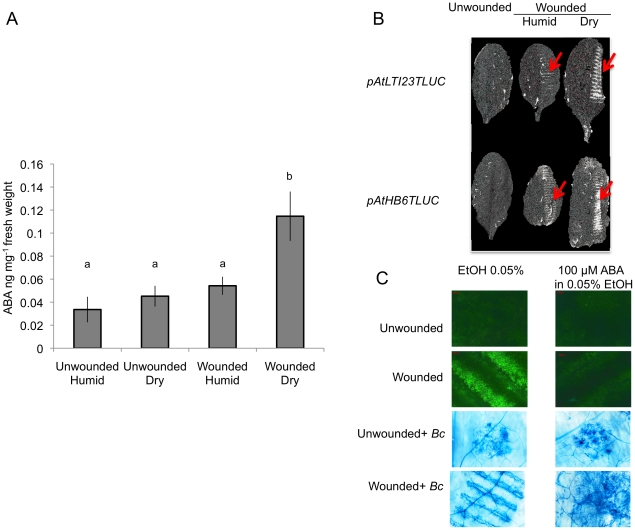
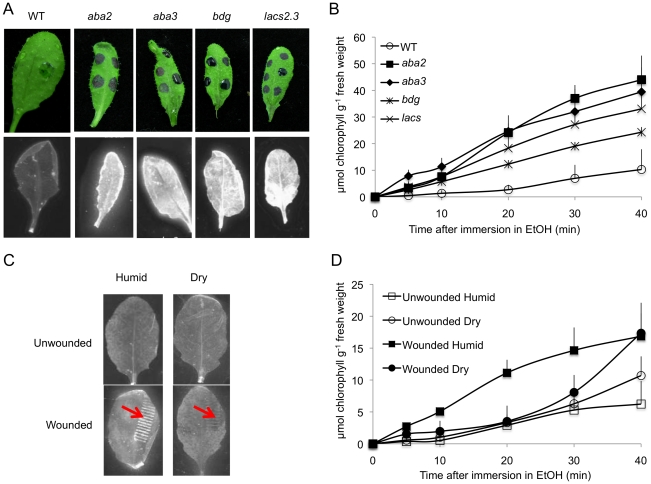
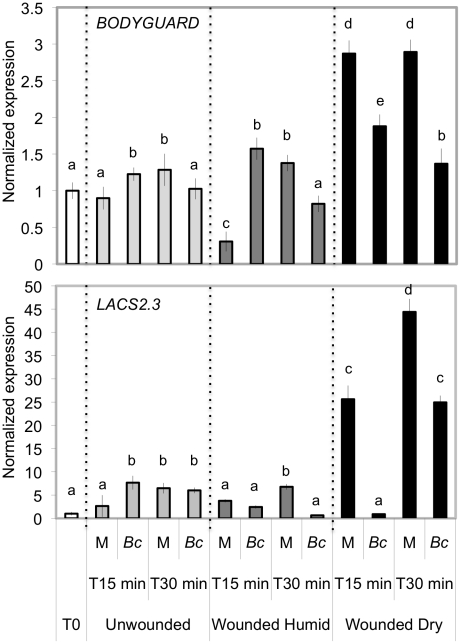
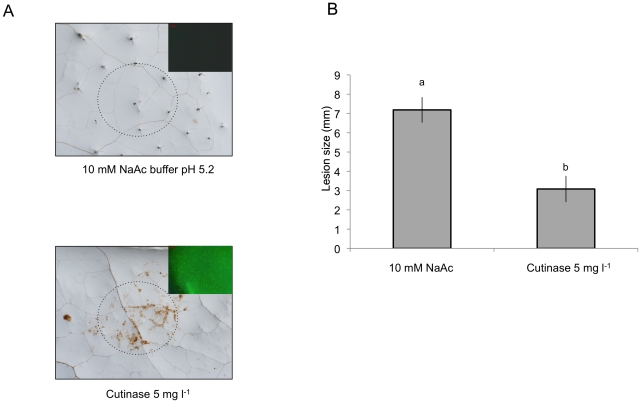
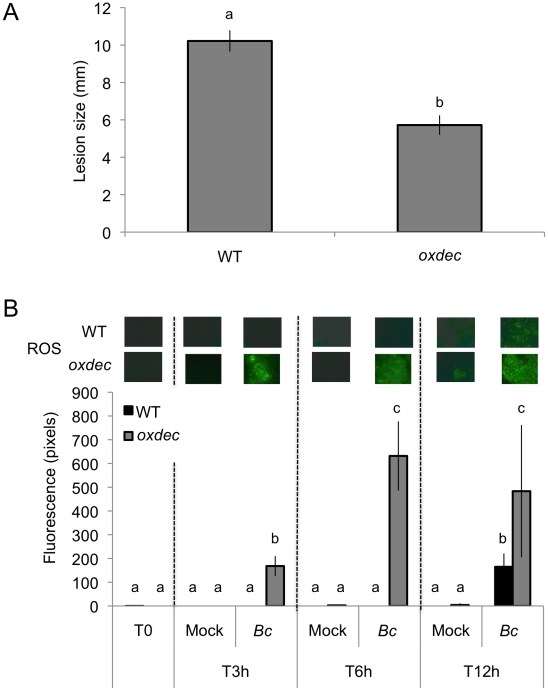
Wounded leaves of Arabidopsis thaliana show transient immunity to Botrytis cinerea, the causal agent of grey mould. Using a fluorescent probe, histological staining and a luminol assay, we now show that reactive oxygen species (ROS), including H(2)O(2) and O(2) (-), are produced within minutes after wounding. ROS are formed in the absence of the enzymes Atrboh D and F and can be prevented by diphenylene iodonium (DPI) or catalase. H(2)O(2) was shown to protect plants upon exogenous application. ROS accumulation and resistance to B. cinerea were abolished when wounded leaves were incubated under dry conditions, an effect that was found to depend on abscisic acid (ABA). Accordingly, ABA biosynthesis mutants (aba2 and aba3) were still fully resistant under dry conditions even without wounding. Under dry conditions, wounded plants contained higher ABA levels and displayed enhanced expression of ABA-dependent and ABA-reporter genes. Mutants impaired in cutin synthesis such as bdg and lacs2.3 are already known to display a high level of resistance to B. cinerea and were found to produce ROS even when leaves were not wounded. An increased permeability of the cuticle and enhanced ROS production were detected in aba2 and aba3 mutants as described for bdg and lacs2.3. Moreover, leaf surfaces treated with cutinase produced ROS and became more protected to B. cinerea. Thus, increased permeability of the cuticle is strongly linked with ROS formation and resistance to B. cinerea. The amount of oxalic acid, an inhibitor of ROS secreted by B. cinerea could be reduced using plants over expressing a fungal oxalate decarboxylase of Trametes versicolor. Infection of such plants resulted in a faster ROS accumulation and resistance to B. cinerea than that observed in untransformed controls, demonstrating the importance of fungal suppression of ROS formation by oxalic acid. Thus, changes in the diffusive properties of the cuticle are linked with the induction ROS and attending innate defenses.
拟南芥受伤的叶片对 Botrytis cinerea(灰霉菌,引起灰霉病的病原菌)表现出短暂的免疫反应。使用荧光探针、组织学染色和发光氨测定法,我们现在表明,活性氧(ROS),包括 H2O2 和 O2(-),在受伤后几分钟内就会产生。在缺乏 Atrboh D 和 F 酶的情况下形成 ROS,并且可以被二苯基碘(DPI)或过氧化氢酶预防。外源施加 H2O2 被证明可以保护植物。当受伤的叶片在干燥条件下孵育时,ROS 的积累和对 B. cinerea 的抗性被消除,这种效应被发现依赖于脱落酸(ABA)。因此,即使在没有受伤的情况下,ABA 生物合成突变体(aba2 和 aba3)在干燥条件下仍然完全具有抗性。在干燥条件下,受伤的植物含有更高水平的 ABA,并显示出 ABA 依赖性和 ABA 报告基因的增强表达。角质合成受损的突变体,如 bdg 和 lacs2.3,已经显示出对 B. cinerea 的高水平抗性,并且即使叶片没有受伤也会产生 ROS。在 aba2 和 aba3 突变体中检测到角质层的通透性增加和 ROS 产生增强,如 bdg 和 lacs2.3 所述。此外,用角质酶处理的叶片表面产生 ROS,并对 B. cinerea 更具保护作用。因此,角质层的通透性增加与 ROS 的形成和对 B. cinerea 的抗性密切相关。使用过表达真菌 Trametes versicolor 草酸脱羧酶的植物,可以减少病原菌 B. cinerea 分泌的 ROS 抑制剂草酸的量。与未转化对照相比,感染这些植物会导致更快的 ROS 积累和对 B. cinerea 的抗性,这表明真菌通过草酸抑制 ROS 形成的重要性。因此,角质层扩散特性的变化与 ROS 的诱导和伴随的先天防御有关。