State Key Laboratory of Subtropical Silviculture, Zhejiang A&F University, Lin'an, Hangzhou, China.
Organismal and Evolutionary Biology Research Program, Faculty of Biological and Environmental Sciences, and Viikki Plant Science Centre, University of Helsinki, Helsinki, Finland.
J Exp Bot. 2019 Oct 24;70(20):5971-5984. doi: 10.1093/jxb/erz345.
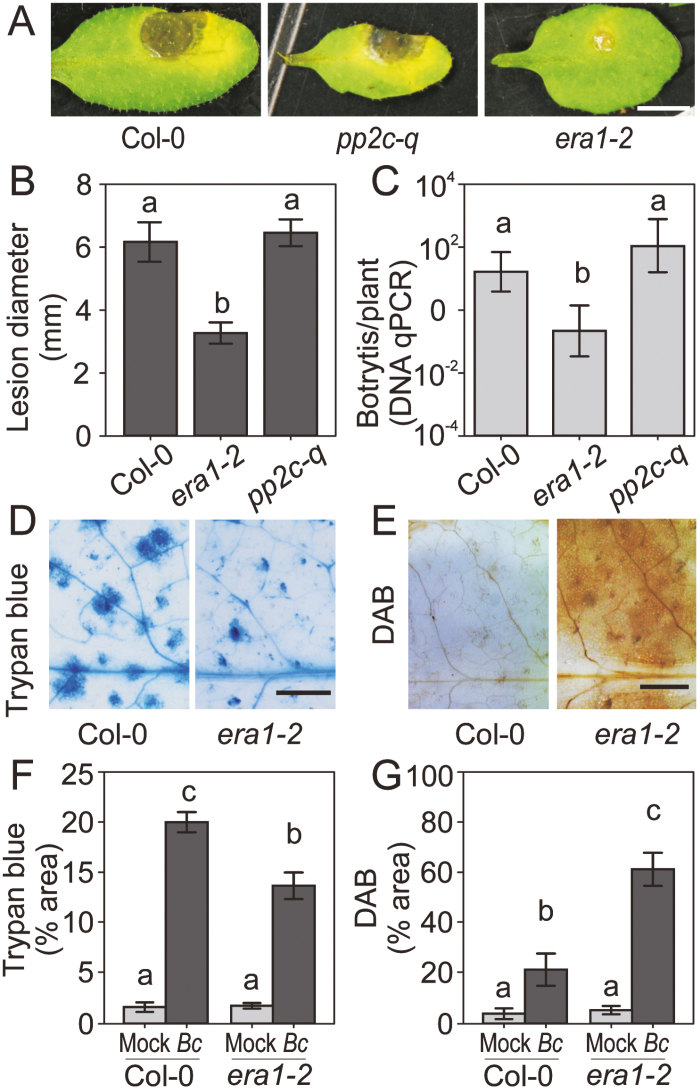
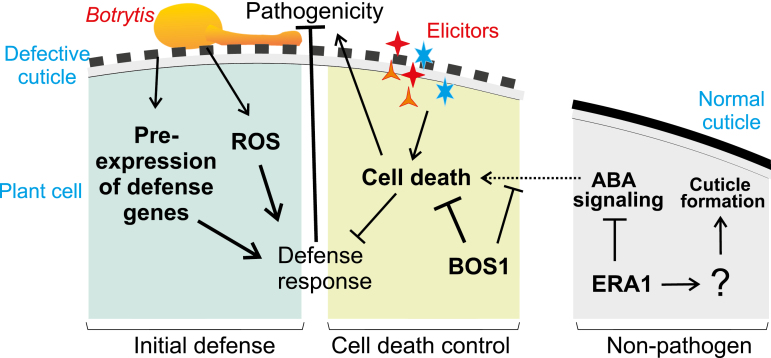
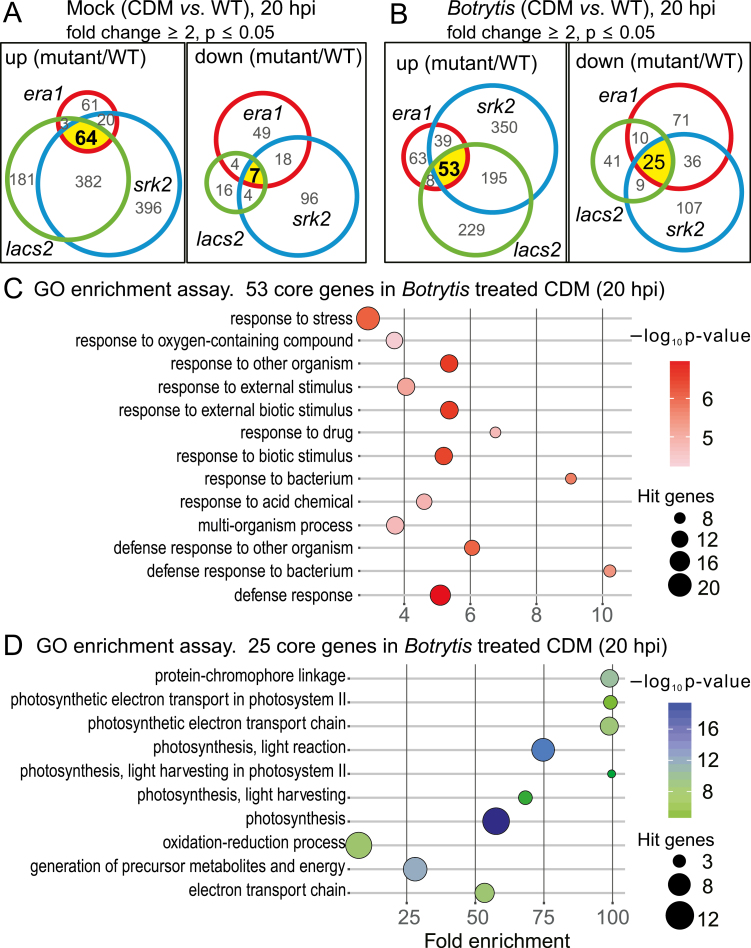
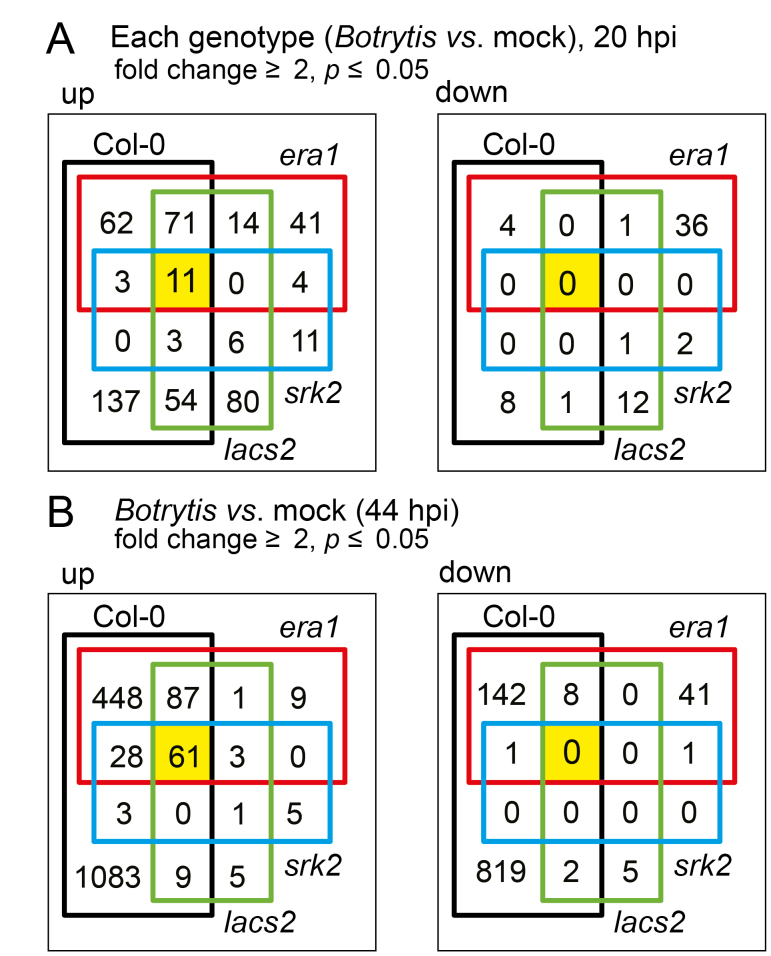
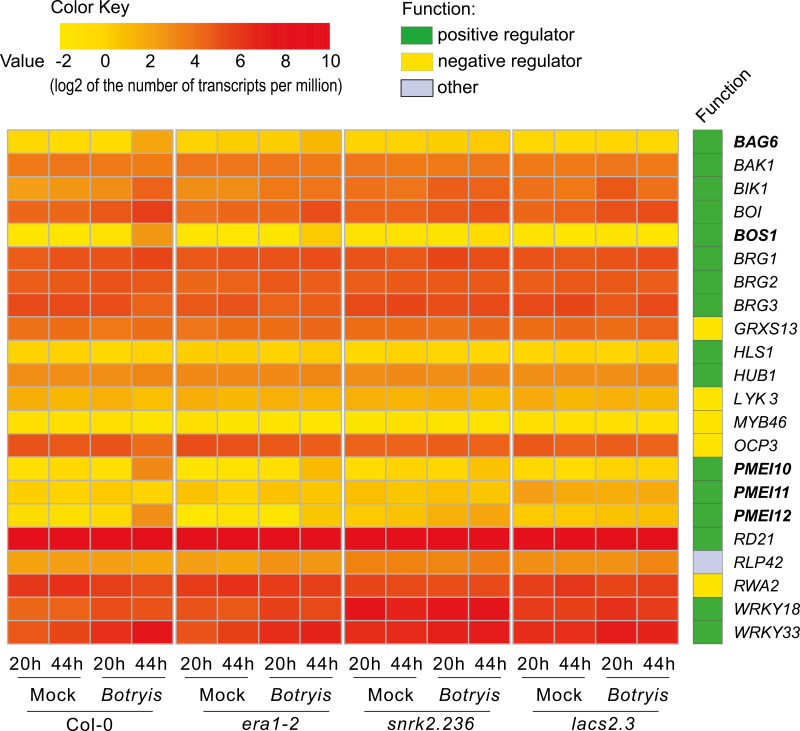
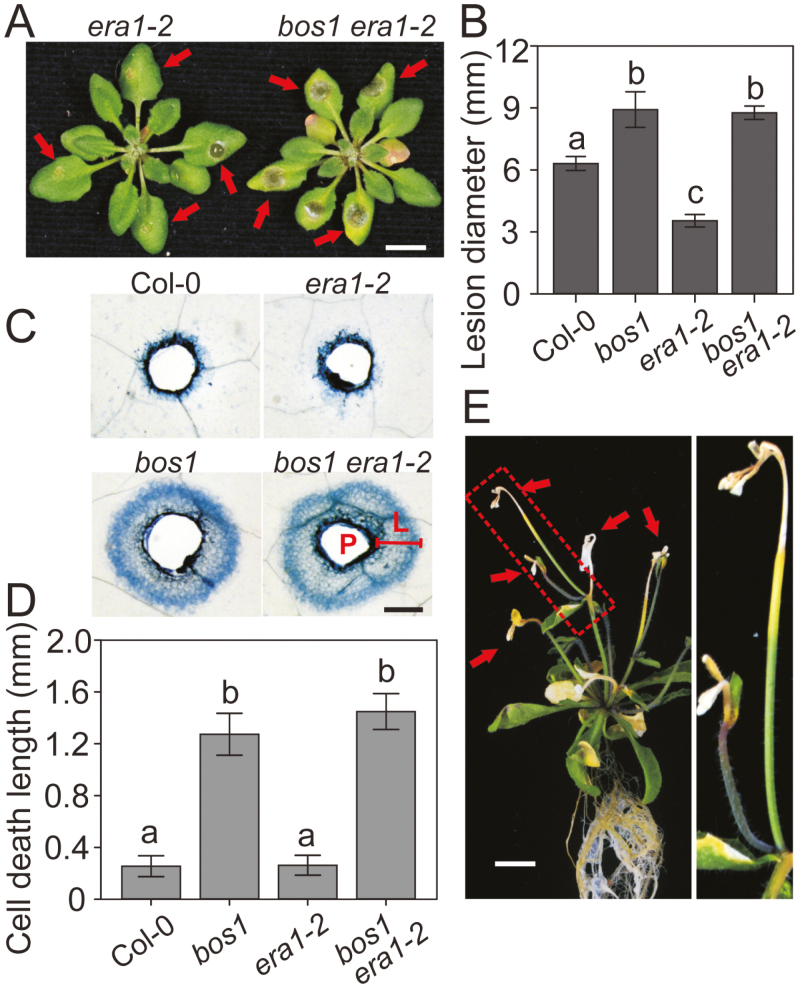
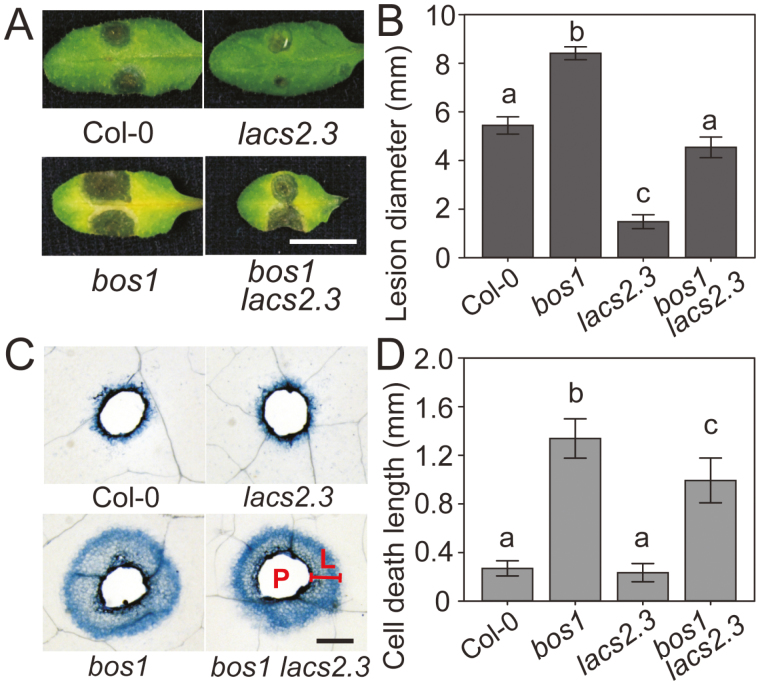
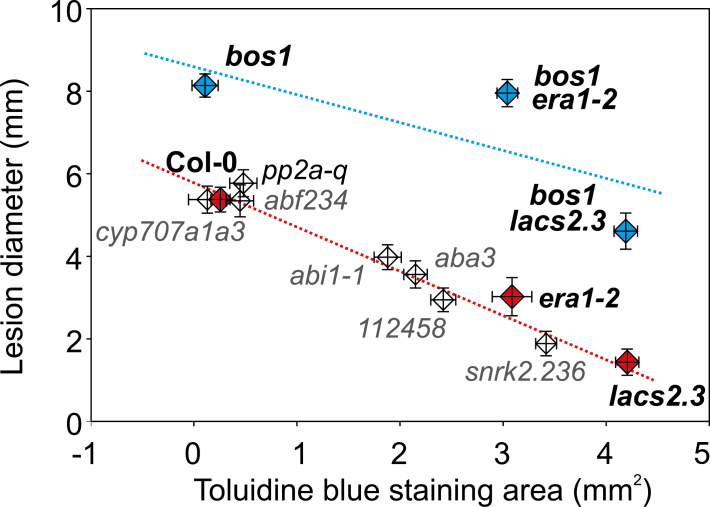
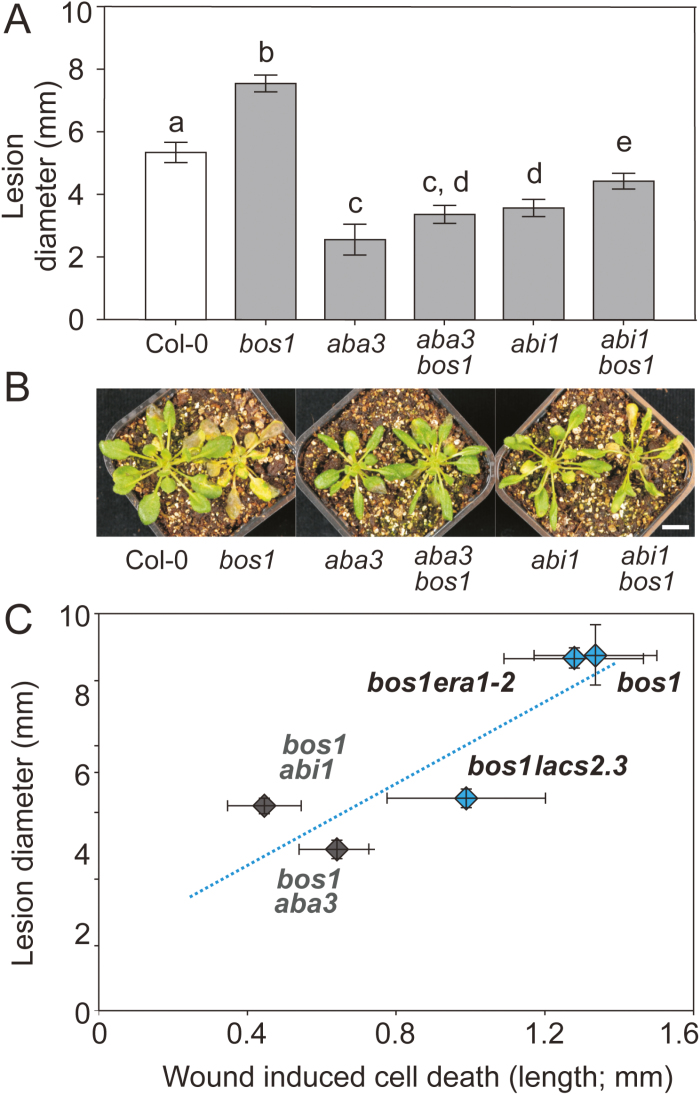
Prevailing evidence indicates that abscisic acid (ABA) negatively influences immunity to the fungal pathogen Botrytis cinerea in most but not all cases. ABA is required for cuticle biosynthesis, and cuticle permeability enhances immunity to Botrytis via unknown mechanisms. This complex web of responses obscures the role of ABA in Botrytis immunity. Here, we addressed the relationships between ABA sensitivity, cuticle permeability, and Botrytis immunity in the Arabidopsis thaliana ABA-hypersensitive mutants protein phosphatase2c quadruple mutant (pp2c-q) and enhanced response to aba1 (era1-2). Neither pp2c-q nor era1-2 exhibited phenotypes predicted by the known roles of ABA; conversely, era1-2 had a permeable cuticle and was Botrytis resistant. We employed RNA-seq analysis in cuticle-permeable mutants of differing ABA sensitivities and identified a core set of constitutively activated genes involved in Botrytis immunity and susceptibility to biotrophs, independent of ABA signaling. Furthermore, botrytis susceptible1 (bos1), a mutant with deregulated cell death and enhanced ABA sensitivity, suppressed the Botrytis immunity of cuticle permeable mutants, and this effect was linearly correlated with the extent of spread of wound-induced cell death in bos1. Overall, our data demonstrate that Botrytis immunity conferred by cuticle permeability can be genetically uncoupled from PP2C-regulated ABA sensitivity, but requires negative regulation of a parallel ABA-dependent cell-death pathway.
现有证据表明,脱落酸(ABA)在大多数情况下而非所有情况下都会对真菌病原体灰葡萄孢的免疫产生负面影响。ABA 是角质层生物合成所必需的,而角质层通透性通过未知机制增强了对灰葡萄孢的免疫。这种复杂的反应网络掩盖了 ABA 在灰葡萄孢免疫中的作用。在这里,我们研究了拟南芥 ABA 超敏突变体蛋白磷酸酶 2C 四重突变体(pp2c-q)和增强的 ABA1 反应(era1-2)中 ABA 敏感性、角质层通透性和灰葡萄孢免疫之间的关系。pp2c-q 和 era1-2 均未表现出已知 ABA 作用所预测的表型;相反,era1-2 的角质层通透性增强,且对灰葡萄孢具有抗性。我们在具有不同 ABA 敏感性的角质层通透性突变体中采用 RNA-seq 分析,鉴定出一组与灰葡萄孢免疫和对生物寄生菌易感性相关的组成性激活基因,这些基因与 ABA 信号无关。此外,细胞死亡失调且 ABA 敏感性增强的突变体 bos1 对灰葡萄孢具有敏感性,它抑制了角质层通透性突变体的灰葡萄孢免疫,这种效应与 bos1 中诱导性细胞死亡的扩散程度呈线性相关。总的来说,我们的数据表明,角质层通透性赋予的灰葡萄孢免疫可以与 PP2C 调节的 ABA 敏感性在遗传上解耦,但需要 ABA 依赖性细胞死亡途径的负调控。