ETH Zürich, Laboratory for Surface Science and Technology, Wolfgang-Pauli-Strasse 10, 8093 Zürich, Switzerland.
Nat Commun. 2011 Aug 16;2:438. doi: 10.1038/ncomms1441.
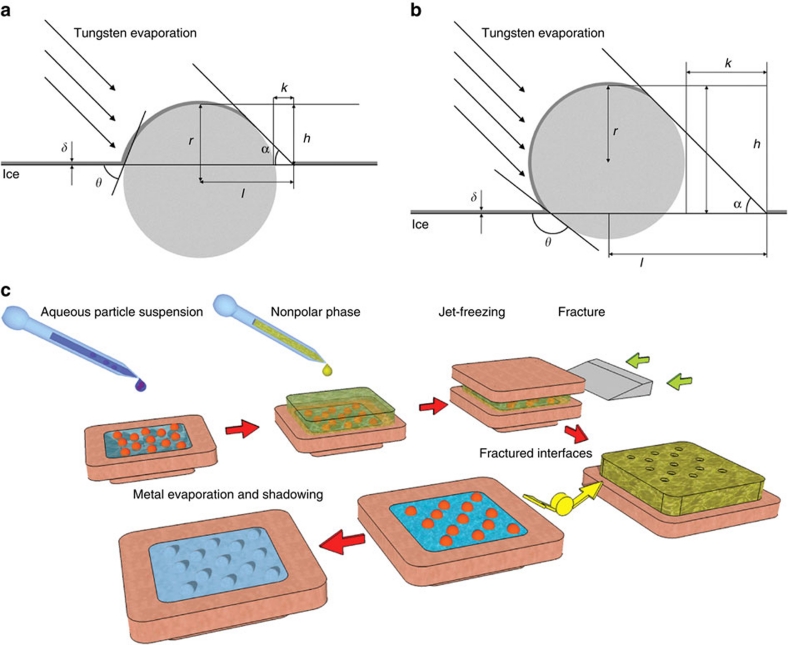
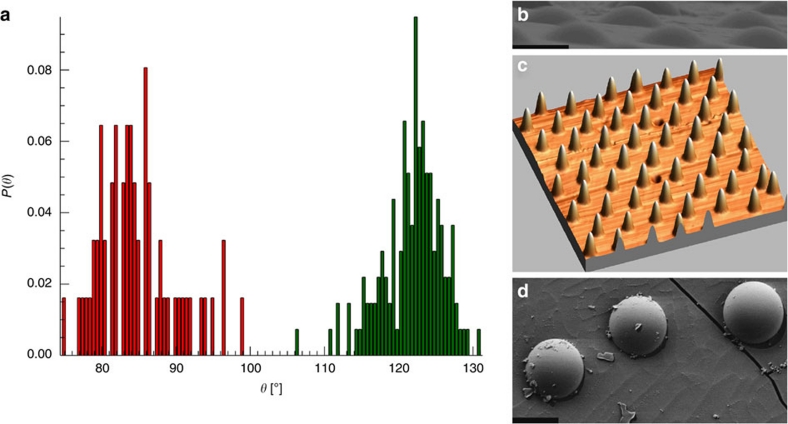
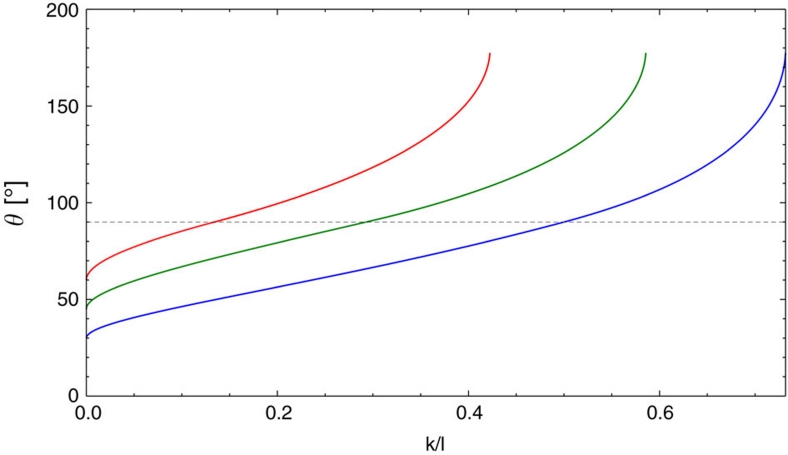
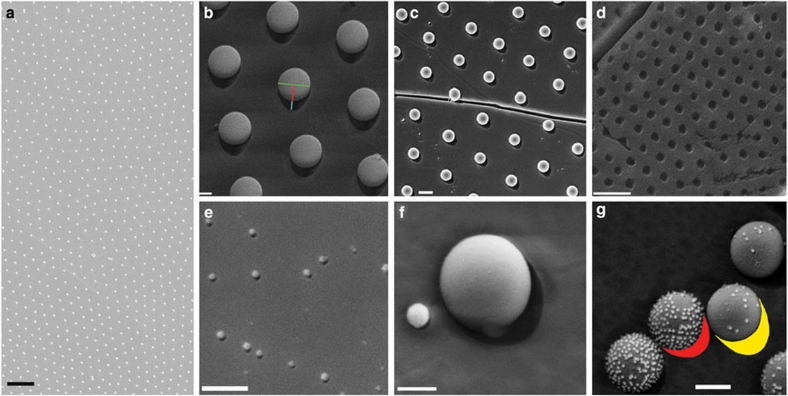
Nanoparticles at fluid interfaces are central to a rapidly increasing range of cutting-edge applications, including drug delivery, uptake through biological membranes, emulsion stabilization and the fabrication of nanocomposites. Understanding nanoscale wetting is a challenging issue, still unresolved for individual nanoparticles, and is essential in designing nanoparticle-building blocks with controlled surface properties. The core information about the structural and thermodynamic properties of particles at fluid interfaces is enclosed in the three-phase contact angle θ. Here we present a novel in situ method, on the basis of freeze-fracture shadow-casting cryo-scanning electron microscopy, that allows the measurement of contact angles of individual nanoparticles with 10 nm diameter, and thus greatly surpasses the current state of the art. We study hydrophilic and hydrophobic, organic and inorganic nanoparticles, demonstrating general applicability to systems of fundamental and applied nanotechnological interest. Significant heterogeneity in the wetting of nanoparticles is observed.
纳米粒子在流体界面处是一系列前沿应用的核心,包括药物输送、生物膜的摄取、乳液稳定和纳米复合材料的制造。理解纳米尺度的润湿是一个具有挑战性的问题,对于单个纳米粒子而言仍然没有得到解决,对于设计具有可控表面性能的纳米粒子构建块是至关重要的。关于流体界面处粒子的结构和热力学性质的核心信息包含在三相接触角θ中。在这里,我们提出了一种基于冷冻断裂阴影投射冷冻扫描电子显微镜的新的原位方法,可以测量直径为 10nm 的单个纳米粒子的接触角,从而大大超过了当前的技术水平。我们研究了亲水和疏水、有机和无机纳米粒子,证明了该方法对具有基础和应用纳米技术兴趣的系统具有普遍适用性。观察到纳米粒子润湿的显著异质性。