Center for Environmental Implications of Nanotechnology, California NanoSystems Institute, Los Angeles, California 90095, USA.
ACS Nano. 2011 Sep 27;5(9):7284-95. doi: 10.1021/nn202116p. Epub 2011 Aug 25.
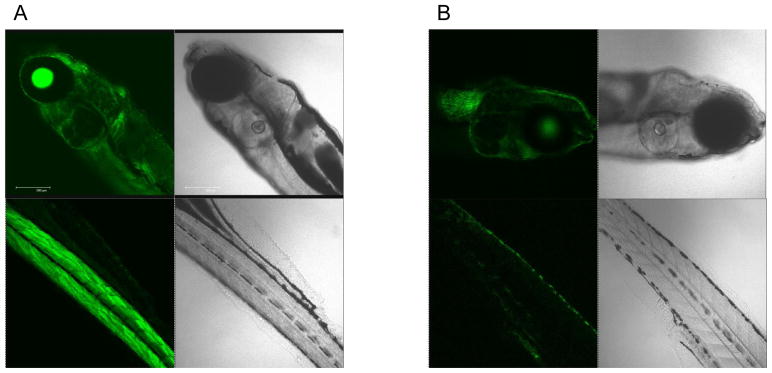
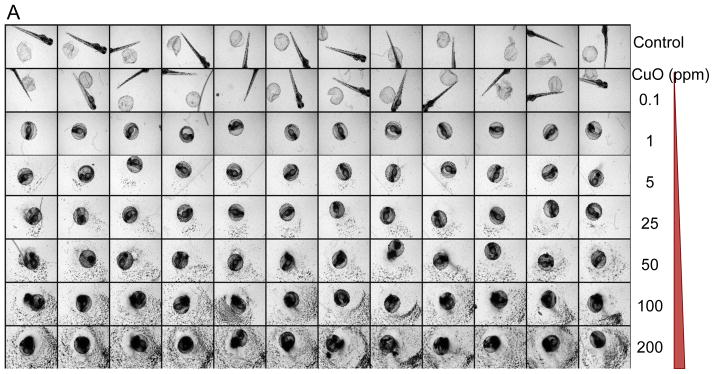
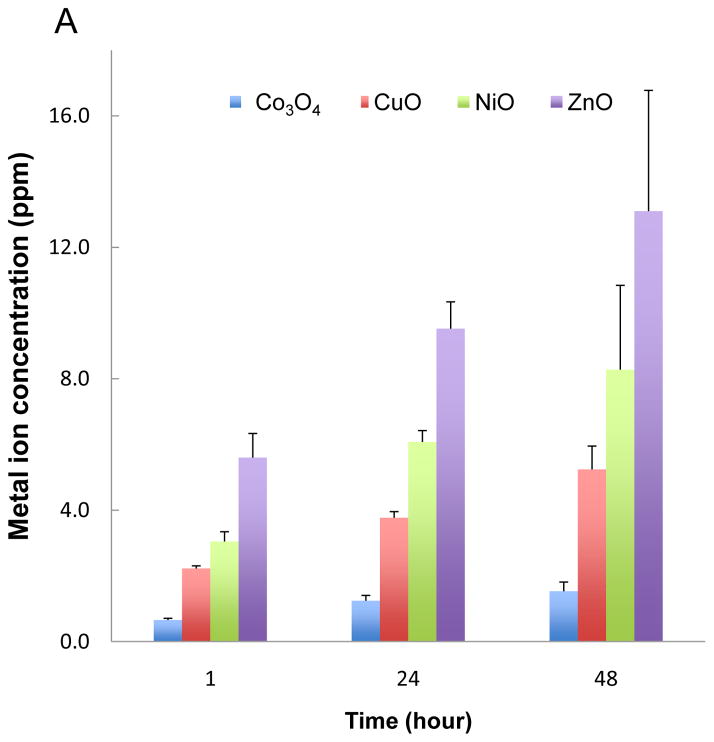
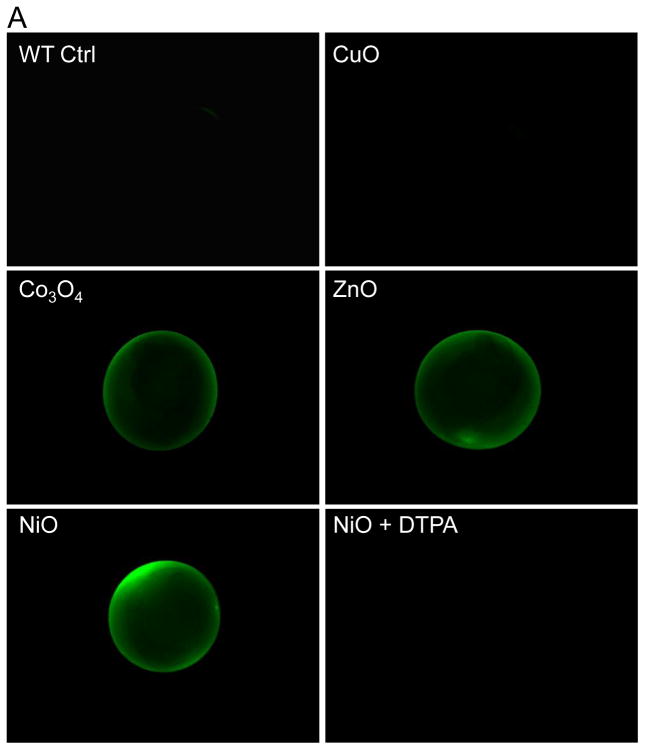
Zebrafish is an aquatic organism that can be used for high content safety screening of engineered nanomaterials (ENMs). We demonstrate, for the first time, the use of high content bright-field and fluorescence-based imaging to compare the toxicological effect of transition metal oxide (CuO, ZnO, NiO, and Co(3)O(4)) nanoparticles in zebrafish embryos and larvae. High content bright-field imaging demonstrated potent and dose-dependent hatching interference in the embryos, with the exception of Co(3)O(4) which was relatively inert. We propose that the hatching interference was due to the shedding of Cu and Ni ions, compromising the activity of the hatching enzyme, ZHE1, similar to what we previously proposed for Zn(2+). This hypothesis is based on the presence of metal-sensitive histidines in the catalytic center of this enzyme. Co-introduction of a metal ion chelator, diethylene triamine pentaacetic acid (DTPA), reversed the hatching interference of Cu, Zn, and Ni. While neither the embryos nor larvae demonstrated morphological abnormalities, high content fluorescence-based imaging demonstrated that CuO, ZnO, and NiO could induce increased expression of the heat shock protein 70:enhanced green fluorescence protein (hsp70:eGFP) in transgenic zebrafish larvae. Induction of this response by CuO required a higher nanoparticle dose than the amount leading to hatching interference. This response was also DTPA-sensitive. We demonstrate that high content imaging of embryo development, morphological abnormalities, and HSP70 expression can be used for hazard ranking and determining the dose-response relationships leading to ENM effects on the development of the zebrafish embryo.
斑马鱼是一种水生生物,可用于工程纳米材料(ENMs)的高通量安全性筛选。我们首次展示了使用高通量明场和荧光成像来比较过渡金属氧化物(CuO、ZnO、NiO 和 Co3O4)纳米颗粒对斑马鱼胚胎和幼虫的毒理学效应。高通量明场成像显示,除了相对惰性的 Co3O4 之外,胚胎中存在强烈的、剂量依赖性的孵化干扰。我们提出,孵化干扰是由于 Cu 和 Ni 离子的脱落,从而削弱了孵化酶 ZHE1 的活性,这类似于我们之前对 Zn2+提出的假设。这一假设基于该酶催化中心存在金属敏感组氨酸。共引入金属离子螯合剂二亚乙基三胺五乙酸(DTPA),可逆转 Cu、Zn 和 Ni 的孵化干扰。虽然胚胎和幼虫均未表现出形态异常,但高通量荧光成像显示,CuO、ZnO 和 NiO 可诱导转基因斑马鱼幼虫中热休克蛋白 70:增强型绿色荧光蛋白(hsp70:eGFP)的表达增加。CuO 诱导这种反应需要比导致孵化干扰的剂量更高的纳米颗粒剂量。这种反应也对 DTPA 敏感。我们证明,胚胎发育、形态异常和 HSP70 表达的高通量成像可用于危害分级,并确定导致 ENM 对斑马鱼胚胎发育影响的剂量-反应关系。