Department of Microbiology, Mount Sinai School of Medicine, New York, New York, United States of America.
PLoS Pathog. 2011 Aug;7(8):e1002186. doi: 10.1371/journal.ppat.1002186. Epub 2011 Aug 11.
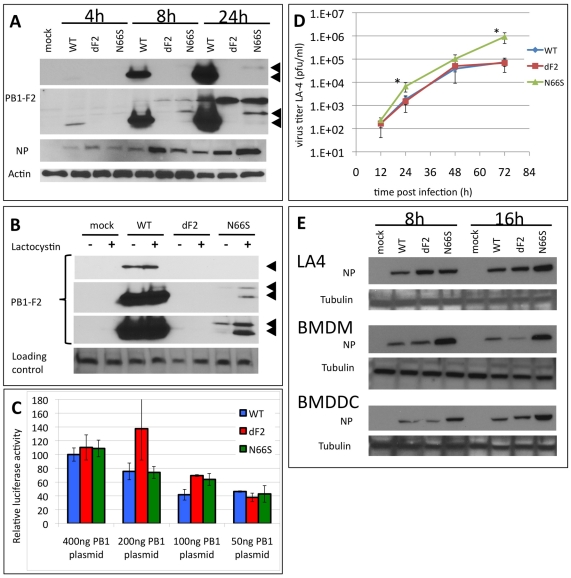
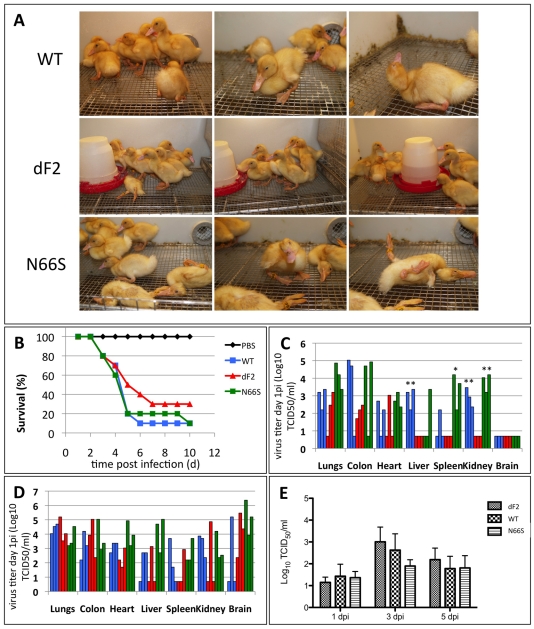
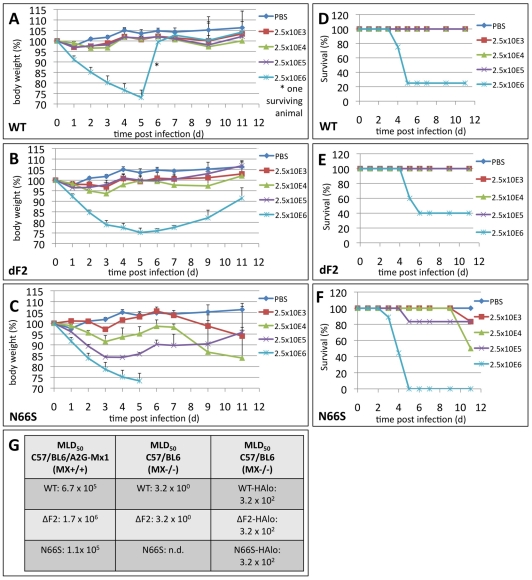
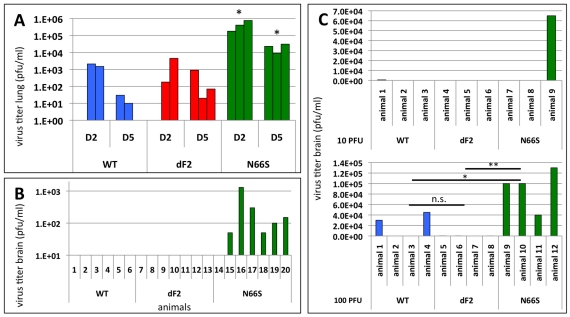
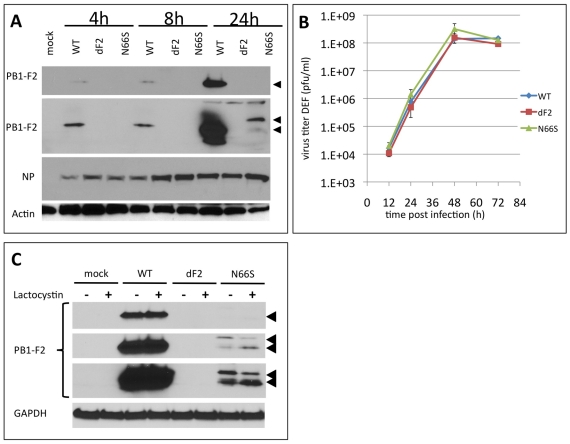
Highly pathogenic avian influenza A viruses (HPAIV) of the H5N1 subtype occasionally transmit from birds to humans and can cause severe systemic infections in both hosts. PB1-F2 is an alternative translation product of the viral PB1 segment that was initially characterized as a pro-apoptotic mitochondrial viral pathogenicity factor. A full-length PB1-F2 has been present in all human influenza pandemic virus isolates of the 20(th) century, but appears to be lost evolutionarily over time as the new virus establishes itself and circulates in the human host. In contrast, the open reading frame (ORF) for PB1-F2 is exceptionally well-conserved in avian influenza virus isolates. Here we perform a comparative study to show for the first time that PB1-F2 is a pathogenicity determinant for HPAIV (A/Viet Nam/1203/2004, VN1203 (H5N1)) in both mammals and birds. In a mammalian host, the rare N66S polymorphism in PB1-F2 that was previously described to be associated with high lethality of the 1918 influenza A virus showed increased replication and virulence of a recombinant VN1203 H5N1 virus, while deletion of the entire PB1-F2 ORF had negligible effects. Interestingly, the N66S substituted virus efficiently invades the CNS and replicates in the brain of Mx+/+ mice. In ducks deletion of PB1-F2 clearly resulted in delayed onset of clinical symptoms and systemic spreading of virus, while variations at position 66 played only a minor role in pathogenesis. These data implicate PB1-F2 as an important pathogenicity factor in ducks independent of sequence variations at position 66. Our data could explain why PB1-F2 is conserved in avian influenza virus isolates and only impacts pathogenicity in mammals when containing certain amino acid motifs such as the rare N66S polymorphism.
高致病性禽流感病毒(HPAIV)的 H5N1 亚型偶尔会从鸟类传播给人类,并可导致这两种宿主的严重全身感染。PB1-F2 是病毒 PB1 片段的一种替代翻译产物,最初被认为是一种促凋亡的线粒体病毒致病性因子。全长的 PB1-F2 存在于 20 世纪所有人类流感大流行病毒分离株中,但随着新病毒的建立和在人类宿主中传播,它似乎随着时间的推移而在进化中丢失。相比之下,PB1-F2 的开放阅读框(ORF)在禽流感病毒分离株中异常保守。在这里,我们进行了一项比较研究,首次表明 PB1-F2 是哺乳动物和鸟类中 HPAIV(A/Viet Nam/1203/2004,VN1203(H5N1))的致病性决定因素。在哺乳动物宿主中,以前描述与 1918 年流感 A 病毒高致死性相关的 PB1-F2 中的罕见 N66S 多态性显示出重组 VN1203 H5N1 病毒的复制和毒力增加,而 PB1-F2 ORF 的缺失几乎没有影响。有趣的是,N66S 取代的病毒能够有效地侵入中枢神经系统并在 Mx+/+ 小鼠的大脑中复制。在鸭子中,PB1-F2 的缺失明显导致临床症状的发作延迟和病毒在全身的传播,而位置 66 的变异仅在发病机制中起次要作用。这些数据表明 PB1-F2 是鸭中重要的致病性因素,独立于位置 66 的序列变异。我们的数据可以解释为什么 PB1-F2 在禽流感病毒分离株中保守,并且仅在包含某些氨基酸基序(如罕见的 N66S 多态性)时才会影响哺乳动物的致病性。