Department of Biological Sciences, Laboratory for Molecular Biology, University of Illinois at Chicago, Chicago, Illinois, United States of America.
PLoS Genet. 2011 Aug;7(8):e1002210. doi: 10.1371/journal.pgen.1002210. Epub 2011 Aug 11.
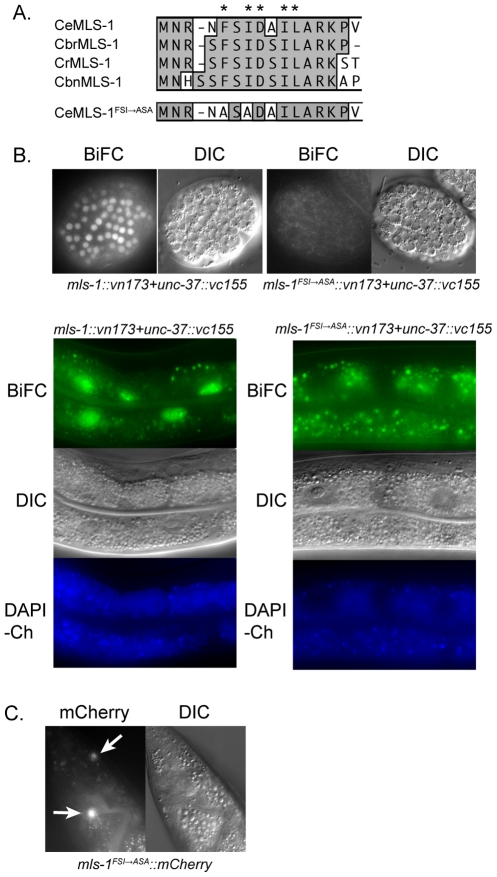
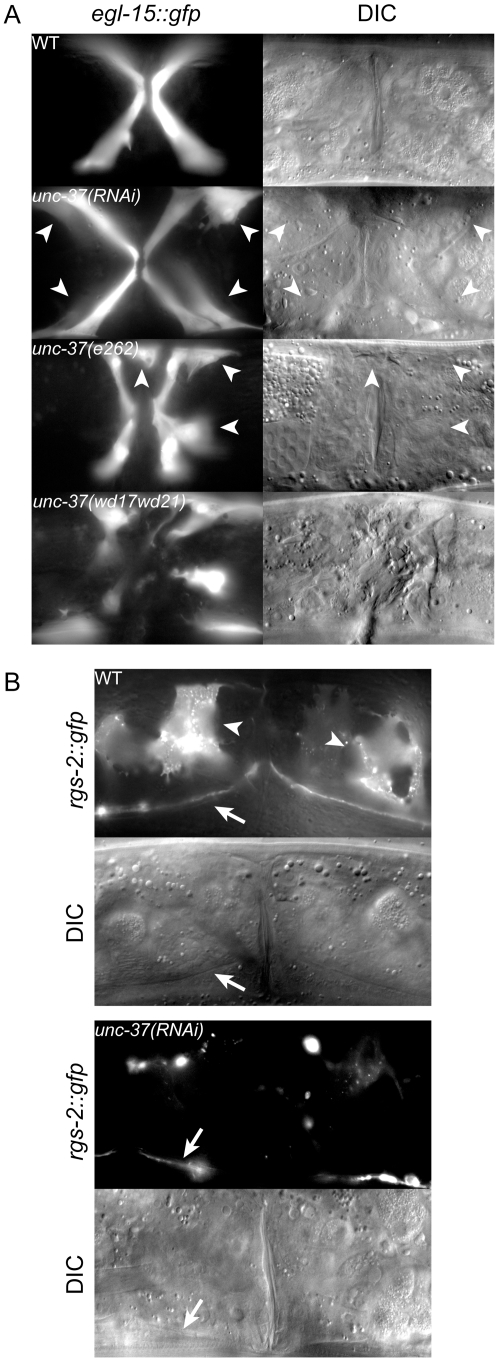
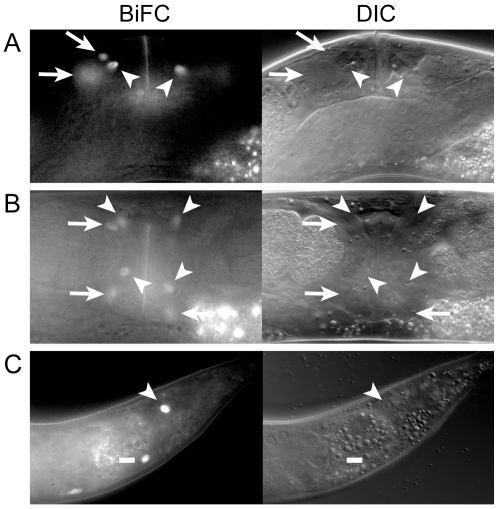
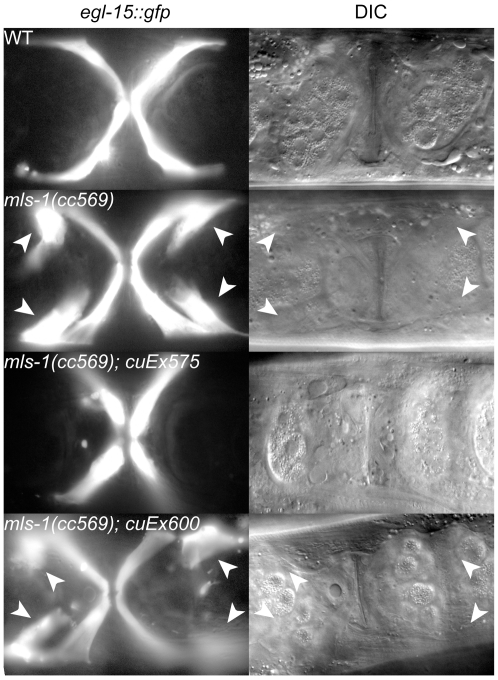
T-box proteins are conserved transcription factors that play crucial roles in development of all metazoans; and, in humans, mutations affecting T-box genes are associated with a variety of congenital diseases and cancers. Despite the importance of this transcription factor family, very little is known regarding how T-box factors regulate gene expression. The Caenorhabditis elegans genome contains 21 T-box genes, and their characterized functions include cell fate specification in a variety of tissues. The C. elegans Tbx1 sub-family member MLS-1 functions during larval development to specify the fate of non-striated uterine muscles; and, in mls-1 mutants, uterine muscles are transformed to a vulval muscle fate. Here we demonstrate that MLS-1 function depends on binding to the Groucho-family co-repressor UNC-37. MLS-1 interacts with UNC-37 via a conserved eh1 motif, and the MLS-1 eh1 motif is necessary for MLS-1 to specify uterine muscle fate. Moreover, unc-37 loss-of-function produces uterine muscle to vulval muscle fate transformation similar to those observed in mls-1 mutants. Based on these results, we conclude that MLS-1 specifies uterine muscle fate by repressing target gene expression, and this function depends on interaction with UNC-37. Moreover, we suggest that MLS-1 shares a common mechanism for transcriptional repression with related T-box factors in other animal phyla.
T 盒蛋白是保守的转录因子,在所有后生动物的发育中发挥着关键作用;而在人类中,影响 T 盒基因的突变与多种先天性疾病和癌症有关。尽管这个转录因子家族非常重要,但对于 T 盒因子如何调节基因表达,我们知之甚少。秀丽隐杆线虫基因组包含 21 个 T 盒基因,其特征功能包括在各种组织中细胞命运的特化。秀丽隐杆线虫 Tbx1 亚家族成员 MLS-1 在幼虫发育过程中发挥作用,特化非横纹子宫肌的命运;而在 mls-1 突变体中,子宫肌被转化为阴道肌命运。在这里,我们证明 MLS-1 的功能取决于与 Groucho 家族共抑制因子 UNC-37 的结合。MLS-1 通过保守的 eh1 基序与 UNC-37 相互作用,并且 MLS-1 eh1 基序对于 MLS-1 特化子宫肌命运是必需的。此外,unc-37 功能丧失会导致子宫肌向阴道肌命运的转变,类似于 mls-1 突变体中观察到的情况。基于这些结果,我们得出结论,MLS-1 通过抑制靶基因的表达来特化子宫肌命运,并且这种功能依赖于与 UNC-37 的相互作用。此外,我们认为 MLS-1 与其他动物门中相关 T 盒因子的转录抑制具有共同的机制。