Section of Molecular Hematology and Therapy, Department of Leukemia, The University of Texas MD Anderson Cancer Center, Houston, Texas, United States of America.
PLoS One. 2011;6(8):e23108. doi: 10.1371/journal.pone.0023108. Epub 2011 Aug 11.
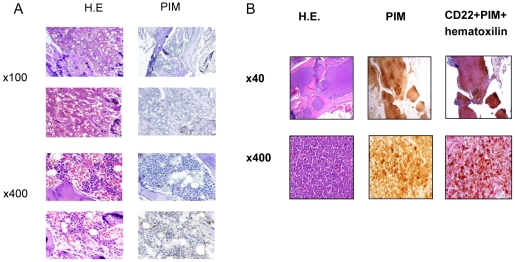
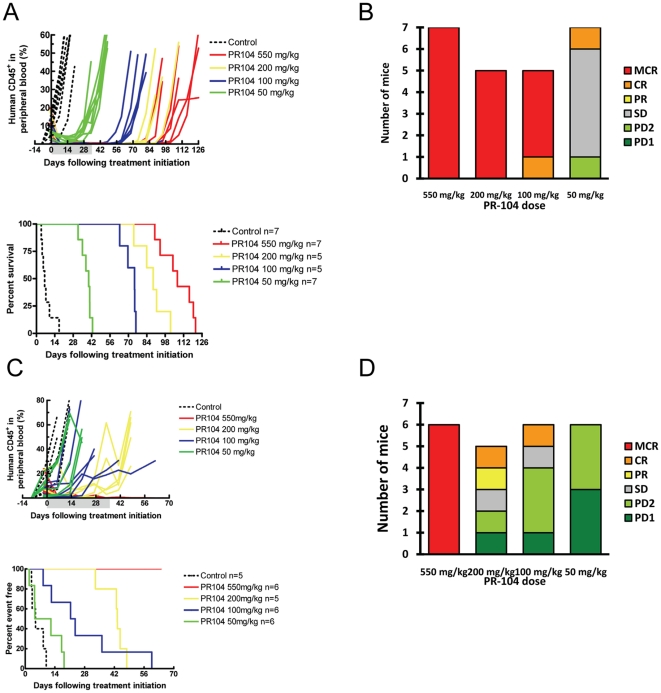
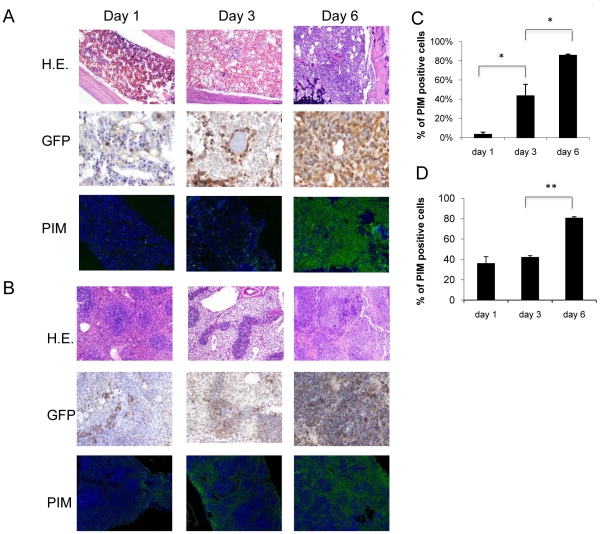
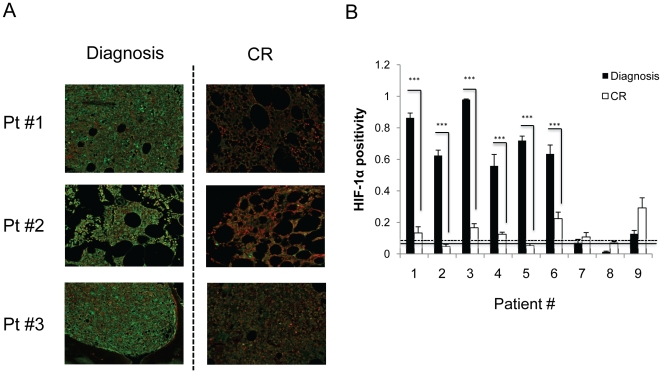
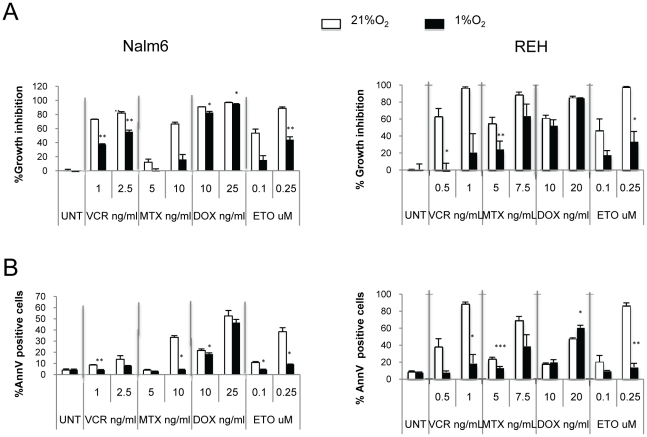
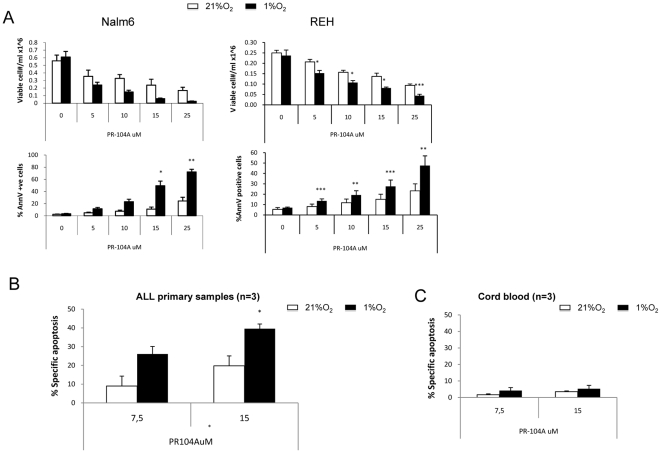
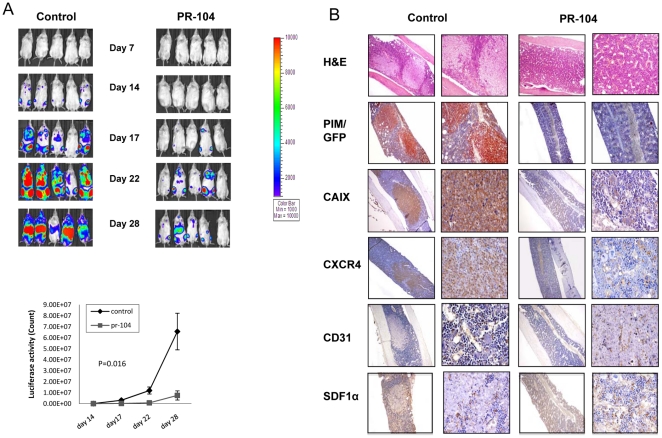
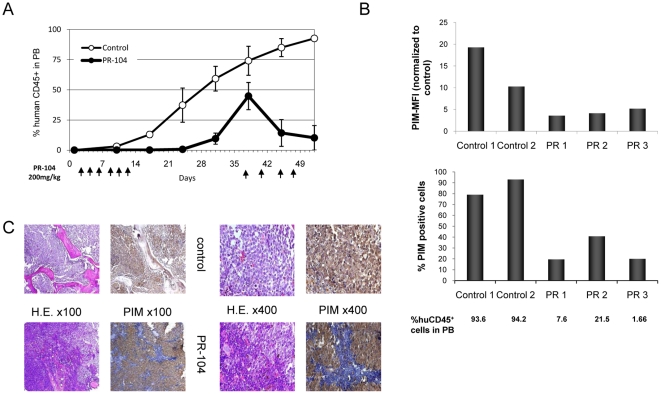
Recent studies indicate that interactions between leukemia cells and the bone marrow (BM) microenvironment promote leukemia cell survival and confer resistance to anti-leukemic drugs. There is evidence that BM microenvironment contains hypoxic areas that confer survival advantage to hematopoietic cells. In the present study we investigated whether hypoxia in leukemic BM contributes to the protective role of the BM microenvironment. We observed a marked expansion of hypoxic BM areas in immunodeficient mice engrafted with acute lymphoblastic leukemia (ALL) cells. Consistent with this finding, we found that hypoxia promotes chemoresistance in various ALL derived cell lines. These findings suggest to employ hypoxia-activated prodrugs to eliminate leukemia cells within hypoxic niches. Using several xenograft models, we demonstrated that administration of the hypoxia-activated dinitrobenzamide mustard, PR-104 prolonged survival and decreased leukemia burden of immune-deficient mice injected with primary acute lymphoblastic leukemia cells. Together, these findings strongly suggest that targeting hypoxia in leukemic BM is feasible and may significantly improve leukemia therapy.
最近的研究表明,白血病细胞与骨髓(BM)微环境之间的相互作用促进了白血病细胞的存活,并赋予了它们对抗白血病药物的耐药性。有证据表明,BM 微环境中存在缺氧区域,为造血细胞提供了生存优势。在本研究中,我们研究了白血病 BM 中的缺氧是否有助于 BM 微环境的保护作用。我们观察到免疫缺陷小鼠植入急性淋巴细胞白血病(ALL)细胞后,缺氧 BM 区域明显扩大。与这一发现一致的是,我们发现缺氧促进了各种 ALL 来源细胞系的化疗耐药性。这些发现表明可以使用缺氧激活前药来消除缺氧龛内的白血病细胞。我们使用几种异种移植模型证明,缺氧激活的二硝基苯甲酰胺芥 PR-104 的给药延长了免疫缺陷小鼠的存活时间,并降低了注射原发性急性淋巴细胞白血病细胞的小鼠的白血病负担。总之,这些发现强烈表明靶向白血病 BM 中的缺氧是可行的,并可能显著改善白血病治疗。