Hughes Anastasia M, Kuek Vincent, Kotecha Rishi S, Cheung Laurence C
Leukaemia Translational Research Laboratory, Telethon Kids Cancer Centre, Telethon Kids Institute, Perth, WA 6009, Australia.
Curtin Medical School, Curtin University, Perth, WA 6102, Australia.
Cancers (Basel). 2022 Apr 22;14(9):2089. doi: 10.3390/cancers14092089.
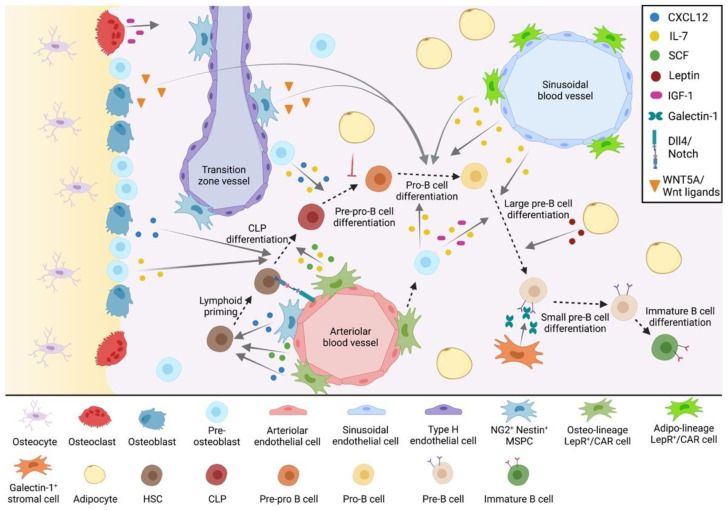
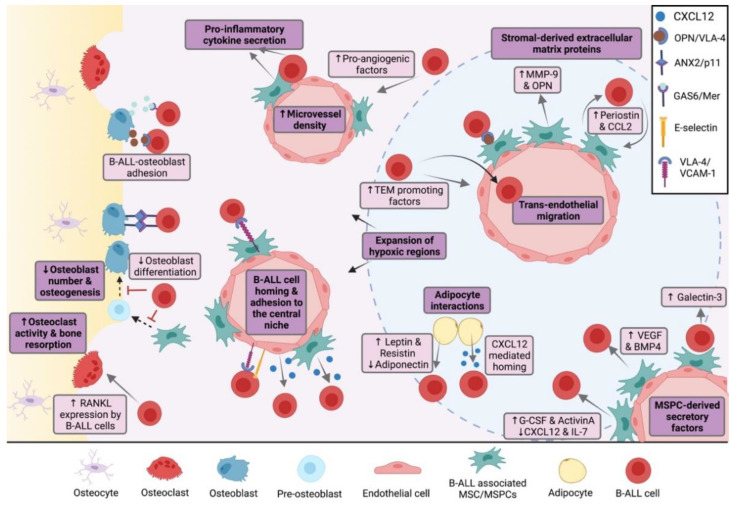
B lymphopoiesis is characterized by progressive loss of multipotent potential in hematopoietic stem cells, followed by commitment to differentiate into B cells, which mediate the humoral response of the adaptive immune system. This process is tightly regulated by spatially distinct bone marrow niches where cells, including mesenchymal stem and progenitor cells, endothelial cells, osteoblasts, osteoclasts, and adipocytes, interact with B-cell progenitors to direct their proliferation and differentiation. Recently, the B-cell niche has been implicated in initiating and facilitating B-cell precursor acute lymphoblastic leukemia. Leukemic cells are also capable of remodeling the B-cell niche to promote their growth and survival and evade treatment. Here, we discuss the major cellular components of bone marrow niches for B lymphopoiesis and the role of the malignant B-cell niche in disease development, treatment resistance and relapse. Further understanding of the crosstalk between leukemic cells and bone marrow niche cells will enable development of additional therapeutic strategies that target the niches in order to hinder leukemia progression.
B淋巴细胞生成的特征是造血干细胞多能潜力的逐渐丧失,随后定向分化为B细胞,B细胞介导适应性免疫系统的体液反应。这一过程受到空间上不同的骨髓生态位的严格调控,在这些生态位中,包括间充质干细胞和祖细胞、内皮细胞、成骨细胞、破骨细胞和脂肪细胞在内的细胞与B细胞祖细胞相互作用,指导它们的增殖和分化。最近,B细胞生态位被认为与启动和促进B细胞前体急性淋巴细胞白血病有关。白血病细胞也能够重塑B细胞生态位,以促进其生长和存活并逃避治疗。在这里,我们讨论了B淋巴细胞生成的骨髓生态位的主要细胞成分,以及恶性B细胞生态位在疾病发展、治疗耐药性和复发中的作用。进一步了解白血病细胞与骨髓生态位细胞之间的相互作用,将有助于开发针对生态位的额外治疗策略,以阻碍白血病进展。