Department of Global Health Systems and Development, School of Public Health and Tropical Medicine, Tulane University, New Orleans, USA.
Int J Equity Health. 2011 Aug 19;10:33. doi: 10.1186/1475-9276-10-33.
One strategic approach available to policy makers to improve the availability of reproductive and child health care supplies and services as well as the sustainability of programs is to expand the role of the private sector in providing these services. However, critics of this approach argue that increased reliance on the private sector will not serve the needs of the poor, and could lead to increases in socio-economic disparities in the use of health care services. The purpose of this study is to investigate whether the expansion of the role of private providers in the provision of modern contraceptive supplies is associated with increased horizontal inequity in modern contraceptive use.
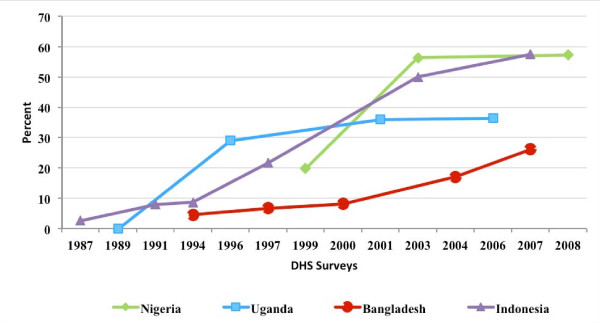
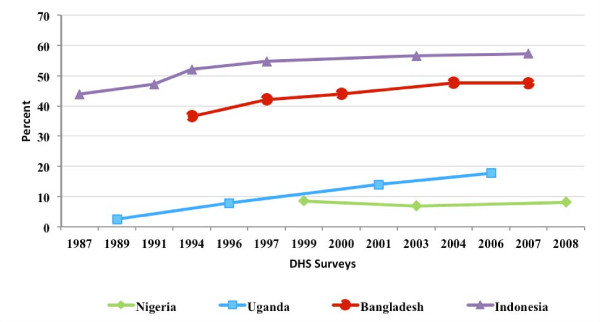
The study is based on multiple rounds of Demographic and Health Survey data from four selected countries (Nigeria, Uganda, Bangladesh, and Indonesia) in which there was an increase in the private sector supply of contraceptives. The methodology involves estimating concentration indices to assess the degree of inequality and inequity in contraceptive use by wealth groups across time. In order to measure inequity in the use of modern contraceptives, the study uses multivariate methods to control for differences in the need for family planning services in relation to household wealth.
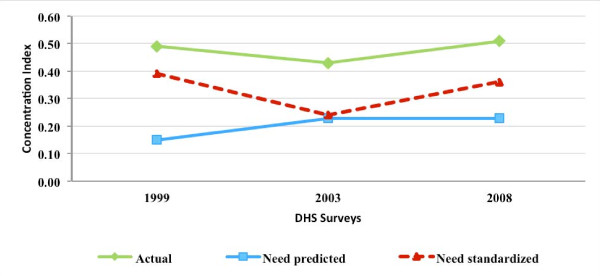
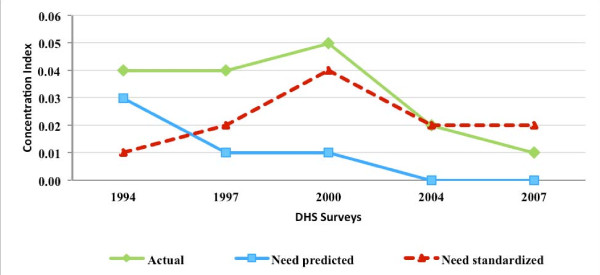
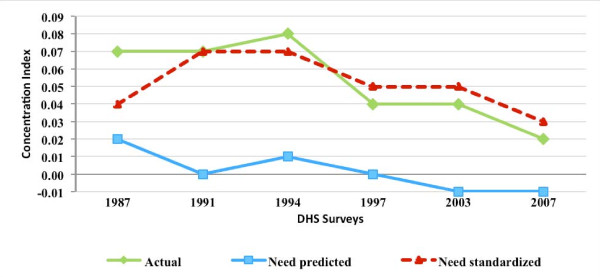
The results suggest that the expansion of the private commercial sector supply of contraceptives in the four study countries did not lead to increased inequity in the use of modern contraceptives. In Nigeria and Uganda, inequity actually decreased over time; while in Bangladesh and Indonesia, inequity fluctuated.
The study results do not offer support to the hypothesis that the increased role of the private commercial sector in the supply of contraceptive supplies led to increased inequity in modern contraceptive use.
政策制定者可以采取一种战略方法,扩大私营部门在提供这些服务中的作用,以提高生殖健康和儿童保健用品和服务的可及性以及项目的可持续性。然而,这种方法的批评者认为,增加对私营部门的依赖将无法满足穷人的需求,并可能导致医疗保健服务使用方面的社会经济差距扩大。本研究的目的是调查私营提供者在提供现代避孕药具供应方面作用的扩大是否与现代避孕药具使用中的横向不平等增加有关。
该研究基于来自四个选定国家(尼日利亚、乌干达、孟加拉国和印度尼西亚)的多轮人口与健康调查数据,这些国家的避孕药具私营部门供应有所增加。该方法涉及估计集中指数,以评估不同财富群体在不同时间内避孕使用率的不平等程度和不平等程度。为了衡量现代避孕药具使用中的不平等程度,该研究使用多元方法来控制与家庭财富有关的计划生育服务需求的差异。
结果表明,在这四个研究国家,扩大私营商业部门避孕药具供应并没有导致现代避孕药具使用中的不平等程度增加。在尼日利亚和乌干达,不平等程度实际上随着时间的推移而降低;而在孟加拉国和印度尼西亚,不平等程度则波动不定。
研究结果不支持这样的假设,即私营商业部门在避孕药具供应中的作用增加导致了现代避孕药具使用中的不平等程度增加。