Department of Gastroenterology & Hepatology, University of Texas Medical Branch, Galveston, Texas, USA.
Nat Med. 2011 Aug 21;17(9):1136-41. doi: 10.1038/nm.2405.
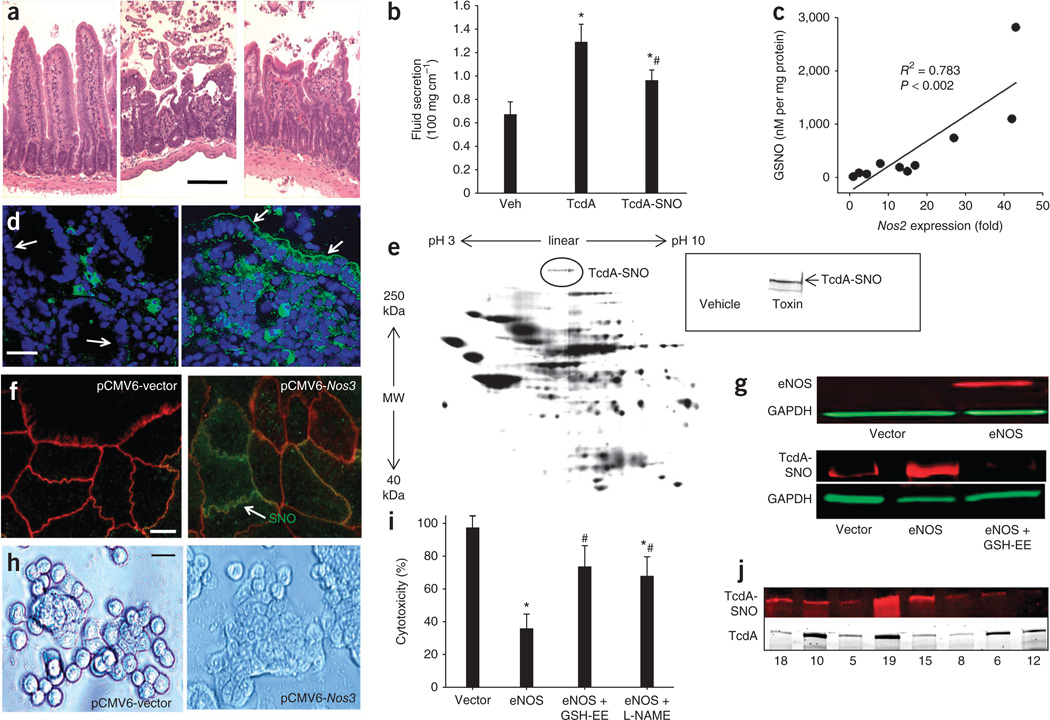
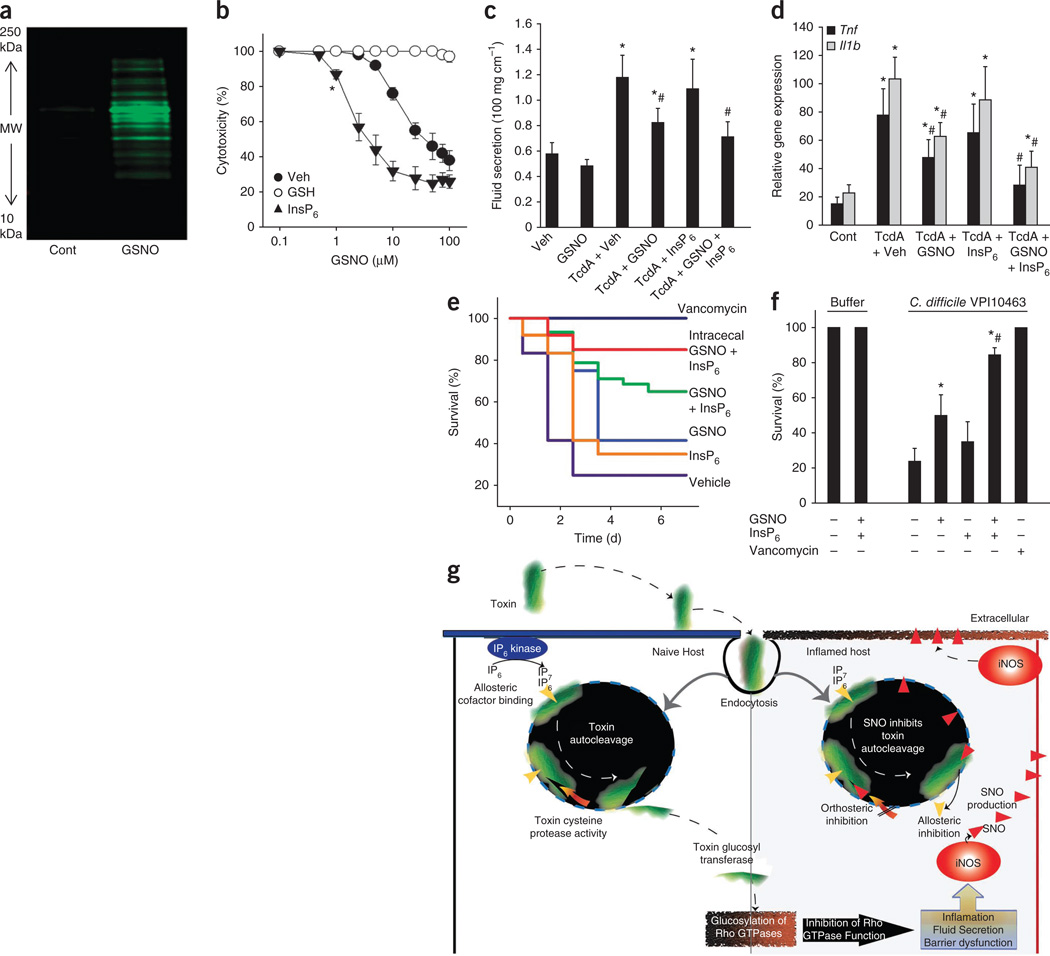
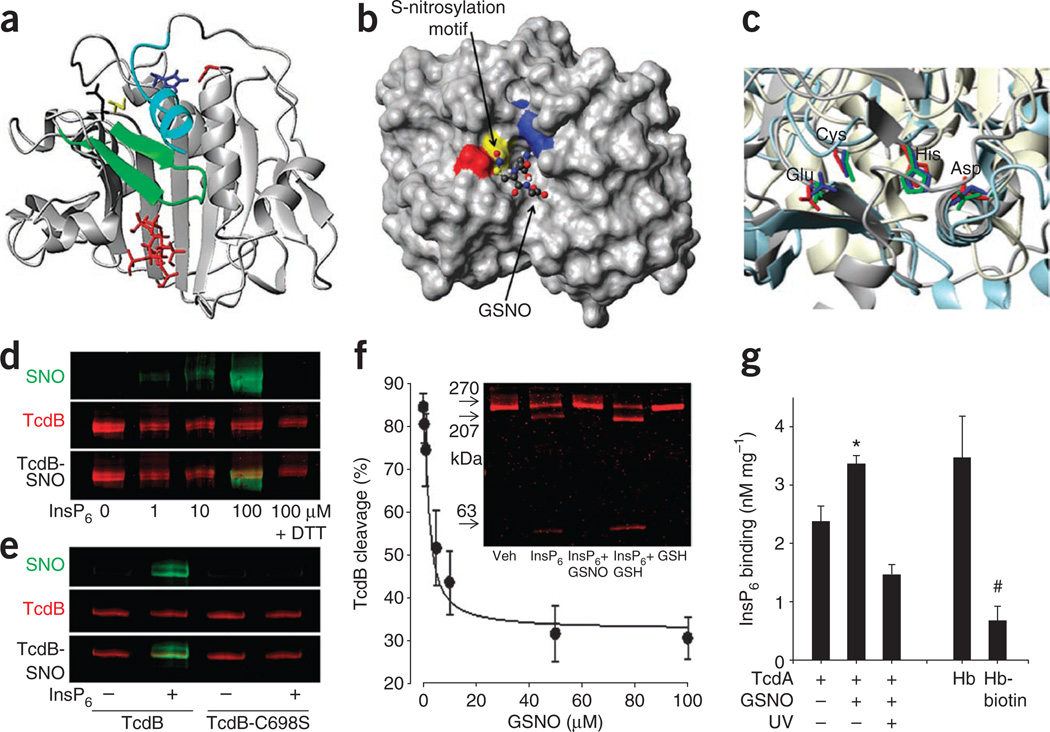
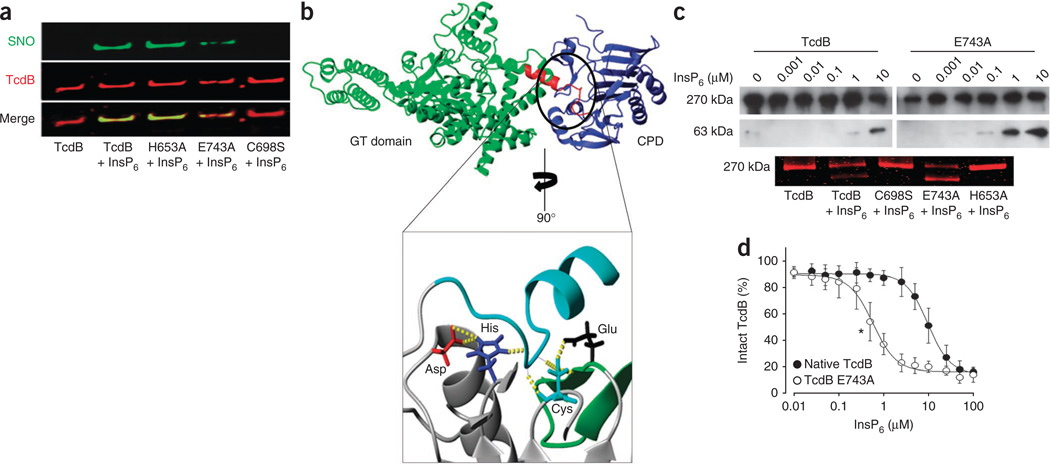
The global prevalence of severe Clostridium difficile infection highlights the profound clinical significance of clostridial glucosylating toxins. Virulence is dependent on the autoactivation of a toxin cysteine protease, which is promoted by the allosteric cofactor inositol hexakisphosphate (InsP(6)). Host mechanisms that protect against such exotoxins are poorly understood. It is increasingly appreciated that the pleiotropic functions attributed to nitric oxide (NO), including host immunity, are in large part mediated by S-nitrosylation of proteins. Here we show that C. difficile toxins are S-nitrosylated by the infected host and that S-nitrosylation attenuates virulence by inhibiting toxin self-cleavage and cell entry. Notably, InsP(6)- and inositol pyrophosphate (InsP(7))-induced conformational changes in the toxin enabled host S-nitrosothiols to transnitrosylate the toxin catalytic cysteine, which forms part of a structurally conserved nitrosylation motif. Moreover, treatment with exogenous InsP(6) enhanced the therapeutic actions of oral S-nitrosothiols in mouse models of C. difficile infection. Allostery in bacterial proteins has thus been successfully exploited in the evolutionary development of nitrosothiol-based innate immunity and may provide an avenue to new therapeutic approaches.
全球范围内艰难梭菌感染的高发率凸显了梭菌糖基化毒素的深远临床意义。其毒力依赖于毒素半胱氨酸蛋白酶的自动激活,而这种激活是由别构辅因子肌醇六磷酸(InsP(6))促进的。宿主对抗此类外毒素的机制还了解甚少。人们越来越认识到一氧化氮(NO)的多种功能,包括宿主免疫,在很大程度上是通过蛋白质的 S-亚硝基化来介导的。在这里,我们表明艰难梭菌毒素被感染宿主 S-亚硝基化,S-亚硝基化通过抑制毒素自我切割和细胞进入来降低毒力。值得注意的是,InsP(6)和焦磷酸肌醇(InsP(7))诱导毒素构象变化,使宿主 S-亚硝基硫醇能够将毒素催化半胱氨酸转亚硝基化,该半胱氨酸构成结构保守的亚硝基化模体的一部分。此外,用外源性 InsP(6)治疗可增强口服 S-亚硝基硫醇在艰难梭菌感染小鼠模型中的治疗作用。因此,细菌蛋白的变构作用在基于氮硫醇的先天免疫的进化发展中得到了成功利用,可能为新的治疗方法提供了途径。