Neuroradiologische Klinik, Neurozentrum, Klinikum Stuttgart, Stuttgart, Germany.
Neuroradiology. 2012 Apr;54(4):369-82. doi: 10.1007/s00234-011-0948-x. Epub 2011 Sep 1.
The purpose of this study was to evaluate the safety and efficacy of the recently available flow diverter "pipeline embolization device" (PED) for the treatment of intracranial aneurysms and dissections.
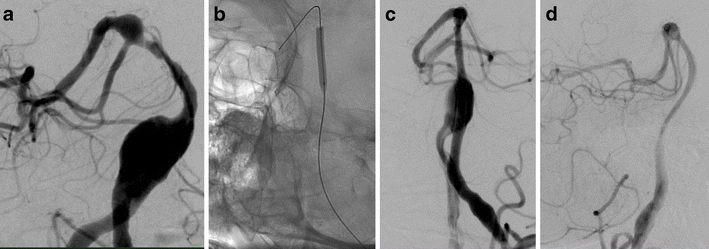
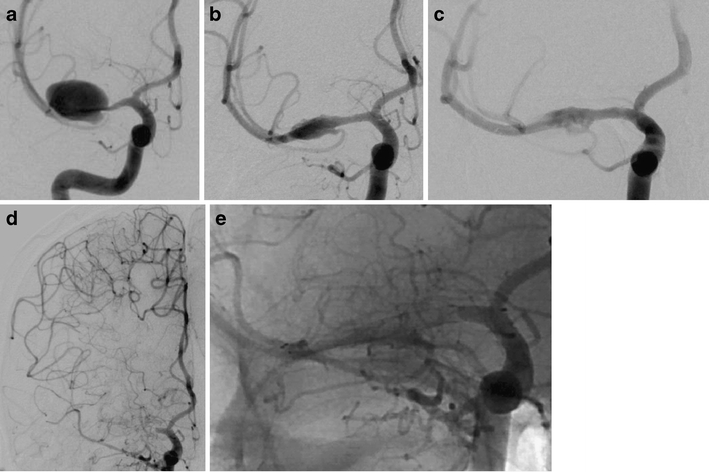
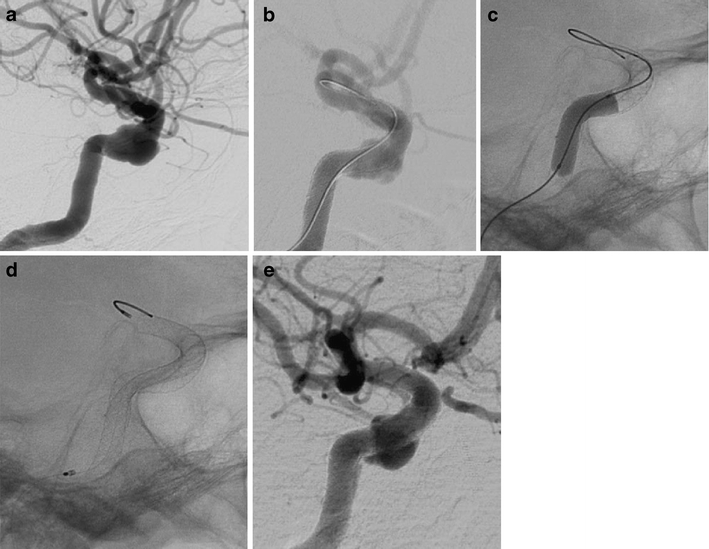
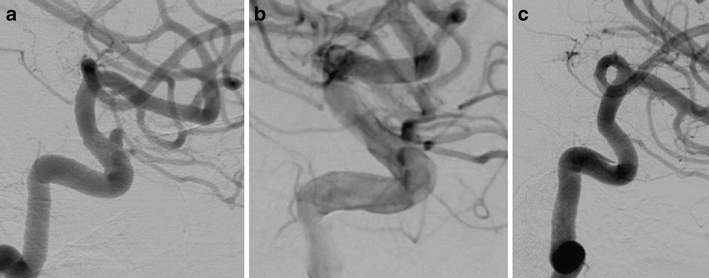
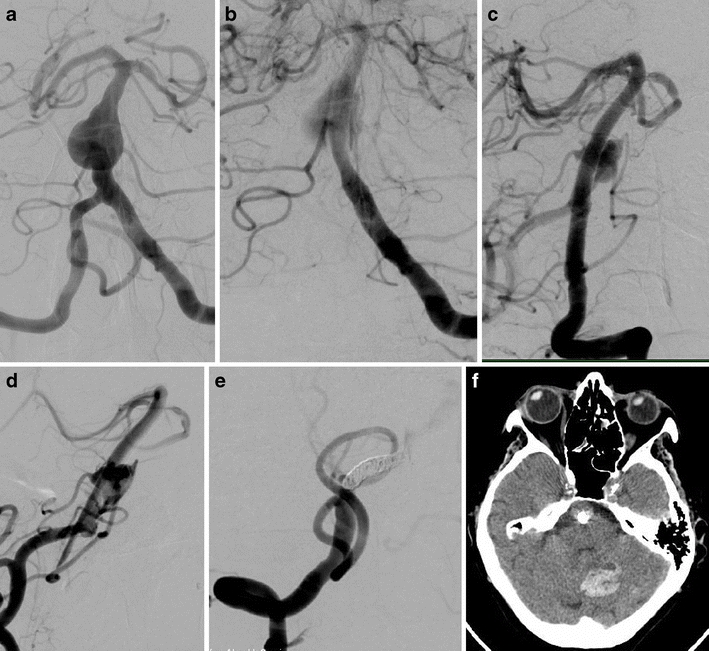
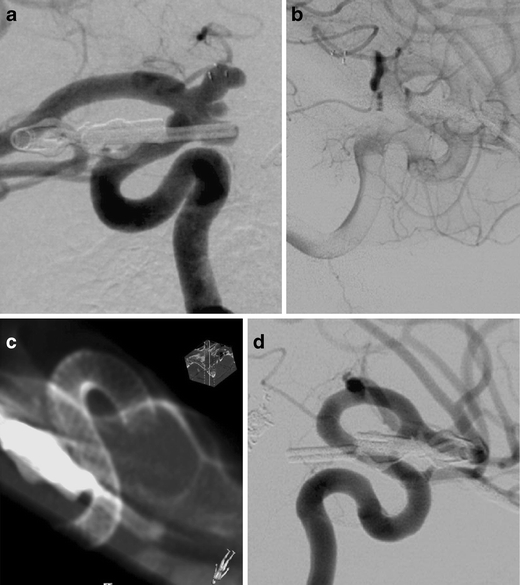
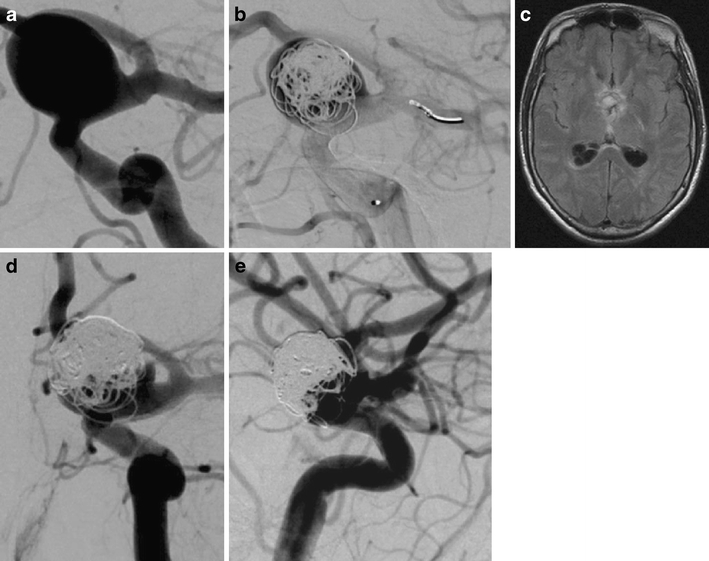
Eighty-eight consecutive patients underwent an endovascular treatment of 101 intracranial aneurysms or dissections using the PED between September 2009 and January 2011. The targeted vessels include 79 (78%) in the anterior circulation and 22 (22%) in the posterior circulation. We treated 96 aneurysms and 5 vessel dissections. Multiple devices were implanted in 67 lesions (66%).
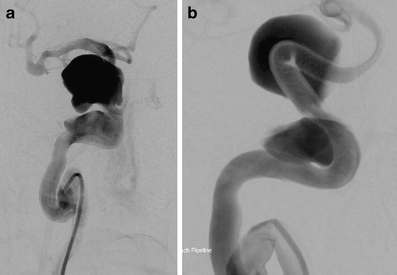
One technical failure of the procedure was encountered. Immediate exclusion of the target lesion was not observed. Angiographic follow-up examinations were carried out in 80 patients (91%) with 90 lesions and revealed complete cure of the target lesion(s) in 47 (52%), morphological improvement in 32 lesions (36%), and no improvement in 11 lesions (12%). Six major complications were encountered: one fatal aneurysm rupture, one acute and one delayed PED thrombosis, and three hemorrhages in the dependent brain parenchyma.
Our experience reveals that the PED procedure is technically straightforward for the treatment of selected wide-necked saccular aneurysms, fusiform aneurysms, remnants of aneurysms, aneurysms with a high likelihood of failure with conventional endovascular techniques, and dissected vessels. While vessel reconstruction, performed after dissection, is achieved within days, remodeling of aneurysmal dilatations may take several months. Dual platelet inhibition is obligatory. Parenchymal bleeding into brain areas dependent on the target vessel is uncommon.
本研究旨在评估最近可获得的血流导向装置“Pipeline 栓塞装置”(PED)治疗颅内动脉瘤和夹层的安全性和疗效。
2009 年 9 月至 2011 年 1 月,88 例患者连续接受了 101 例颅内动脉瘤或夹层的血管内治疗,使用 PED。靶血管包括前循环 79 个(78%)和后循环 22 个(22%)。我们治疗了 96 个动脉瘤和 5 个血管夹层。67 个病变(66%)中植入了多个装置。
手术过程中遇到 1 例技术失败。未观察到目标病变的即刻排除。80 例患者(91%)的 90 个病变进行了血管造影随访检查,结果显示 47 个(52%)目标病变完全治愈,32 个病变形态改善(36%),11 个病变无改善(12%)。共发生 6 例严重并发症:1 例致命性动脉瘤破裂,1 例急性和 1 例迟发性 PED 血栓形成,3 例依赖脑实质出血。
我们的经验表明,PED 术式对于治疗选定的宽颈囊状动脉瘤、梭形动脉瘤、动脉瘤残余、常规血管内技术治疗失败可能性高的动脉瘤以及夹层血管是一种技术上简单直接的方法。尽管血管重建可以在几天内完成,但动脉瘤扩张的重塑可能需要几个月的时间。双重血小板抑制是必需的。依赖于靶血管的脑实质出血并不常见。