American Society of Human Genetics, Bethesda, MD 20814, USA.
CBE Life Sci Educ. 2011 Fall;10(3):318-27. doi: 10.1187/cbe.10-09-0122.
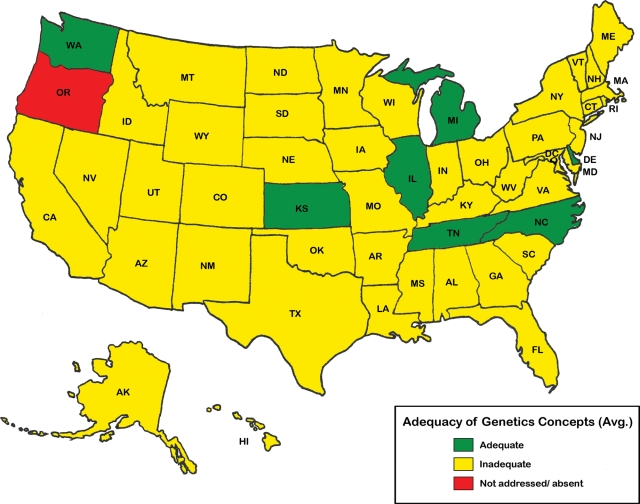
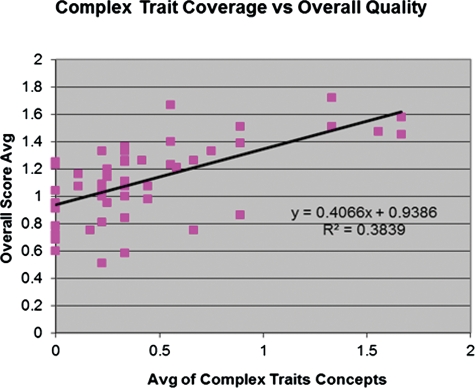
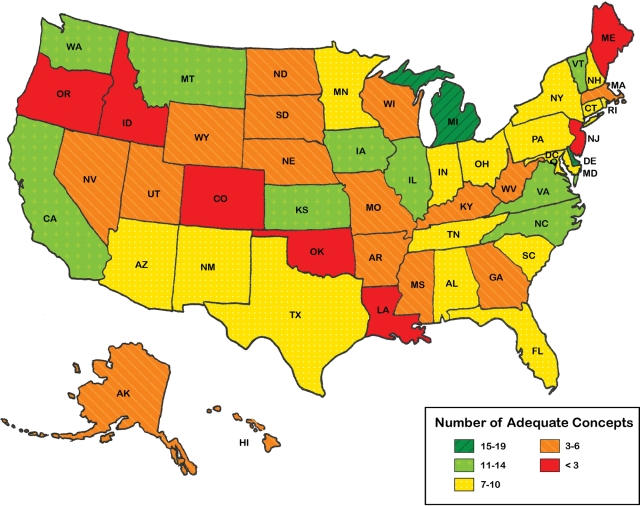
Science education in the United States will increasingly be driven by testing and accountability requirements, such as those mandated by the No Child Left Behind Act, which rely heavily on learning outcomes, or "standards," that are currently developed on a state-by-state basis. Those standards, in turn, drive curriculum and instruction. Given the importance of standards to teaching and learning, we investigated the quality of life sciences/biology standards with respect to genetics for all 50 states and the District of Columbia, using core concepts developed by the American Society of Human Genetics as normative benchmarks. Our results indicate that the states' genetics standards, in general, are poor, with more than 85% of the states receiving overall scores of Inadequate. In particular, the standards in virtually every state have failed to keep pace with changes in the discipline as it has become genomic in scope, omitting concepts related to genetic complexity, the importance of environment to phenotypic variation, differential gene expression, and the differences between inherited and somatic genetic disease. Clearer, more comprehensive genetics standards are likely to benefit genetics instruction and learning, help prepare future genetics researchers, and contribute to the genetic literacy of the U.S. citizenry.
美国的科学教育将越来越受到测试和问责制要求的推动,例如《不让一个孩子掉队法案》所要求的那样,该法案严重依赖学习成果或“标准”,这些标准目前是在州一级制定的。这些标准反过来又推动了课程和教学。鉴于标准对教学和学习的重要性,我们使用美国人类遗传学协会制定的核心概念作为规范基准,调查了所有 50 个州和哥伦比亚特区的生命科学/生物学标准中的遗传学标准。我们的研究结果表明,各州的遗传学标准总体上较差,超过 85%的州获得了不足的总体评分。特别是,几乎每个州的标准都未能跟上该学科的变化步伐,因为它已经具有基因组范围,省略了与遗传复杂性、环境对表型变异、基因表达差异以及遗传和体细胞遗传疾病之间差异相关的概念。更清晰、更全面的遗传学标准可能有利于遗传学教学和学习,帮助培养未来的遗传学研究人员,并提高美国公民的遗传素养。