Stud Mycol. 2011 Jun 30;69(1):81-97. doi: 10.3114/sim.2011.69.06.
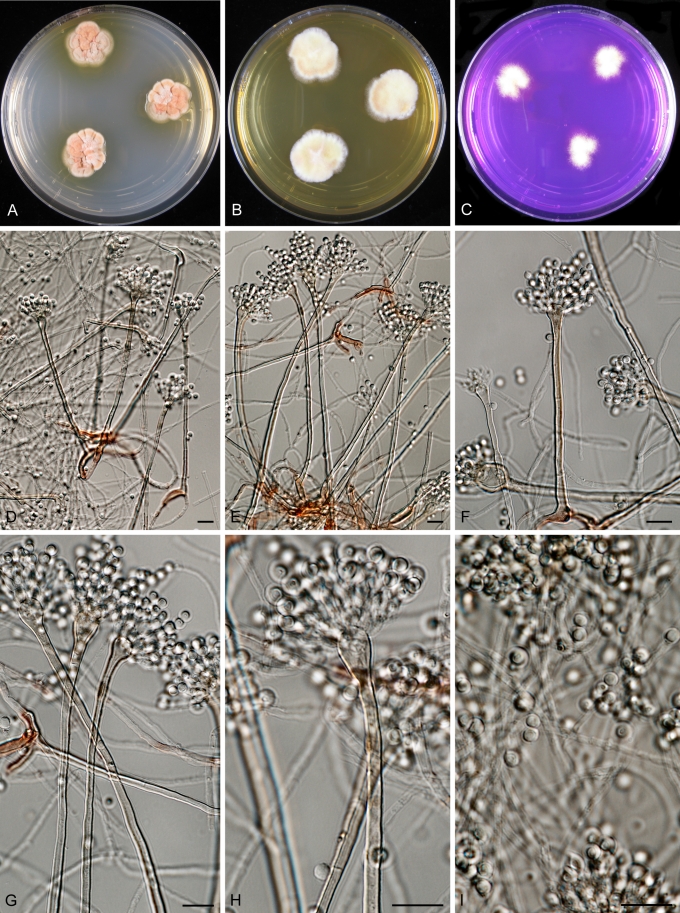
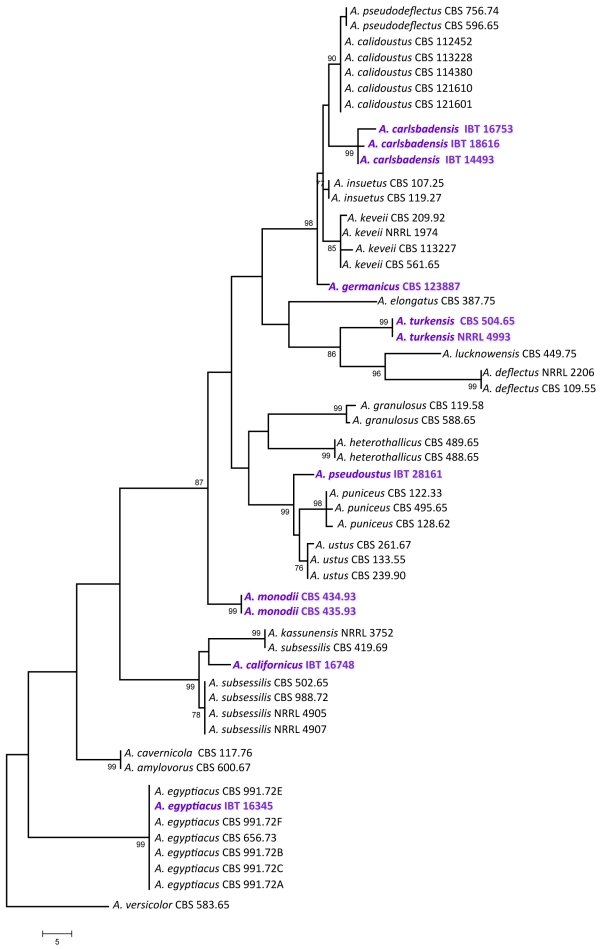
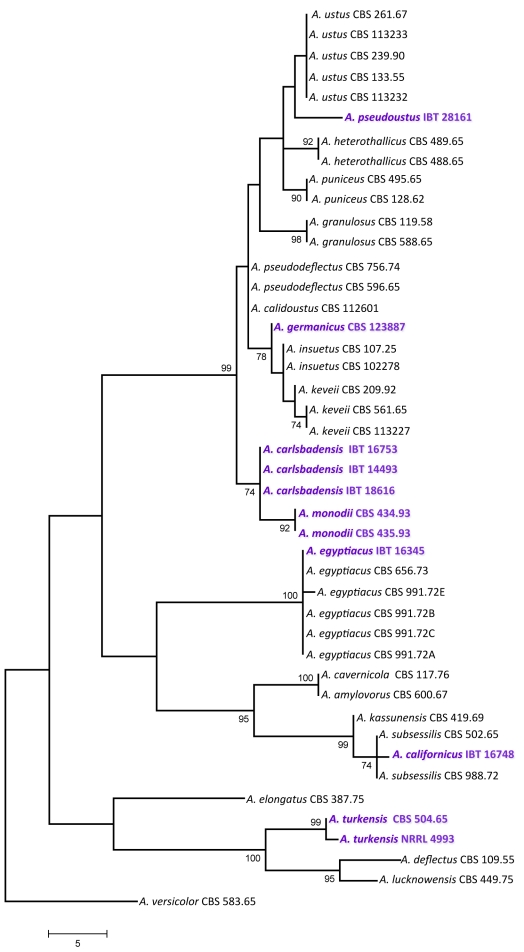
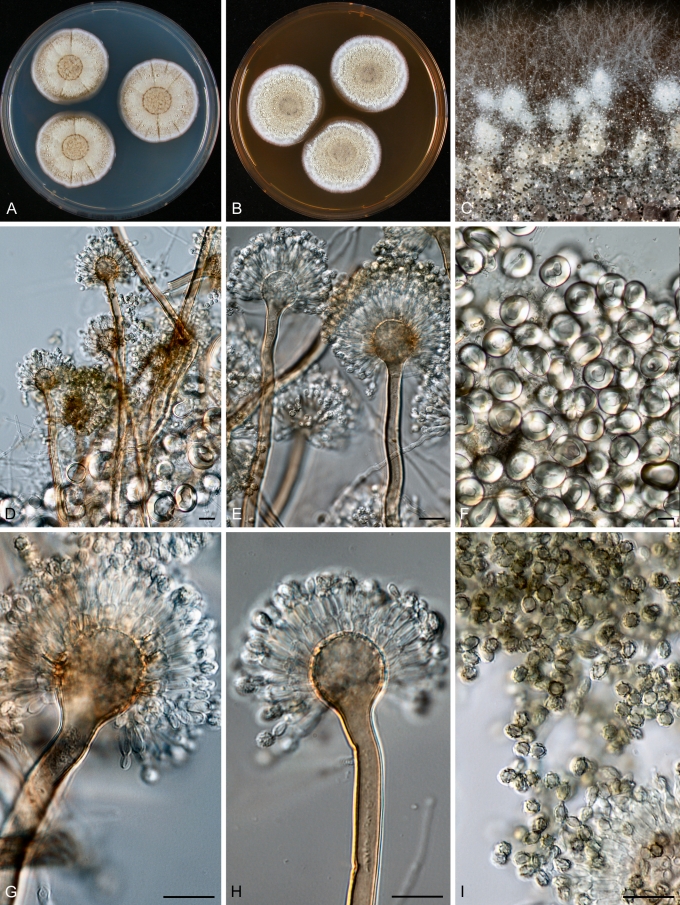
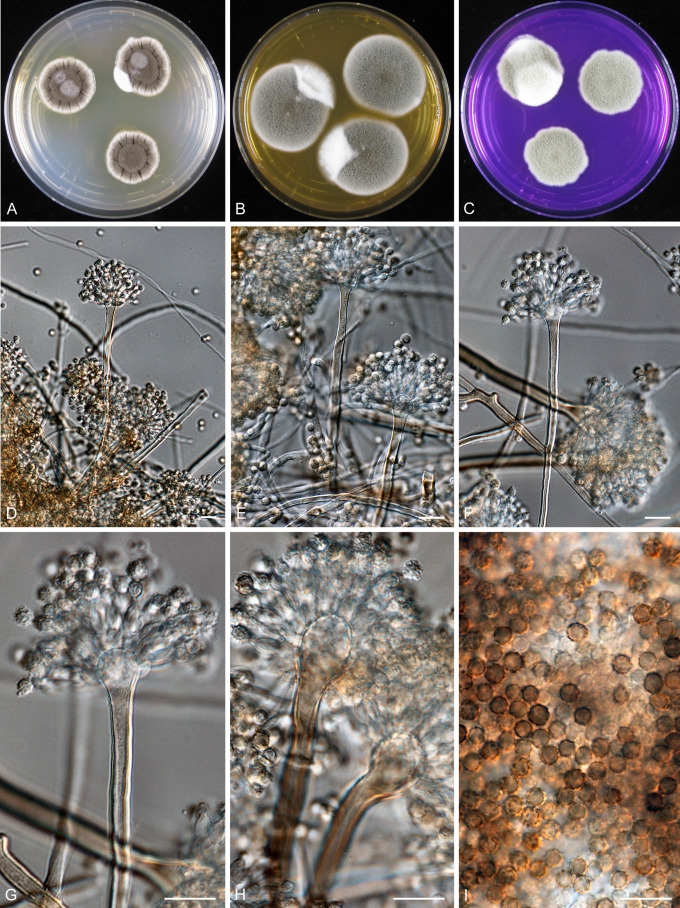
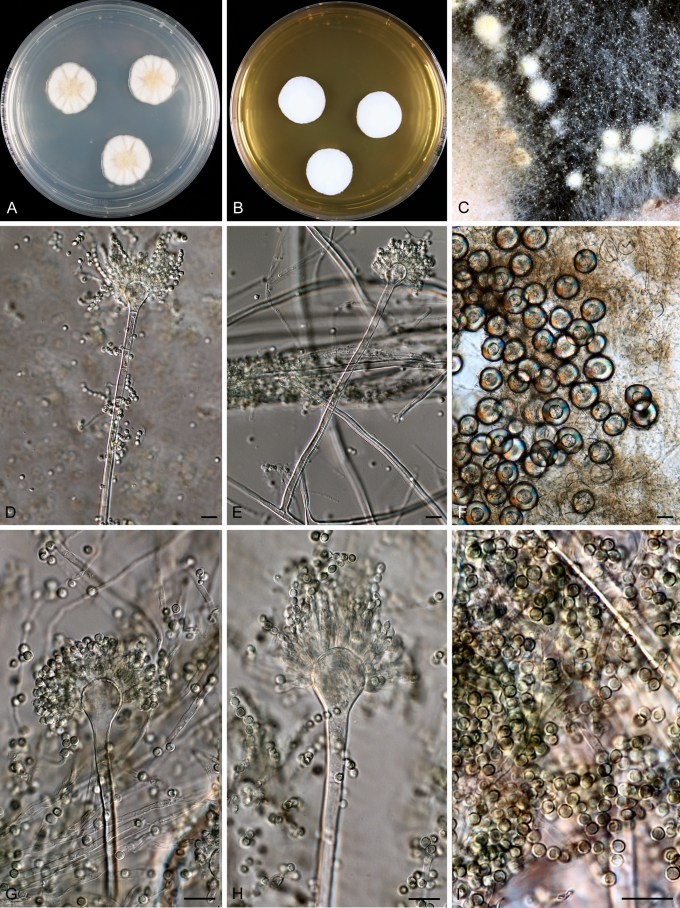
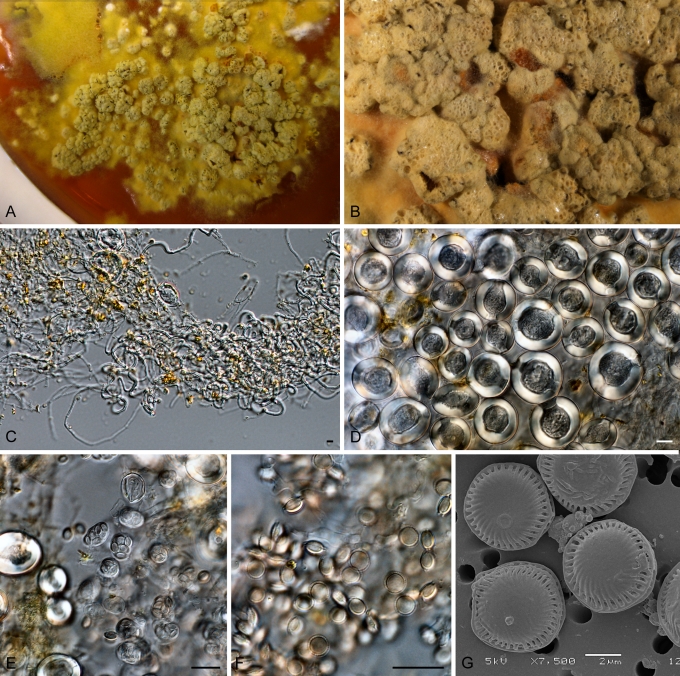
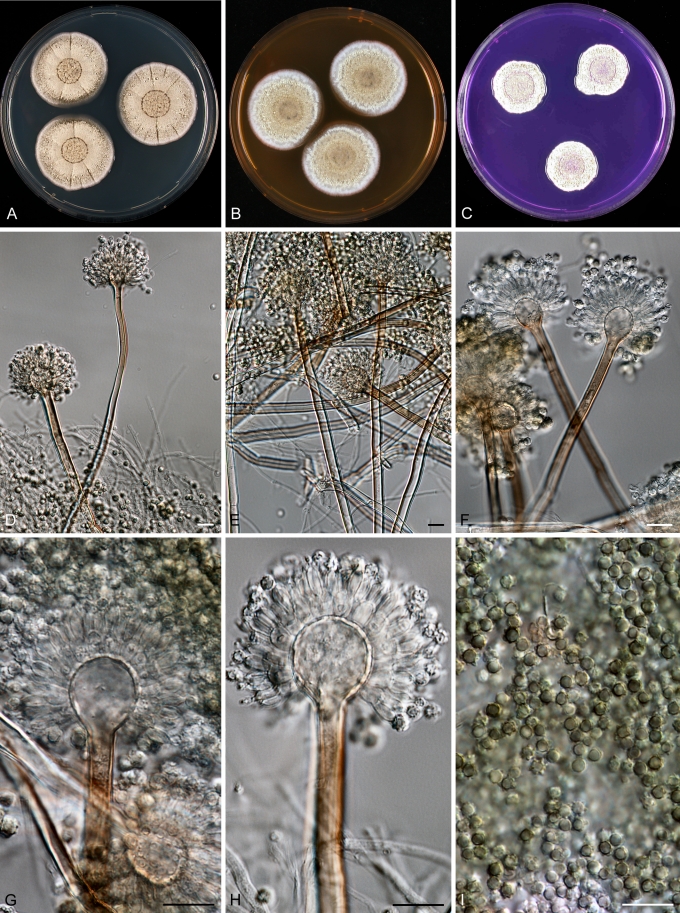
Based on phylogenetic analysis of sequence data, Aspergillus section Usti includes 21 species, inclucing two teleomorphic species Aspergillus heterothallicus (= Emericella heterothallica) and Fennellia monodii. Aspergillus germanicus sp. nov. was isolated from indoor air in Germany. This species has identical ITS sequences with A. insuetusCBS 119.27, but is clearly distinct from that species based on β-tubulin and calmodulin sequence data. This species is unable to grow at 37 °C, similarly to A. keveii and A. insuetus. Aspergillus carlsbadensis sp. nov. was isolated from the Carlsbad Caverns National Park in New Mexico. This taxon is related to, but distinct from a clade including A. calidoustus, A. pseudodeflectus, A. insuetus and A. keveii on all trees. This species is also unable to grow at 37 °C, and acid production was not observed on CREA. Aspergillus californicus sp. nov. is proposed for an isolate from chamise chaparral (Adenostoma fasciculatum) in California. It is related to a clade including A. subsessilis and A. kassunensis on all trees. This species grew well at 37 °C, and acid production was not observed on CREA. The strain CBS 504.65 from soil in Turkey showed to be clearly distinct from the A. deflectus ex-type strain, indicating that this isolate represents a distinct species in this section. We propose the name A. turkensis sp. nov. for this taxon. This species grew, although rather restrictedly at 37 °C, and acid production was not observed on CREA. Isolates from stored maize, South Africa, as a culture contaminant of Bipolaris sorokiniana from indoor air in Finland proved to be related to, but different from A. ustus and A. puniceus. The taxon is proposed as the new species A. pseudoustus. Although supported only by low bootstrap values, F. monodii was found to belong to section Usti based on phylogenetic analysis of either loci BLAST searches to the GenBank database also resulted in closest hits from section Usti. This species obviously does not belong to the Fennellia genus, instead it is a member of the Emericella genus. However, in accordance with the guidelines of the Amsterdam Declaration on fungal nomenclature (Hawksworth et al. 2011), and based on phylogenetic and physiological evidence, we propose the new combination Aspergillus monodii comb. nov. for this taxon. Species assigned to section Usti can be assigned to three chemical groups based on the extrolites. Aspergillus ustus, A. granulosus and A. puniceus produced ustic acid, while A. ustus and A. puniceus also produced austocystins and versicolorins. In the second chemical group, A. pseudodeflectus produced drimans in common with the other species in this group, and also several unique unknown compounds. Aspergillus calidoustus isolates produced drimans and ophiobolins in common with A. insuetus and A. keveii, but also produced austins. Aspergillus insuetus isolates also produced pergillin while A. keveii isolates produced nidulol. In the third chemical group, E. heterothallica has been reported to produce emethallicins, 5'-hydroxyaveranthin, emeheterone, emesterones, 5'-hydroxyaveranthin.
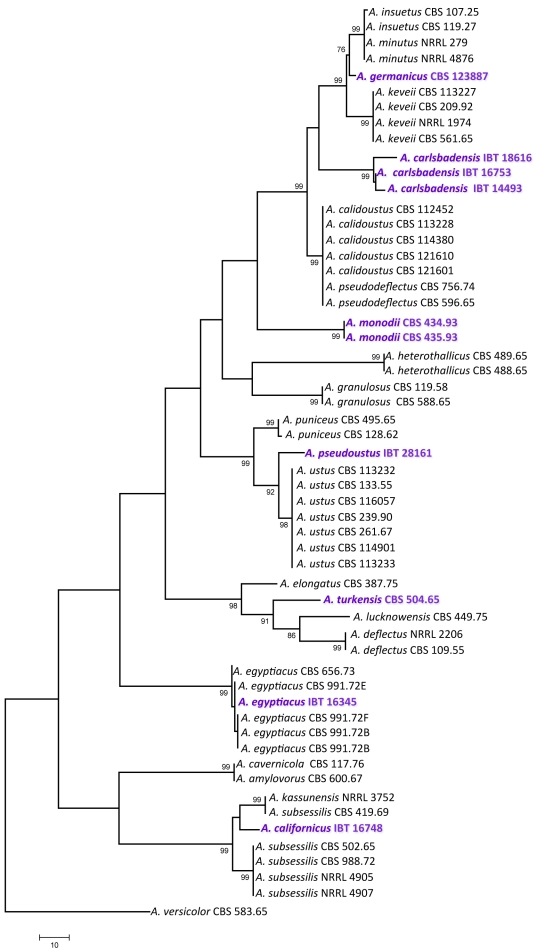
基于序列数据的系统发育分析,曲霉 Usti 组包括 21 个种,包括两个有性态种 Aspergillus heterothallicus(=Emericella heterothallica)和 Fennellia monodii。 Aspergillus germanicus sp. nov. 是从德国室内空气中分离出来的。该种与 A. insuetusCBS 119.27 的 ITS 序列完全相同,但基于 β-微管蛋白和钙调蛋白序列数据,与该种明显不同。该种不能在 37°C 下生长,与 A. keveii 和 A. insuetus 相似。 Aspergillus carlsbadensis sp. nov. 是从新墨西哥州卡尔斯巴德洞穴国家公园分离出来的。该分类群与包括 A. calidoustus、A. pseudodeflectus、A. insuetus 和 A. keveii 的分支有关,但在所有树上都与该分支不同。该种也不能在 37°C 下生长,并且在 CREA 上没有观察到酸的产生。 Aspergillus californicus sp. nov. 是从加利福尼亚州 chamise 灌丛(Adenostoma fasciculatum)中分离出来的一株菌。它与包括 A. subsessilis 和 A. kassunensis 的分支在所有树上都有关。该种在 37°C 下生长良好,并且在 CREA 上没有观察到酸的产生。来自土耳其土壤的 CBS 504.65 株与 A. deflectus 模式株明显不同,表明该分离株代表该组中的一个独特种。我们建议将这个分类群命名为 A. turkensis sp. nov.。该种虽然在 37°C 下生长受限,但在 CREA 上没有观察到酸的产生。来自南非储存玉米的分离株是芬兰室内空气中 Bipolaris sorokiniana 的培养物污染物,被证明与 A. ustus 和 A. puniceus 有关,但不同。该分类群被提议为新种 A. pseudoustus。虽然仅得到低的自举支持值,但基于 ITS 序列的系统发育分析和对 GenBank 数据库的 BLAST 搜索表明,F. monodii 属于 Usti 组。该种显然不属于 Fennellia 属,而是属于 Emericella 属。然而,根据真菌命名法阿姆斯特丹宣言的指导方针(Hawksworth 等人,2011 年),并基于系统发育和生理证据,我们提议将该分类群命名为 Aspergillus monodii comb. nov.。根据外毒素,可将归属于 Usti 组的种分配到三个化学组。 Aspergillus ustus、A. granulosus 和 A. puniceus 产生 ustic 酸,而 A. ustus 和 A. puniceus 也产生 austocystins 和 versicolorins。在第二个化学组中,A. pseudodeflectus 与该组中的其他种共同产生 drimans,还产生几种独特的未知化合物。 Aspergillus calidoustus 分离株与 A. insuetus 和 A. keveii 共同产生 drimans 和 ophiobolins,但也产生 austins。A. insuetus 分离株也产生 pergillin,而 A. keveii 分离株产生 nidulol。在第三个化学组中,E. heterothallica 已被报道产生 emethallicins、5'-hydroxyaveranthin、emeheterone、emesterones 和 5'-hydroxyaveranthin。