Domi Rudin, Sula Hektor
Department of Anesthesiology, Intensive Care, Emergency, and Toxicology, University Hospital Center "Mother Theresa", Tirana, Albania.
Indian J Endocrinol Metab. 2011 Jul;15(3):209-13. doi: 10.4103/2230-8210.83408.
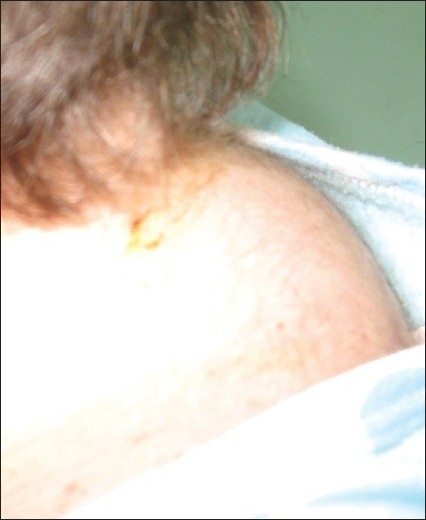
Cushing's syndrome (CS) is associated with reduced life quality and increased mortality, mostly due to cardiovascular disease. The features of this syndrome are central obesity, moon facies, facial plethora, supraclavicular fat pads, buffalo hump, and purple striae. Other complications include hyperglycemia, hypertension, proximal muscle weakness, skin thinning, menstrual irregularities, amenorrhea and osteopenia. These make perioperative and anesthetic management difficult and present a challenge to the operating team, especially the anaesthesiologist. In this paper, we present two such cases of CS, which were treated with adrenalectomy. We aim to highlight the special care and precautions that need to be taken while administering anesthesia, and in the post operatory period. Anaesthesia induction in the two cases of CS was done prior to the adrenalectomy procedure and special pre and post operative care was taken. Continuous intra operative monitoring of vitals and checking for the stability of the haemodynamics was performed. With adequate care and using advanced anesthetic techniques, the patients showed uneventful post operative recovery. Though the anesthetic management of patients with CS is difficult, desired results can be achieved with continuous monitoring and special precautions.
库欣综合征(CS)与生活质量下降和死亡率增加相关,主要原因是心血管疾病。该综合征的特征包括向心性肥胖、满月脸、面部潮红、锁骨上脂肪垫、水牛背和紫纹。其他并发症包括高血糖、高血压、近端肌无力、皮肤变薄、月经不规律、闭经和骨质减少。这些使得围手术期和麻醉管理变得困难,给手术团队,尤其是麻醉医生带来了挑战。在本文中,我们展示了两例接受肾上腺切除术治疗的库欣综合征病例。我们旨在强调在实施麻醉以及术后阶段需要采取的特殊护理和预防措施。这两例库欣综合征患者在肾上腺切除术前进行了麻醉诱导,并采取了特殊的术前和术后护理。术中持续监测生命体征并检查血流动力学稳定性。通过充分的护理和采用先进的麻醉技术,患者术后恢复顺利。尽管库欣综合征患者的麻醉管理困难,但通过持续监测和特殊预防措施可以取得理想的效果。