Lane Kirk L, Talati Megha, Austin Eric, Hemnes Anna R, Johnson Jennifer A, Fessel Joshua P, Blackwell Tom, Mernaugh Ray L, Robinson Linda, Fike Candice, Roberts L Jackson, West James
Department of Medicine, Vanderbilt University Medical Center, Nashville, Tennessee.
Pulm Circ. 2011;1(1):72-83. doi: 10.4103/2045-8932.78107.
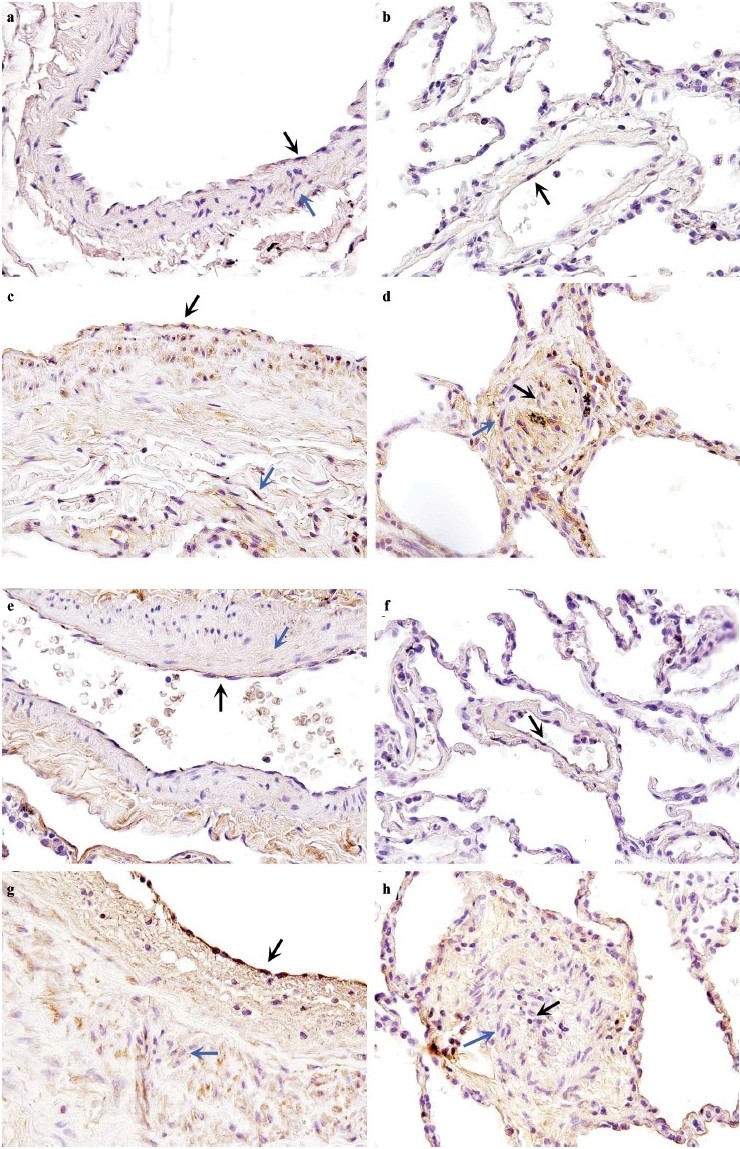
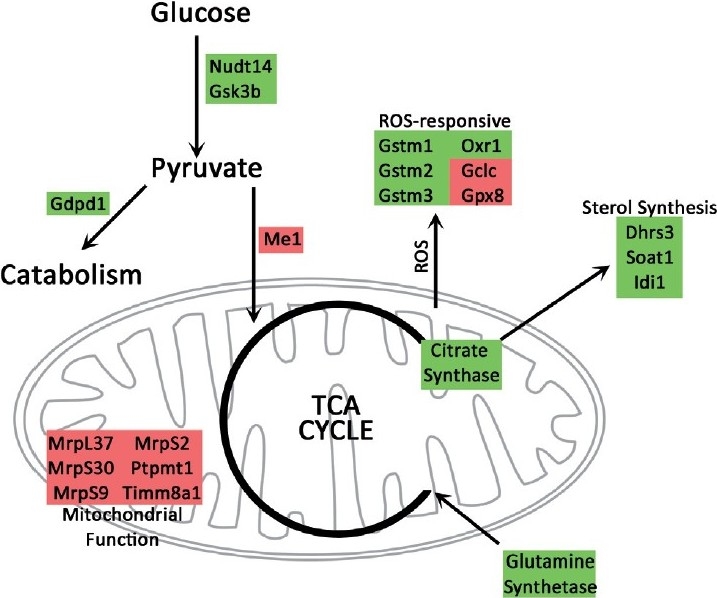
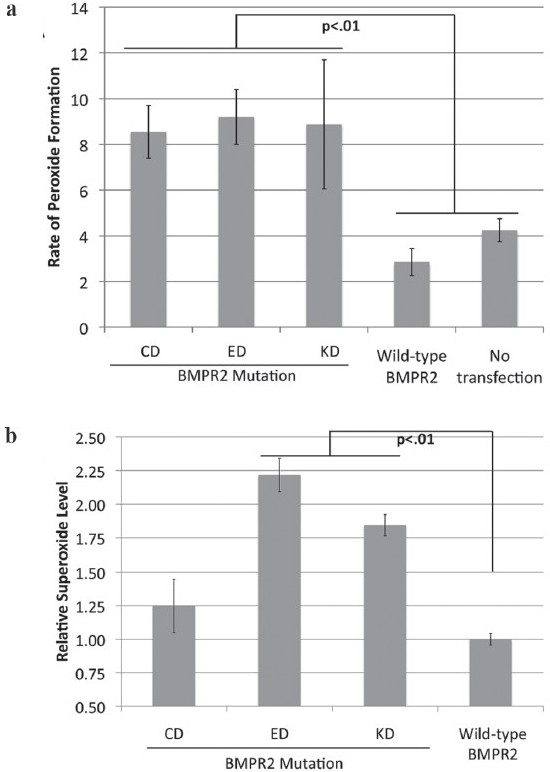
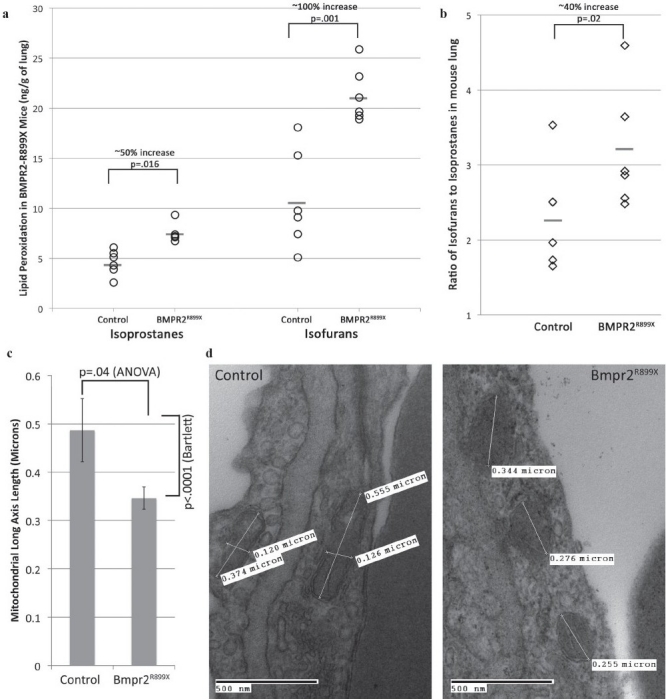
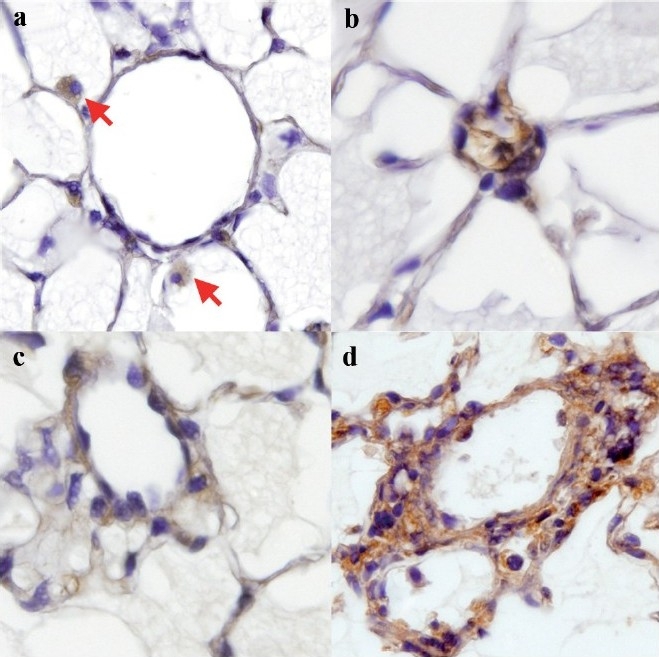
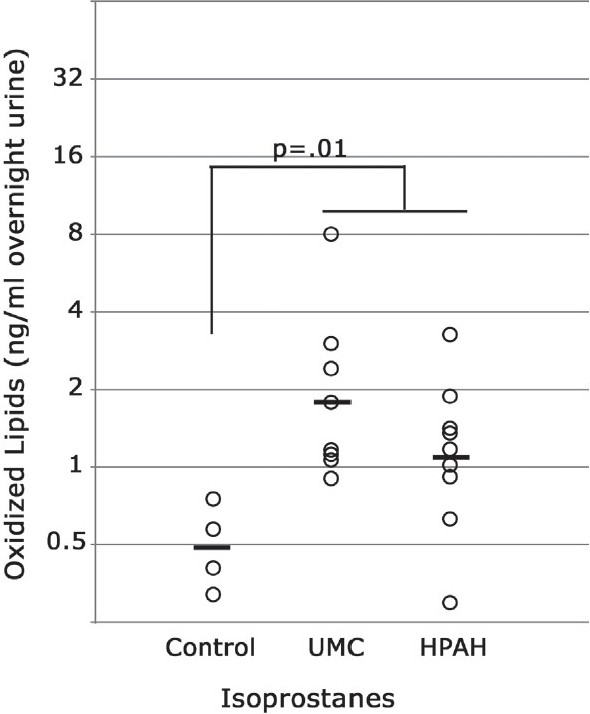
Hereditary pulmonary arterial hypertension(PAH) is usually caused by mutations in BMPR2. Mutations are found throughout the gene, and common molecular consequences of different types of mutation are not known. Knowledge of common molecular consequences would provide insight into molecular etiology of disease. The objective of this study was to determine common molecular consequences across classes of BMPR2 mutation. METHODS #ENTITYSTARTX00026; RESULTS: Increased superoxide and peroxide production, and alterations in genes associated with oxidative stress were a common consequence of stable transfection of vascular smooth muscle cells with three distinct classes of BMPR2 mutation, in the ligand binding domain, the kinase domain, and the cytoplasmic tail domain. Measurement of oxidized lipids in whole lung from transgenic mice expressing a mutation in the BMPR2 cytoplasmic tail showed a 50% increase in isoprostanes and a twofold increase in isofurans, suggesting increased ROS of mitochondrial origin. Immunohistochemistry on BMPR2 transgenic mouse lung showed that oxidative stress was vascular-specific. Electron microscopy showed decreased mitochondrial size and variability in pulmonary vessels from BMPR2 mutant mice. Measurement of oxidized lipids in urine from humans with BMPR2 mutations demonstrated increased ROS, regardless of disease status. Immunohistochemistry on HPAH patient lung confirmed oxidative stress specific to the vasculature. CONCLUSIONS: Increased oxidative stress, likely of mitochondrial origin, is a common consequence of BMPR2 mutation across mutation types in cell culture, mice, and humans.
遗传性肺动脉高压(PAH)通常由BMPR2基因突变引起。该基因各处均发现有突变,不同类型突变的常见分子后果尚不清楚。了解常见分子后果将有助于深入了解疾病的分子病因。本研究的目的是确定不同类别的BMPR2突变的常见分子后果。方法#ENTITYSTARTX00026;结果:用三种不同类别的BMPR2突变(配体结合域、激酶域和细胞质尾域)稳定转染血管平滑肌细胞后,超氧化物和过氧化物生成增加以及与氧化应激相关的基因改变是常见后果。对表达BMPR2细胞质尾突变的转基因小鼠全肺中氧化脂质的测量显示,异前列腺素增加50%,异呋喃增加两倍,提示线粒体来源的活性氧增加。对BMPR2转基因小鼠肺进行免疫组织化学分析表明,氧化应激具有血管特异性。电子显微镜检查显示,BMPR2突变小鼠肺血管中线粒体大小减小且存在变异性。对携带BMPR2突变的人类尿液中的氧化脂质进行测量表明,无论疾病状态如何,活性氧均增加。对遗传性PAH患者肺进行免疫组织化学分析证实了血管特异性的氧化应激。结论:细胞培养、小鼠和人类中,氧化应激增加(可能源自线粒体)是不同类型BMPR2突变的常见后果。