Department of Laboratory Medicine, National Taiwan University Hospital, National Taiwan University, Taipei 100, Taiwan.
Cell. 2011 Sep 16;146(6):969-79. doi: 10.1016/j.cell.2011.07.044. Epub 2011 Sep 9.
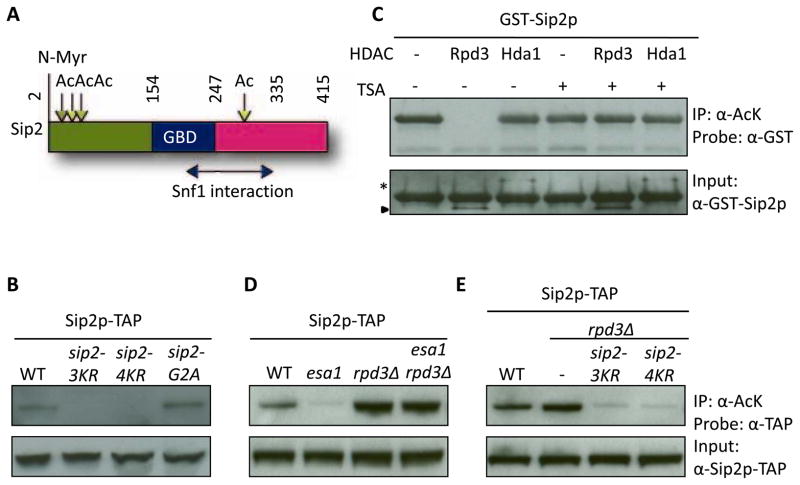
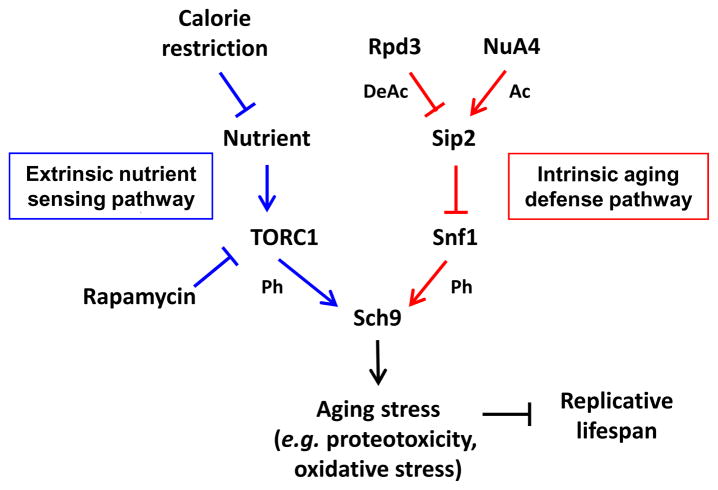
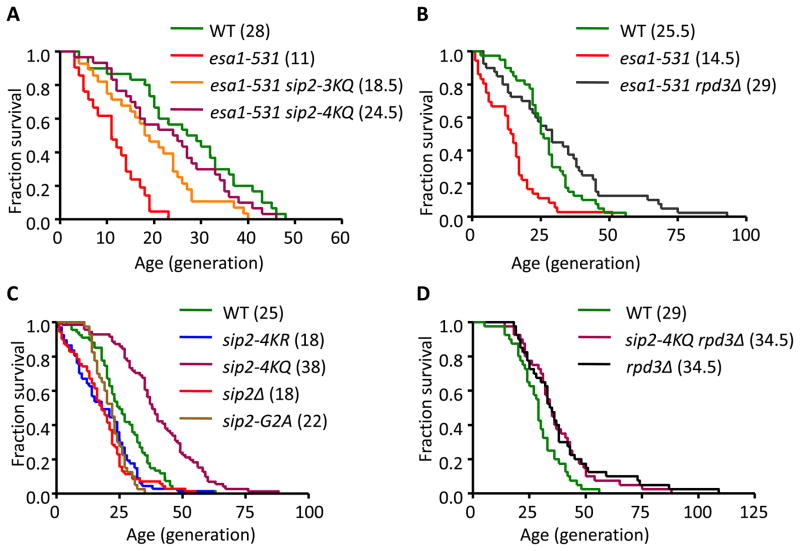
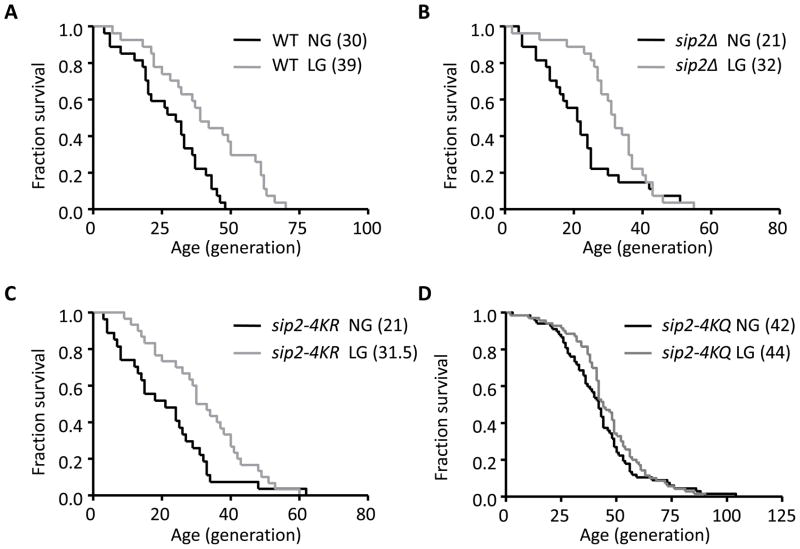
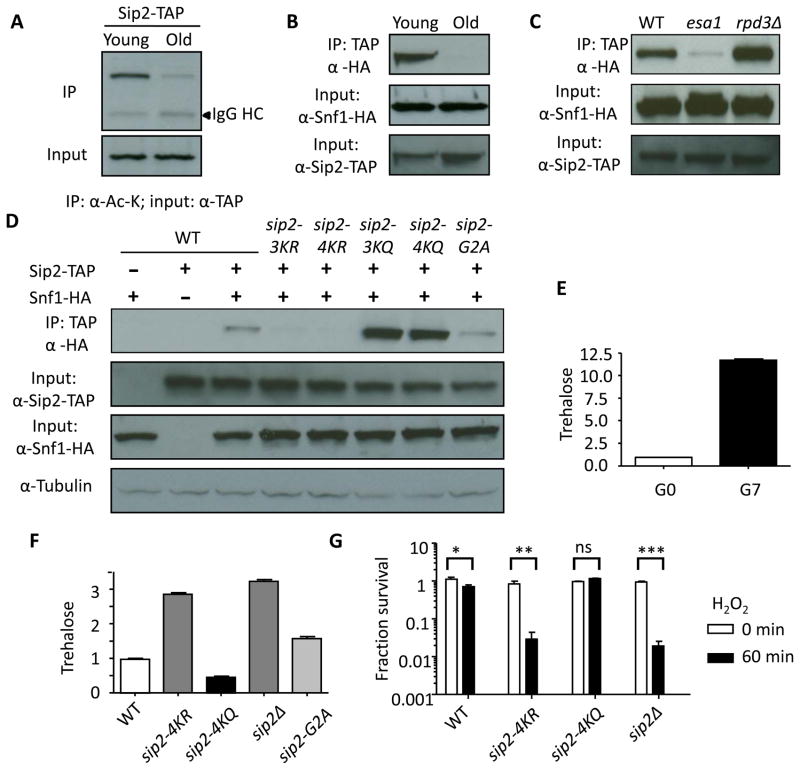
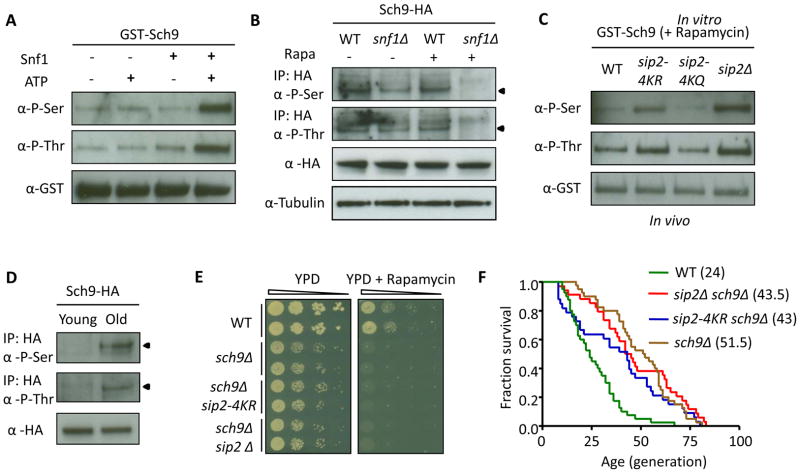
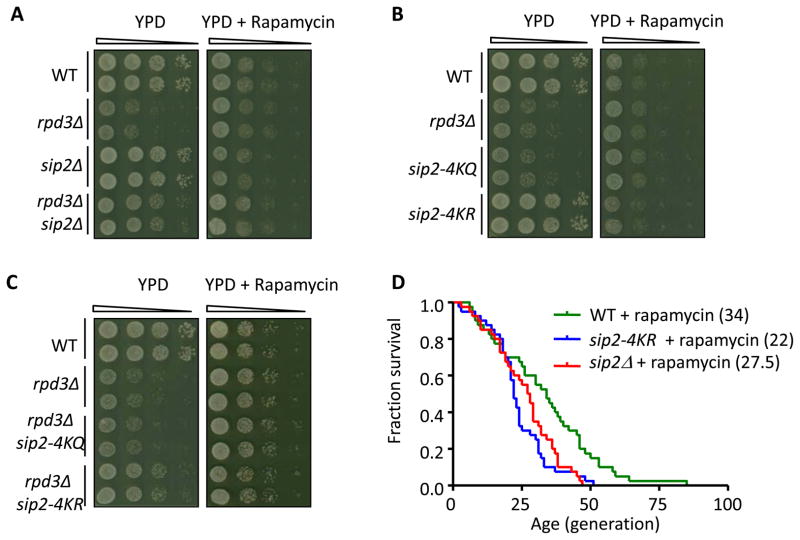
Acetylation of histone and nonhistone proteins is an important posttranslational modification affecting many cellular processes. Here, we report that NuA4 acetylation of Sip2, a regulatory β subunit of the Snf1 complex (yeast AMP-activated protein kinase), decreases as cells age. Sip2 acetylation, controlled by antagonizing NuA4 acetyltransferase and Rpd3 deacetylase, enhances interaction with Snf1, the catalytic subunit of Snf1 complex. Sip2-Snf1 interaction inhibits Snf1 activity, thus decreasing phosphorylation of a downstream target, Sch9 (homolog of Akt/S6K), and ultimately leading to slower growth but extended replicative life span. Sip2 acetylation mimetics are more resistant to oxidative stress. We further demonstrate that the anti-aging effect of Sip2 acetylation is independent of extrinsic nutrient availability and TORC1 activity. We propose a protein acetylation-phosphorylation cascade that regulates Sch9 activity, controls intrinsic aging, and extends replicative life span in yeast.
组蛋白和非组蛋白的乙酰化是一种重要的翻译后修饰,影响许多细胞过程。在这里,我们报告说, Snf1 复合物(酵母 AMP 激活蛋白激酶)的调节β亚基 Sip2 的 NuA4 乙酰化随着细胞衰老而减少。Sip2 的乙酰化受拮抗 NuA4 乙酰转移酶和 Rpd3 脱乙酰酶的控制,增强了与 Snf1 的相互作用,Snf1 是 Snf1 复合物的催化亚基。Sip2-Snf1 相互作用抑制 Snf1 的活性,从而减少下游靶标 Sch9(Akt/S6K 的同源物)的磷酸化,最终导致生长速度减慢,但复制寿命延长。Sip2 乙酰化模拟物对氧化应激的抵抗力更强。我们进一步证明,Sip2 乙酰化的抗衰老作用不依赖于外在的营养可用性和 TORC1 活性。我们提出了一个蛋白质乙酰化-磷酸化级联反应,该反应调节 Sch9 的活性,控制内在衰老,并延长酵母的复制寿命。