Department of Physiology and Biophysics, Institute of Biomedical Sciences, University of Sao Paulo, Sao Paulo, Sao Paulo, Brazil.
PLoS One. 2011;6(8):e24507. doi: 10.1371/journal.pone.0024507. Epub 2011 Aug 31.
Production of reactive oxygen species (ROS) due to chronic exposure to glucose has been associated with impaired beta cell function and diabetes. However, physiologically, beta cells are well equipped to deal with episodic glucose loads, to which they respond with a fine tuned glucose-stimulated insulin secretion (GSIS). In the present study, a systematic investigation in rat pancreatic islets about the changes in the redox environment induced by acute exposure to glucose was carried out.
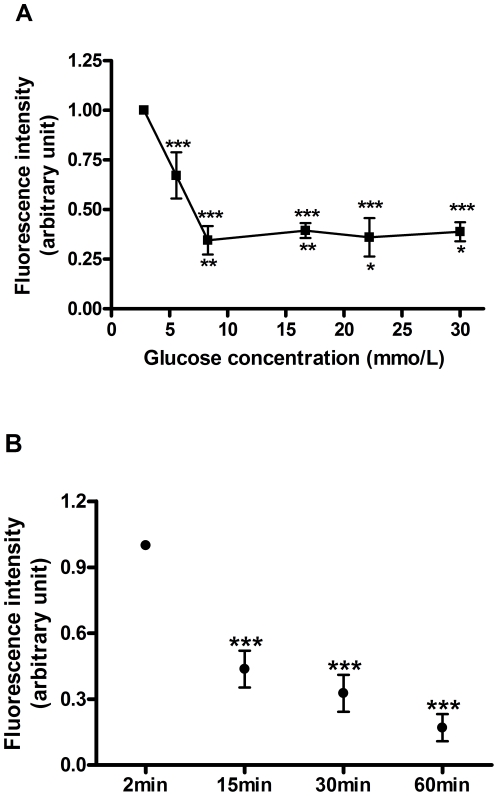
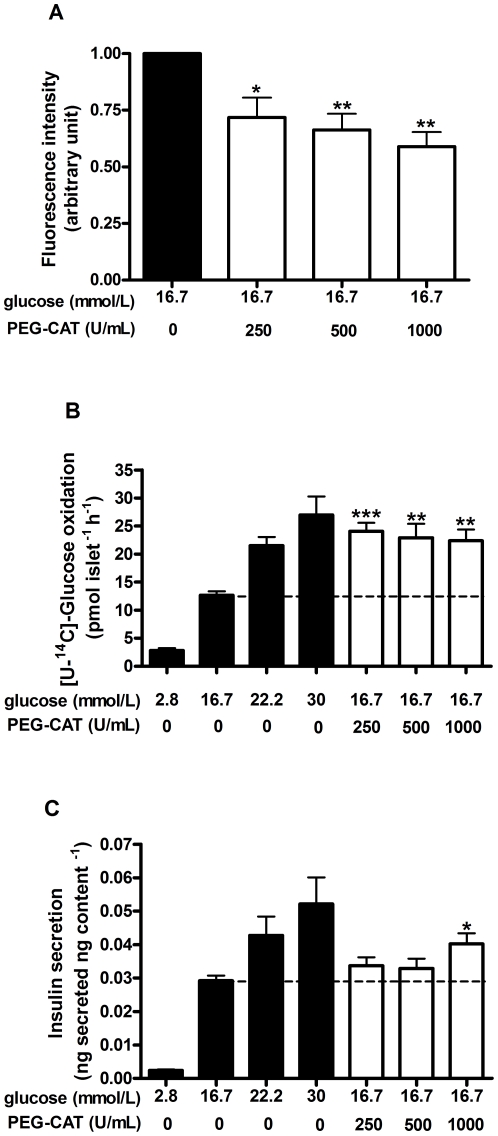
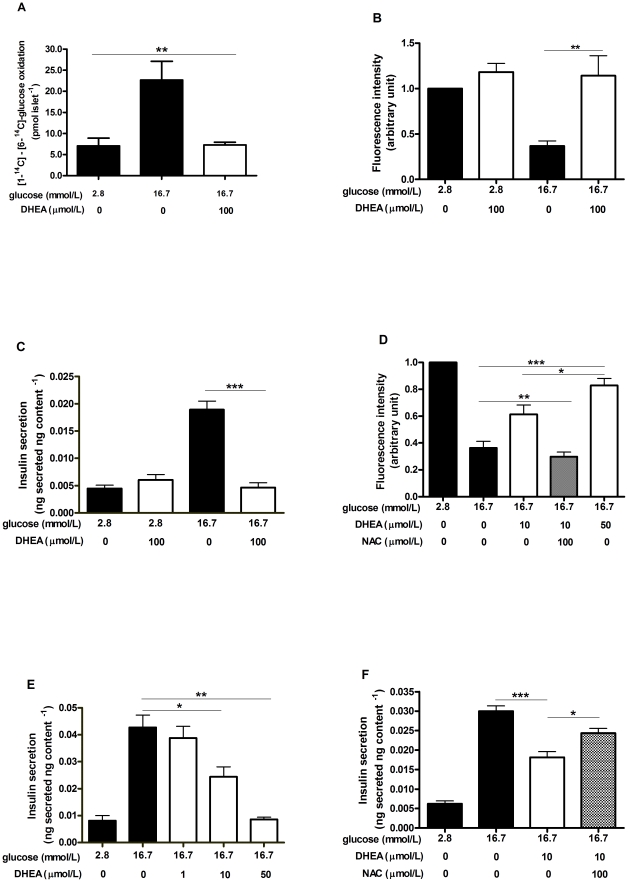
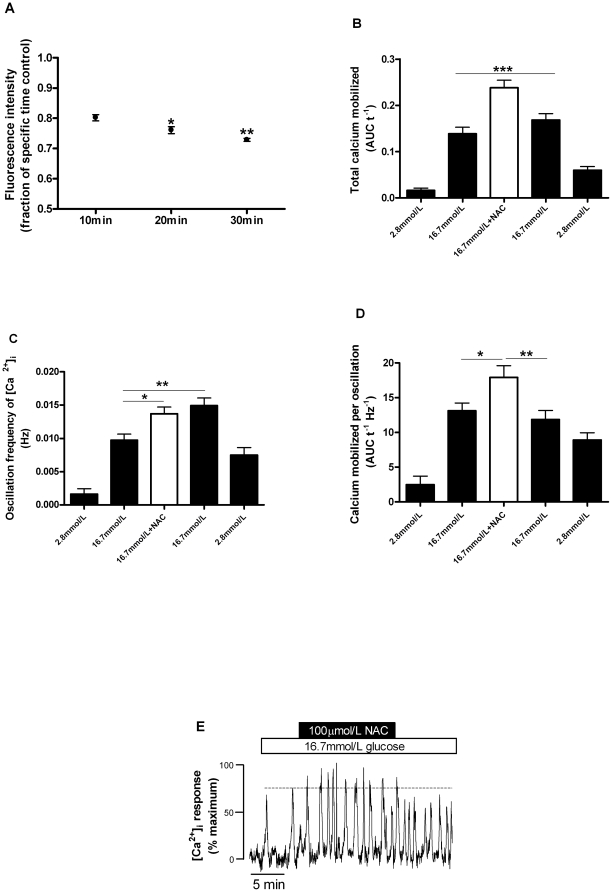
METHODOLOGY/PRINCIPAL FINDINGS: Short term incubations were performed in isolated rat pancreatic islets. Glucose dose- and time-dependently reduced the intracellular ROS content in pancreatic islets as assayed by fluorescence in a confocal microscope. This decrease was due to activation of pentose-phosphate pathway (PPP). Inhibition of PPP blunted the redox control as well as GSIS in a dose-dependent manner. The addition of low doses of ROS scavengers at high glucose concentration acutely improved beta cell function. The ROS scavenger N-acetyl-L-cysteine increased the intracellular calcium response to glucose that was associated with a small decrease in ROS content. Additionally, the presence of the hydrogen peroxide-specific scavenger catalase, in its membrane-permeable form, nearly doubled glucose metabolism. Interestingly, though an increase in GSIS was also observed, this did not match the effect on glucose metabolism.
The control of ROS content via PPP activation by glucose importantly contributes to the mechanisms that couple the glucose stimulus to insulin secretion. Moreover, we identified intracellular hydrogen peroxide as an inhibitor of glucose metabolism intrinsic to rat pancreatic islets. These findings suggest that the intracellular adjustment of the redox environment by glucose plays an important role in the mechanism of GSIS.
由于长期暴露于葡萄糖,活性氧(ROS)的产生与β细胞功能障碍和糖尿病有关。然而,从生理学角度来看,β细胞能够很好地应对间歇性的葡萄糖负荷,对此它们会做出精细调节的葡萄糖刺激胰岛素分泌(GSIS)反应。在本研究中,我们对急性葡萄糖暴露诱导的胰岛氧化还原环境变化进行了系统的研究。
方法/主要发现:在分离的大鼠胰岛中进行短期孵育。通过共聚焦显微镜中的荧光测定,葡萄糖剂量和时间依赖性地降低了胰岛中的细胞内 ROS 含量。这种减少是由于戊糖磷酸途径(PPP)的激活。PPP 的抑制以剂量依赖的方式减弱了氧化还原控制和 GSIS。在高葡萄糖浓度下添加低剂量的 ROS 清除剂可急性改善β细胞功能。ROS 清除剂 N-乙酰-L-半胱氨酸增加了细胞内钙对葡萄糖的反应,同时 ROS 含量略有下降。此外,过氧化氢特异性清除剂过氧化氢酶(其膜通透形式)的存在使葡萄糖代谢增加近一倍。有趣的是,尽管也观察到 GSIS 的增加,但这与葡萄糖代谢的影响不匹配。
通过葡萄糖激活 PPP 来控制 ROS 含量,这对将葡萄糖刺激与胰岛素分泌耦联的机制非常重要。此外,我们发现细胞内过氧化氢是大鼠胰岛固有葡萄糖代谢的抑制剂。这些发现表明,葡萄糖对氧化还原环境的细胞内调节在 GSIS 机制中起着重要作用。