School of Geography, Geology and the Environment, Kingston University London, Surrey, United Kingdom.
PLoS One. 2011;6(9):e24107. doi: 10.1371/journal.pone.0024107. Epub 2011 Sep 1.
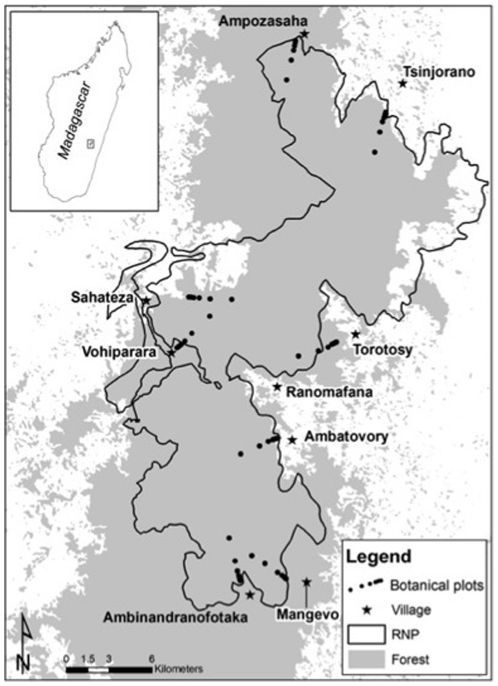
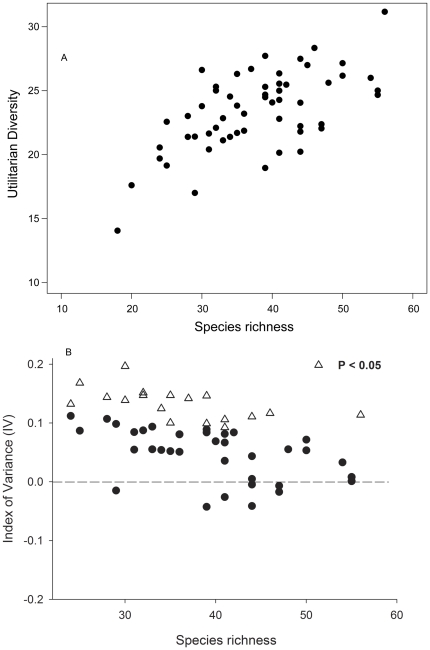
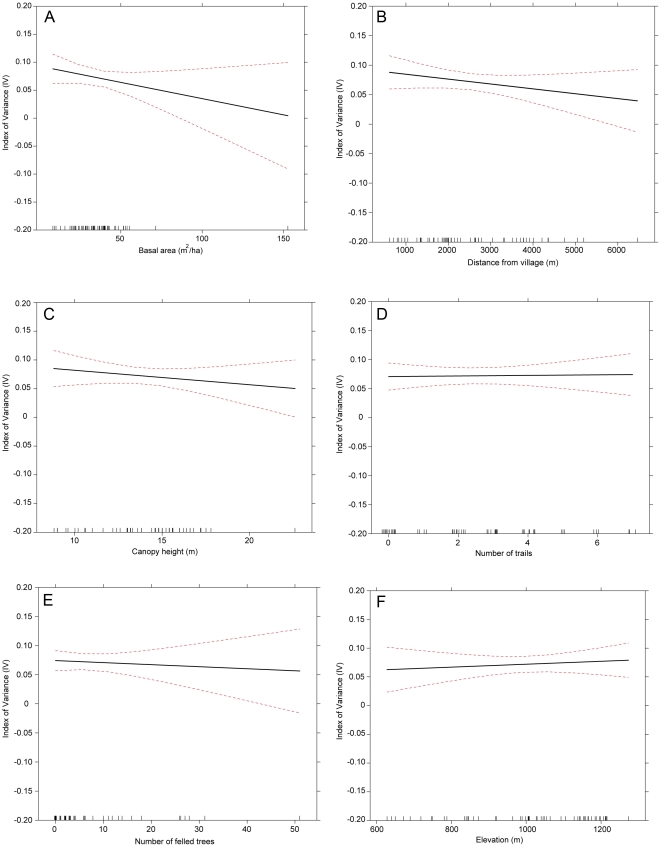
Biodiversity plays an integral role in the livelihoods of subsistence-based forest-dwelling communities and as a consequence it is increasingly important to develop quantitative approaches that capture not only changes in taxonomic diversity, but also variation in natural resources and provisioning services. We apply a functional diversity metric originally developed for addressing questions in community ecology to assess utilitarian diversity of 56 forest plots in Madagascar. The use categories for utilitarian plants were determined using expert knowledge and household questionnaires. We used a null model approach to examine the utilitarian (functional) diversity and utilitarian redundancy present within ecological communities. Additionally, variables that might influence fluctuations in utilitarian diversity and redundancy--specifically number of felled trees, number of trails, basal area, canopy height, elevation, distance from village--were analyzed using Generalized Linear Models (GLMs). Eighteen of the 56 plots showed utilitarian diversity values significantly higher than expected. This result indicates that these habitats exhibited a low degree of utilitarian redundancy and were therefore comprised of plants with relatively distinct utilitarian properties. One implication of this finding is that minor losses in species richness may result in reductions in utilitarian diversity and redundancy, which may limit local residents' ability to switch between alternative choices. The GLM analysis showed that the most predictive model included basal area, canopy height and distance from village, which suggests that variation in utilitarian redundancy may be a result of local residents harvesting resources from the protected area. Our approach permits an assessment of the diversity of provisioning services available to local communities, offering unique insights that would not be possible using traditional taxonomic diversity measures. These analyses introduce another tool available to conservation biologists for assessing how future losses in biodiversity will lead to a reduction in natural resources and provisioning services from forests.
生物多样性是基于生计的森林居住社区的生计的一个组成部分,因此越来越有必要开发定量方法,不仅要捕捉分类多样性的变化,还要捕捉自然资源和供应服务的变化。我们应用了最初为解决社区生态学问题而开发的功能多样性度量标准,来评估马达加斯加的 56 个森林样地的功利多样性。功利植物的使用类别是利用专家知识和家庭调查问卷确定的。我们使用零模型方法来检验生态群落中存在的功利(功能)多样性和功利冗余。此外,还使用广义线性模型(GLM)分析了可能影响功利多样性和冗余波动的变量——具体来说,砍伐树木的数量、小径的数量、基底面积、冠层高度、海拔、距离村庄。56 个样地中有 18 个的功利多样性值明显高于预期。这一结果表明,这些栖息地表现出较低的功利冗余度,因此包含了具有相对独特功利属性的植物。这一发现的一个含义是,物种丰富度的微小损失可能导致功利多样性和冗余度的降低,这可能限制当地居民在替代选择之间进行切换的能力。GLM 分析表明,最具预测性的模型包括基底面积、冠层高度和距离村庄,这表明功利冗余的变化可能是当地居民从保护区收获资源的结果。我们的方法允许评估提供给当地社区的供应服务的多样性,提供了使用传统分类多样性措施不可能获得的独特见解。这些分析为保护生物学家提供了另一种评估未来生物多样性损失如何导致森林自然资源和供应服务减少的工具。