Department of Natural and Life Sciences, The Open University of Israel, PO Box 808, Ra'anana 43107, Israel.
Eur J Neurosci. 2011 Sep;34(6):884-907. doi: 10.1111/j.1460-9568.2011.07851.x.
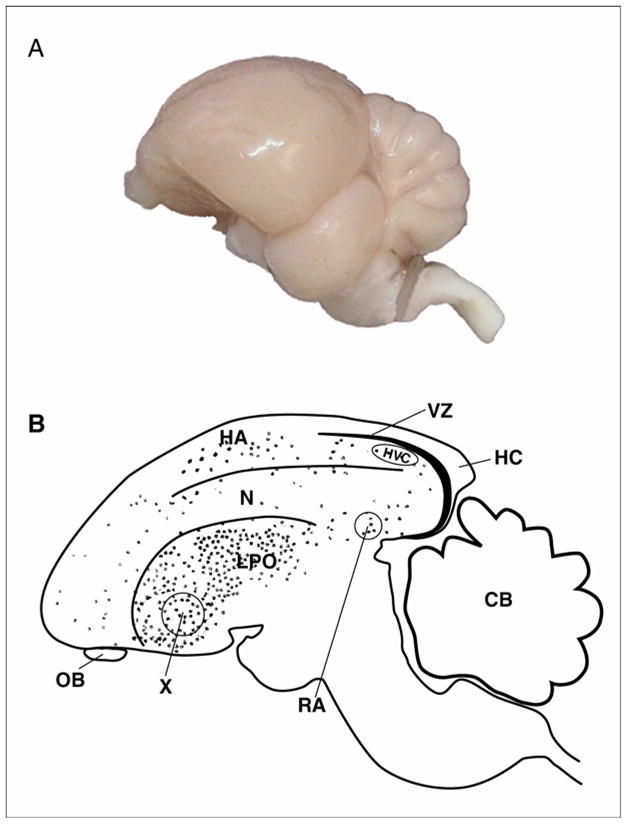
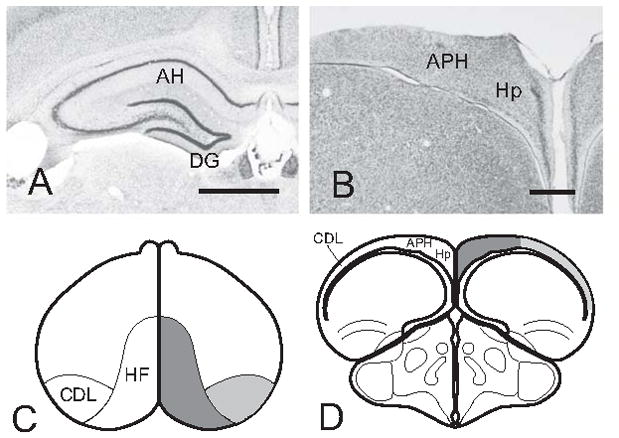
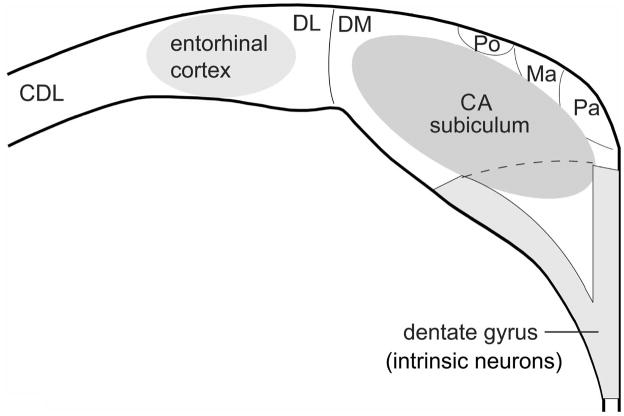
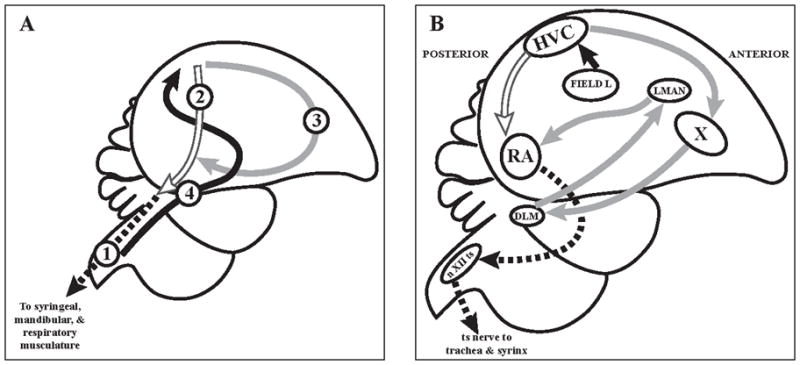
During the last few decades, evidence has demonstrated that adult neurogenesis is a well-preserved feature throughout the animal kingdom. In birds, ongoing neuronal addition occurs rather broadly, to a number of brain regions. This review describes adult avian neurogenesis and neuronal recruitment, discusses factors that regulate these processes, and touches upon the question of their genetic control. Several attributes make birds an extremely advantageous model to study neurogenesis. First, song learning exhibits seasonal variation that is associated with seasonal variation in neuronal turnover in some song control brain nuclei, which seems to be regulated via adult neurogenesis. Second, food-caching birds naturally use memory-dependent behavior in learning the locations of thousands of food caches scattered over their home ranges. In comparison with other birds, food-caching species have relatively enlarged hippocampi with more neurons and intense neurogenesis, which appears to be related to spatial learning. Finally, migratory behavior and naturally occurring social systems in birds also provide opportunities to investigate neurogenesis. This diversity of naturally occurring memory-based behaviors, combined with the fact that birds can be studied both in the wild and in the laboratory, make them ideal for investigation of neural processes underlying learning. This can be done by using various approaches, from evolutionary and comparative to neuroethological and molecular. Finally, we connect the avian arena to a broader view by providing a brief comparative and evolutionary overview of adult neurogenesis and by discussing the possible functional role of the new neurons. We conclude by indicating future directions and possible medical applications.
在过去的几十年中,有证据表明,在整个动物界,成人神经发生是一种保存完好的特征。在鸟类中,持续的神经元添加发生在许多脑区。这篇综述描述了成年鸟类的神经发生和神经元募集,讨论了调节这些过程的因素,并探讨了它们的遗传控制问题。鸟类有几个特点使其成为研究神经发生的极佳模型。首先,鸣禽学习表现出季节性变化,与一些鸣叫控制脑核中神经元更替的季节性变化相关,而这种变化似乎是通过成年神经发生来调节的。其次,食籽鸟在学习散布在其家园范围内数千个食物藏点的位置时,自然会使用依赖记忆的行为。与其他鸟类相比,食籽鸟的大脑海马区相对较大,神经元较多,神经发生强烈,这似乎与空间学习有关。最后,鸟类的迁徙行为和自然发生的社会系统也为研究神经发生提供了机会。这些基于记忆的自然行为的多样性,加上鸟类既可以在野外也可以在实验室中进行研究这一事实,使它们成为研究学习背后的神经过程的理想选择。这可以通过从进化和比较到神经行为学和分子等各种方法来实现。最后,我们通过提供对成年神经发生的简要比较和进化概述,并讨论新神经元的可能功能作用,将鸟类领域与更广泛的视角联系起来。我们最后指出了未来的方向和可能的医学应用。