Division of Neurosurgery, Department of Surgery, University of Alabama at Birmingham, Birmingham, Alabama, United States of America.
PLoS One. 2011;6(9):e24665. doi: 10.1371/journal.pone.0024665. Epub 2011 Sep 9.
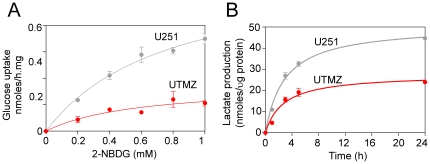
Temozolomide (TMZ) is an alkylating agent used for treating gliomas. Chemoresistance is a severe limitation to TMZ therapy; there is a critical need to understand the underlying mechanisms that determine tumor response to TMZ. We recently reported that chemoresistance to TMZ is related to a remodeling of the entire electron transport chain, with significant increases in the activity of complexes II/III and cytochrome c oxidase (CcO). Moreover, pharmacologic and genetic manipulation of CcO reverses chemoresistance. Therefore, to test the hypothesis that TMZ-resistance arises from tighter mitochondrial coupling and decreased production of reactive oxygen species (ROS), we have assessed mitochondrial function in TMZ-sensitive and -resistant glioma cells, and in TMZ-resistant glioblastoma multiform (GBM) xenograft lines (xenolines). Maximum ADP-stimulated (state 3) rates of mitochondrial oxygen consumption were greater in TMZ-resistant cells and xenolines, and basal respiration (state 2), proton leak (state 4), and mitochondrial ROS production were significantly lower in TMZ-resistant cells. Furthermore, TMZ-resistant cells consumed less glucose and produced less lactic acid. Chemoresistant cells were insensitive to the oxidative stress induced by TMZ and hydrogen peroxide challenges, but treatment with the oxidant L-buthionine-S,R-sulfoximine increased TMZ-dependent ROS generation and reversed chemoresistance. Importantly, treatment with the antioxidant N-acetyl-cysteine inhibited TMZ-dependent ROS generation in chemosensitive cells, preventing TMZ toxicity. Finally, we found that mitochondrial DNA-depleted cells (ρ°) were resistant to TMZ and had lower intracellular ROS levels after TMZ exposure compared with parental cells. Repopulation of ρ° cells with mitochondria restored ROS production and sensitivity to TMZ. Taken together, our results indicate that chemoresistance to TMZ is linked to tighter mitochondrial coupling and low ROS production, and suggest a novel mitochondrial ROS-dependent mechanism underlying TMZ-chemoresistance in glioma. Thus, perturbation of mitochondrial functions and changes in redox status might constitute a novel strategy for sensitizing glioma cells to therapeutic approaches.
替莫唑胺(TMZ)是一种用于治疗神经胶质瘤的烷化剂。化疗耐药是 TMZ 治疗的严重限制;因此,迫切需要了解决定肿瘤对 TMZ 反应的潜在机制。我们最近报道称,TMZ 耐药与整个电子传递链的重塑有关,复合物 II/III 和细胞色素 c 氧化酶(CcO)的活性显著增加。此外,CcO 的药理学和遗传操作可逆转耐药性。因此,为了测试 TMZ 耐药性是否源于更紧密的线粒体偶联和活性氧(ROS)产生减少的假说,我们评估了 TMZ 敏感和耐药神经胶质瘤细胞以及 TMZ 耐药多形性胶质母细胞瘤(GBM)异种移植系(异种细胞系)中的线粒体功能。TMZ 耐药细胞和异种细胞系的最大 ADP 刺激(状态 3)线粒体耗氧率更高,基础呼吸(状态 2)、质子漏(状态 4)和线粒体 ROS 产生显著降低。此外,TMZ 耐药细胞消耗的葡萄糖和产生的乳酸较少。耐药细胞对 TMZ 和过氧化氢挑战诱导的氧化应激不敏感,但用氧化剂 L-丁硫氨酸-S,R-亚砜亚胺处理可增加 TMZ 依赖性 ROS 生成并逆转耐药性。重要的是,抗氧化剂 N-乙酰半胱氨酸处理可抑制敏感细胞中 TMZ 依赖性 ROS 生成,从而防止 TMZ 毒性。最后,我们发现线粒体 DNA 耗竭细胞(ρ°)对 TMZ 耐药,并且与亲本细胞相比,暴露于 TMZ 后细胞内 ROS 水平较低。用线粒体重新填充 ρ°细胞可恢复 ROS 生成并使细胞对 TMZ 敏感。总之,我们的结果表明,TMZ 耐药与更紧密的线粒体偶联和低 ROS 生成有关,并提示胶质瘤中 TMZ 耐药的一种新的线粒体 ROS 依赖性机制。因此,线粒体功能的扰动和氧化还原状态的改变可能构成使神经胶质瘤细胞对治疗方法敏感的新策略。