Department of Pharmacy, Xiangya Hospital, Central South University, Changsha, 410008, China.
Department of Neurosurgery, Xiangya Hospital, Central South University, Changsha, 410008, China.
Signal Transduct Target Ther. 2024 Mar 4;9(1):58. doi: 10.1038/s41392-024-01763-x.
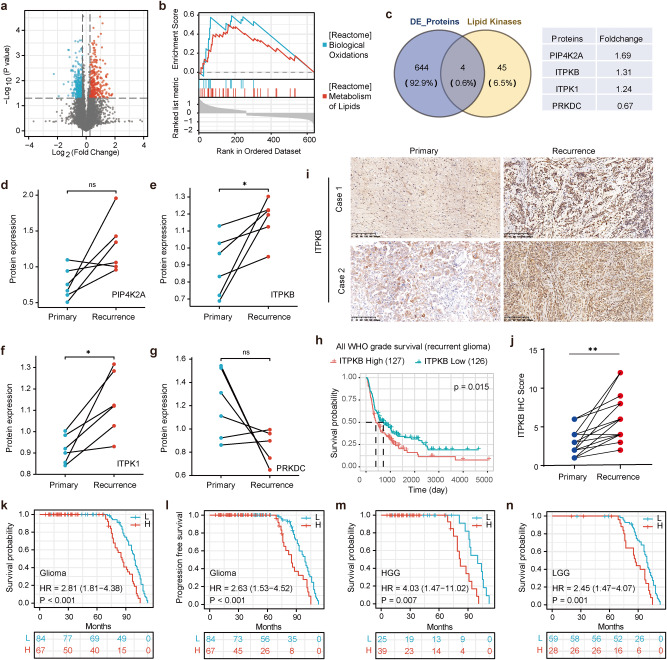
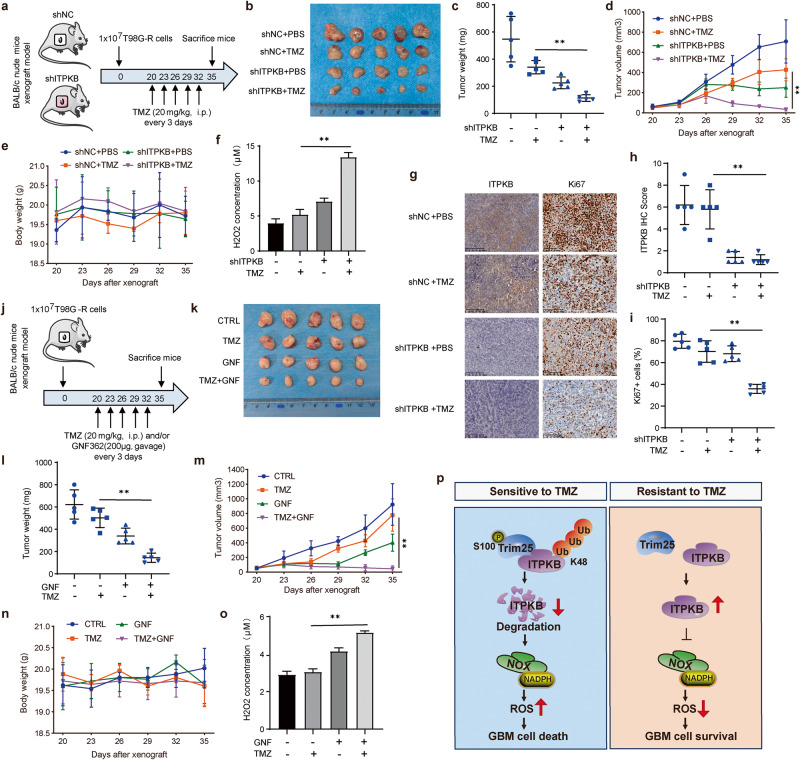
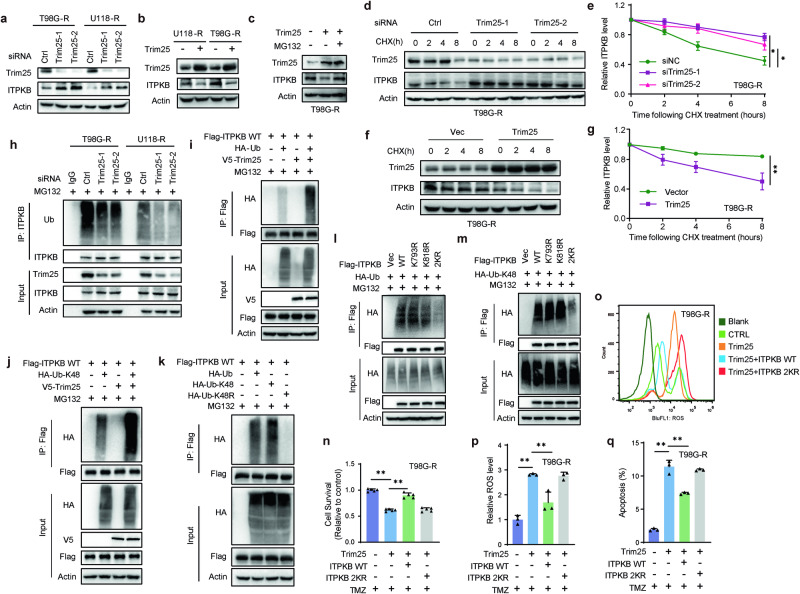
Temozolomide (TMZ) represents a standard-of-care chemotherapeutic agent in glioblastoma (GBM). However, the development of drug resistance constitutes a significant hurdle in the treatment of malignant glioma. Although specific innovative approaches, such as immunotherapy, have shown favorable clinical outcomes, the inherent invasiveness of most gliomas continues to make them challenging to treat. Consequently, there is an urgent need to identify effective therapeutic targets for gliomas to overcome chemoresistance and facilitate drug development. This investigation used mass spectrometry to examine the proteomic profiles of six pairs of GBM patients who underwent standard-of-care treatment and surgery for both primary and recurrent tumors. A total of 648 proteins exhibiting significant differential expression were identified. Gene Set Enrichment Analysis (GSEA) unveiled notable alterations in pathways related to METABOLISM_OF_LIPIDS and BIOLOGICAL_OXIDATIONS between the primary and recurrent groups. Validation through glioma tissue arrays and the Xiangya cohort confirmed substantial upregulation of inositol 1,4,5-triphosphate (IP3) kinase B (ITPKB) in the recurrence group, correlating with poor survival in glioma patients. In TMZ-resistant cells, the depletion of ITPKB led to an increase in reactive oxygen species (ROS) related to NADPH oxidase (NOX) activity and restored cell sensitivity to TMZ. Mechanistically, the decreased phosphorylation of the E3 ligase Trim25 at the S100 position in recurrent GBM samples accounted for the weakened ITPKB ubiquitination. This, in turn, elevated ITPKB stability and impaired ROS production. Furthermore, ITPKB depletion or the ITPKB inhibitor GNF362 effectively overcome TMZ chemoresistance in a glioma xenograft mouse model. These findings reveal a novel mechanism underlying TMZ resistance and propose ITPKB as a promising therapeutic target for TMZ-resistant GBM.
替莫唑胺(TMZ)是胶质母细胞瘤(GBM)的标准治疗化疗药物。然而,药物耐药性的发展是恶性胶质瘤治疗的一个重大障碍。虽然免疫疗法等特定的创新方法已显示出良好的临床效果,但大多数神经胶质瘤的固有侵袭性仍然使它们难以治疗。因此,迫切需要确定有效的治疗靶点,以克服胶质母细胞瘤的化疗耐药性并促进药物开发。本研究使用质谱法分析了 6 对接受标准治疗和手术的胶质母细胞瘤患者的原发性和复发性肿瘤的蛋白质组谱。共鉴定出 648 种具有显著差异表达的蛋白质。基因集富集分析(GSEA)揭示了原发性和复发性组之间与代谢脂质和生物氧化相关的途径的显著改变。通过神经胶质瘤组织阵列和湘雅队列的验证证实,在复发性组中,三磷酸肌醇(IP3)激酶 B(ITPKB)的表达显著上调,与神经胶质瘤患者的不良生存相关。在 TMZ 耐药细胞中,ITPKB 的耗竭导致与 NADPH 氧化酶(NOX)活性相关的活性氧(ROS)增加,并恢复细胞对 TMZ 的敏感性。从机制上讲,复发性 GBM 样本中 E3 连接酶 Trim25 在 S100 位置的磷酸化减少导致 ITPKB 泛素化减弱。这反过来又提高了 ITPKB 的稳定性并损害了 ROS 的产生。此外,ITPKB 耗竭或 ITPKB 抑制剂 GNF362 可有效克服胶质母细胞瘤异种移植小鼠模型中的 TMZ 耐药性。这些发现揭示了 TMZ 耐药性的一种新机制,并提出 ITPKB 是 TMZ 耐药性 GBM 的有前途的治疗靶点。