Department of Molecular Carcinogenesis, the University of Texas M.D. Anderson Cancer Center, Smithville, Texas, United States of America.
PLoS One. 2011;6(9):e24397. doi: 10.1371/journal.pone.0024397. Epub 2011 Sep 15.
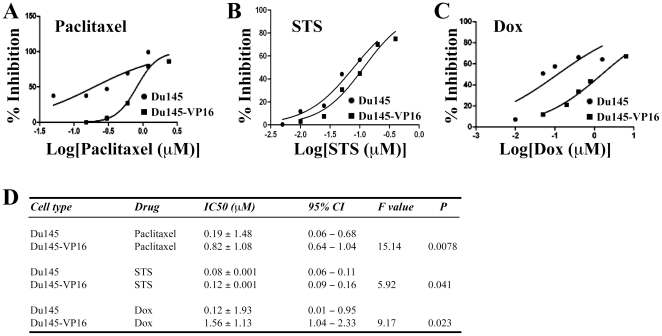
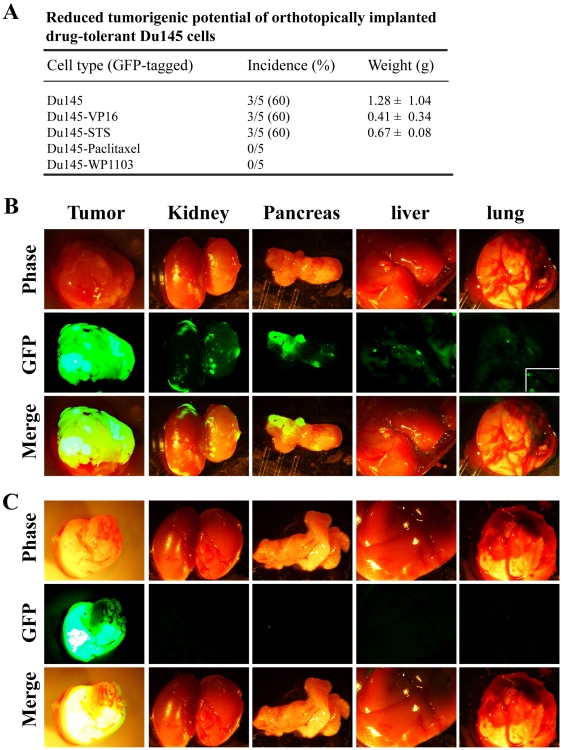
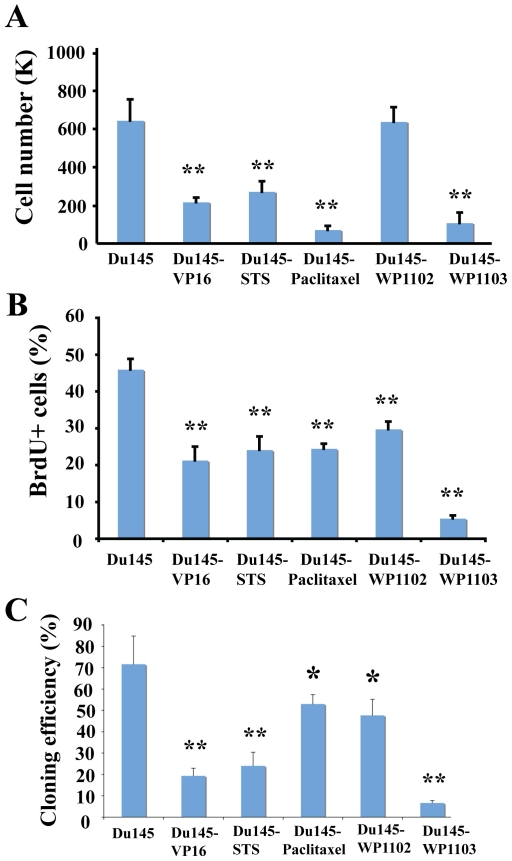
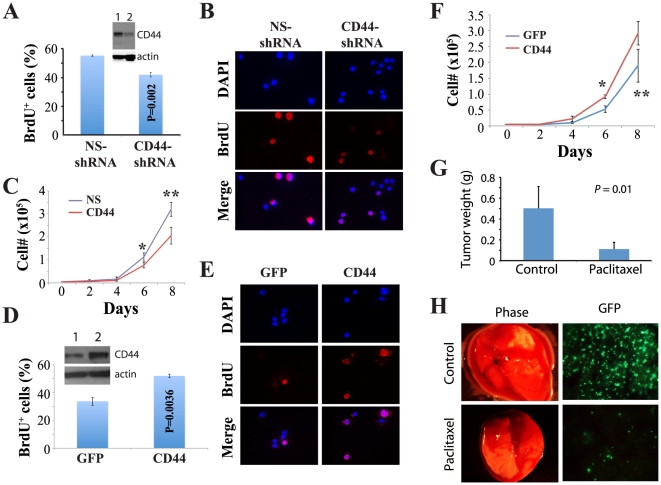
Cancer stem cells (CSCs) possess high tumor-initiating capacity and have been reported to be resistant to therapeutics. Vice versa, therapy-resistant cancer cells seem to manifest CSC phenotypes and properties. It has been generally assumed that drug-resistant cancer cells may all be CSCs although the generality of this assumption is unknown. Here, we chronically treated Du145 prostate cancer cells with etoposide, paclitaxel and some experimental drugs (i.e., staurosporine and 2 paclitaxel analogs), which led to populations of drug-tolerant cells (DTCs). Surprisingly, these DTCs, when implanted either subcutaneously or orthotopically into NOD/SCID mice, exhibited much reduced tumorigenicity or were even non-tumorigenic. Drug-tolerant DLD1 colon cancer cells selected by a similar chronic selection protocol also displayed reduced tumorigenicity whereas drug-tolerant UC14 bladder cancer cells demonstrated either increased or decreased tumor-regenerating capacity. Drug-tolerant Du145 cells demonstrated low proliferative and clonogenic potential and were virtually devoid of CD44(+) cells. Prospective knockdown of CD44 in Du145 cells inhibited cell proliferation and tumor regeneration, whereas restoration of CD44 expression in drug-tolerant Du145 cells increased cell proliferation and partially increased tumorigenicity. Interestingly, drug-tolerant Du145 cells showed both increases and decreases in many "stemness" genes. Finally, evidence was provided that chronic drug exposure generated DTCs via epigenetic mechanisms involving molecules such as CD44 and KDM5A. Our results thus reveal that 1) not all DTCs are necessarily CSCs; 2) conventional chemotherapeutic drugs such as taxol and etoposide may directly target CD44(+) tumor-initiating cells; and 3) DTCs generated via chronic drug selection involve epigenetic mechanisms.
癌症干细胞(CSCs)具有高肿瘤起始能力,并被报道对治疗具有抗性。相反,耐药的癌细胞似乎表现出 CSC 表型和特性。人们普遍认为,耐药的癌细胞可能都是 CSCs,尽管这种假设的普遍性尚不清楚。在这里,我们用依托泊苷、紫杉醇和一些实验药物(即,司他丁和 2 种紫杉醇类似物)对 Du145 前列腺癌细胞进行了慢性处理,导致了耐药细胞(DTCs)的产生。令人惊讶的是,这些 DTCs 无论是皮下还是原位植入 NOD/SCID 小鼠,其肿瘤生成能力都大大降低,甚至无致瘤性。通过类似的慢性选择方案选择的耐药 DLD1 结肠癌细胞也显示出降低的肿瘤发生能力,而耐药 UC14 膀胱癌细胞则表现出增加或减少的肿瘤再生能力。耐药 Du145 细胞显示出低增殖和克隆形成潜力,并且几乎没有 CD44(+)细胞。在 Du145 细胞中进行的前瞻性 CD44 敲低抑制了细胞增殖和肿瘤再生,而在耐药 Du145 细胞中恢复 CD44 表达则增加了细胞增殖并部分增加了肿瘤生成能力。有趣的是,耐药 Du145 细胞中许多“干性”基因的表达增加和减少。最后,有证据表明,慢性药物暴露通过涉及 CD44 和 KDM5A 等分子的表观遗传机制产生了 DTCs。我们的结果表明:1)并非所有 DTCs 都是 CSCs;2)紫杉醇和依托泊苷等常规化疗药物可能直接靶向 CD44(+)肿瘤起始细胞;3)通过慢性药物选择产生的 DTCs 涉及表观遗传机制。