Liu Ruifang, Liu Can, Zhang Dingxiao, Liu Bigang, Chen Xin, Rycaj Kiera, Jeter Collene, Calhoun-Davis Tammy, Li Yandong, Yang Tao, Wang Junchen, Tang Dean G
Cancer Stem Cell Institute, Research Center for Translational Medicine, East Hospital, Tongji University School of Medicine, Shanghai 200120, China.
Department of Epigenetics and Molecular Carcinogenesis, The University of Texas MD Anderson Cancer Center, Science Park, Smithville, TX 78957, USA.
Oncotarget. 2016 Aug 30;7(35):56628-56642. doi: 10.18632/oncotarget.10652.
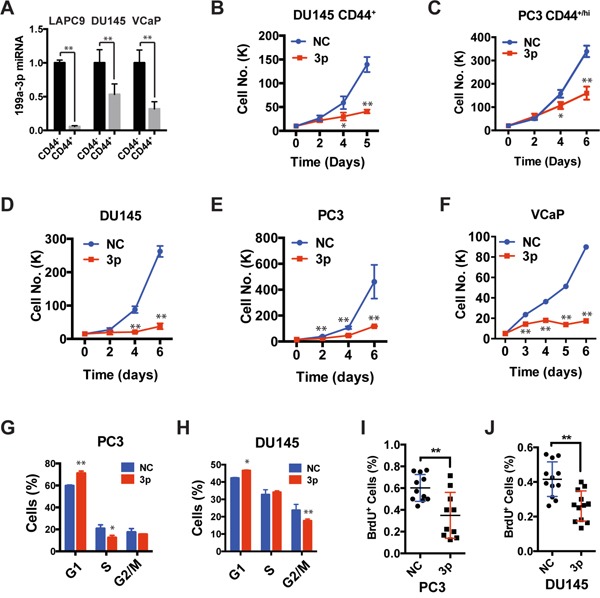
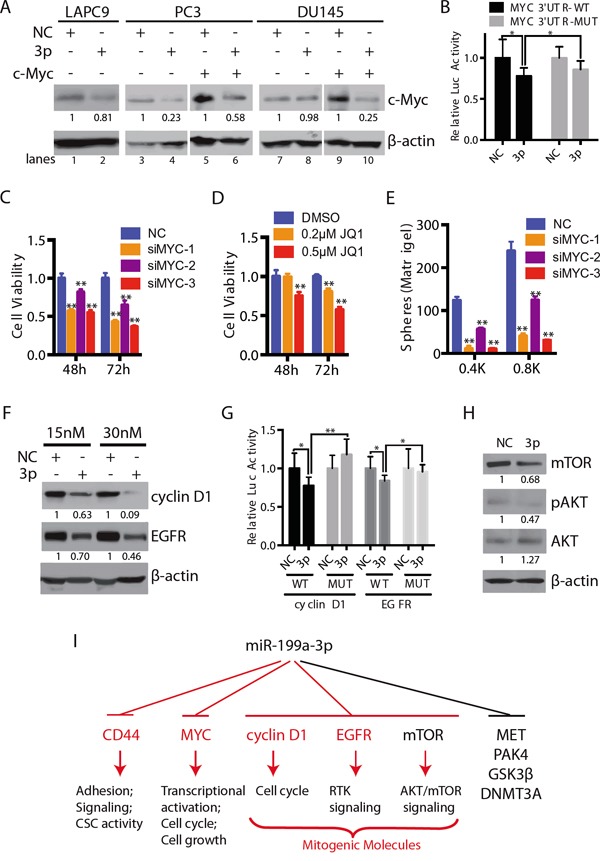
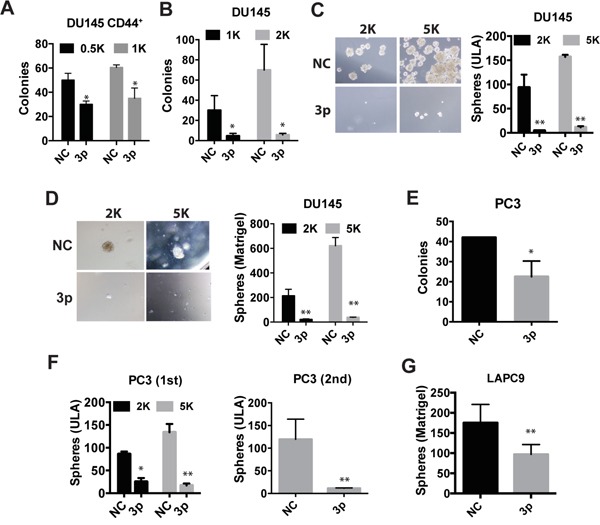
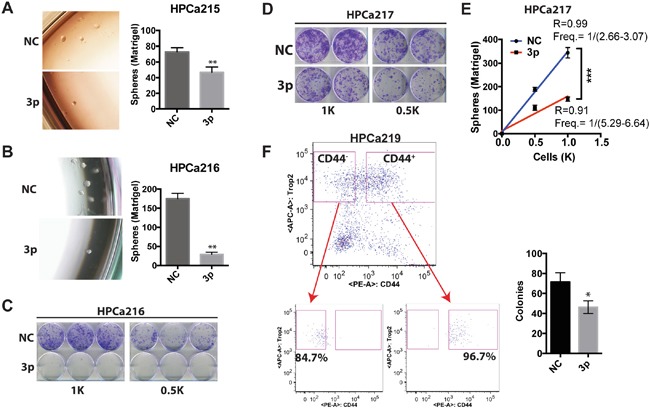
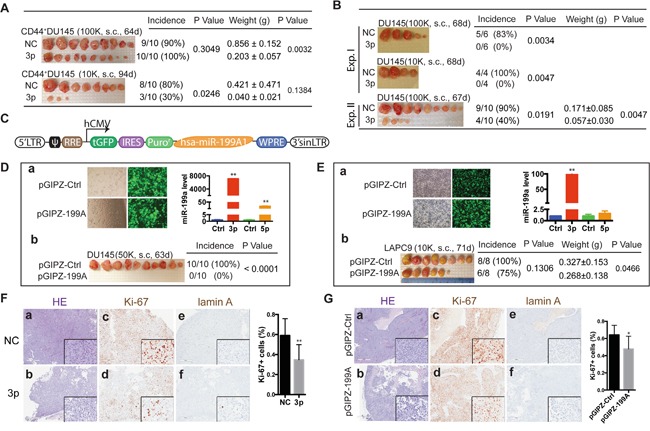
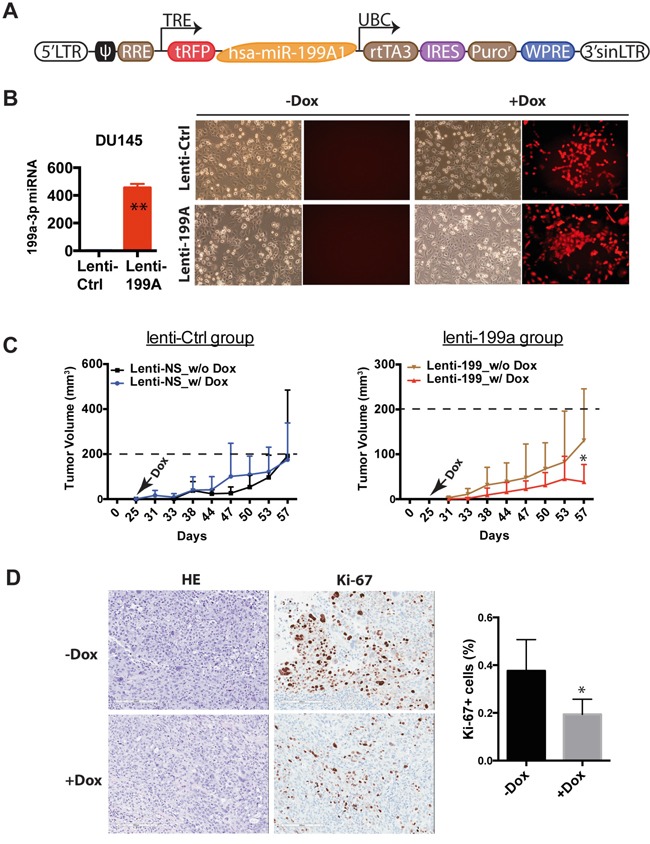
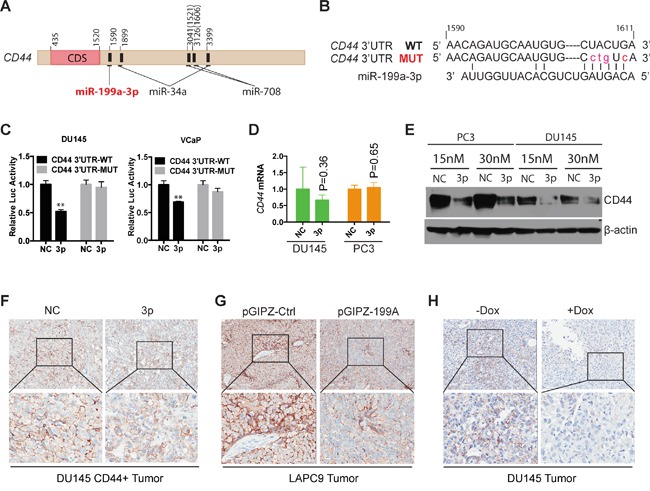
Human cancers exhibit significant cellular heterogeneity featuring tumorigenic cancer stem cells (CSCs) in addition to more differentiated progeny with limited tumor-initiating capabilities. Recent studies suggest that microRNAs (miRNAs) regulate CSCs and tumor development. A previous library screening for differential miRNA expression in CD44+ (and other) prostate CSC vs. non-CSC populations identified miR-199a-3p to be among the most highly under-expressed miRNAs in CSCs. In this study, we characterized the biological functions of miR-199a-3p in CD44+ prostate cancer (PCa) cells and in tumor regeneration. Overexpression of miR-199a-3p in purified CD44+ or bulk PCa cells, including primary PCa, inhibited proliferation and clonal expansion without inducing apoptosis. miR-199a-3p overexpression also diminished tumor-initiating capacities of CD44+ PCa cells as well as tumor regeneration from bulk PCa cells. Importantly, inducible miR-199a-3p expression in pre-established prostate tumors in NOD/SCID mice inhibited tumor growth. Using target prediction program and luciferase assays, we show mechanistically that CD44 is a direct functional target of miR-199a-3p in PCa cells. Moreover, miR-199a-3p also directly or indirectly targeted several additional mitogenic molecules, including c-MYC, cyclin D1 (CCND1) and EGFR. Taken together, our results demonstrate how the aberrant loss of a miRNA-mediated mechanism can lead to the expansion and tumorigenic activity of prostate CSCs, further supporting the development and implementation of miRNA mimics for cancer treatment.
人类癌症表现出显著的细胞异质性,除了具有有限肿瘤起始能力的更多分化后代外,还具有致瘤性癌症干细胞(CSCs)。最近的研究表明,微小RNA(miRNAs)调节CSCs和肿瘤发展。先前一项针对CD44 +(及其他)前列腺CSC与非CSC群体中差异miRNA表达的文库筛选确定,miR-199a-3p是CSCs中表达水平最低的miRNAs之一。在本研究中,我们表征了miR-199a-3p在CD44 +前列腺癌(PCa)细胞和肿瘤再生中的生物学功能。在纯化的CD44 +或大量PCa细胞(包括原发性PCa)中过表达miR-199a-3p可抑制增殖和克隆扩增,而不诱导细胞凋亡。miR-199a-3p过表达还降低了CD44 + PCa细胞的肿瘤起始能力以及大量PCa细胞的肿瘤再生能力。重要的是,在NOD/SCID小鼠预先建立的前列腺肿瘤中诱导miR-199a-3p表达可抑制肿瘤生长。使用靶标预测程序和荧光素酶测定,我们从机制上表明CD44是PCa细胞中miR-199a-3p的直接功能靶标。此外,miR-199a-3p还直接或间接靶向其他几种促有丝分裂分子,包括c-MYC、细胞周期蛋白D1(CCND1)和表皮生长因子受体(EGFR)。综上所述,我们的结果证明了miRNA介导机制的异常缺失如何导致前列腺CSCs的扩增和致瘤活性,进一步支持了miRNA模拟物用于癌症治疗的研发和应用。