División de Neurociencias, Universidad Pablo de Olavide Seville, Spain.
Front Integr Neurosci. 2011 Aug 30;5:39. doi: 10.3389/fnint.2011.00039. eCollection 2011.
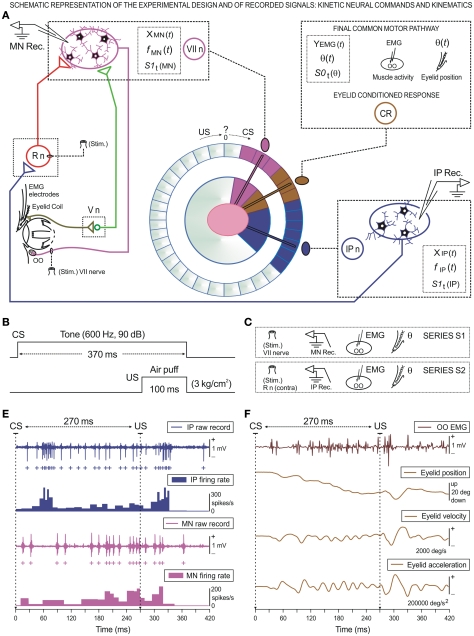
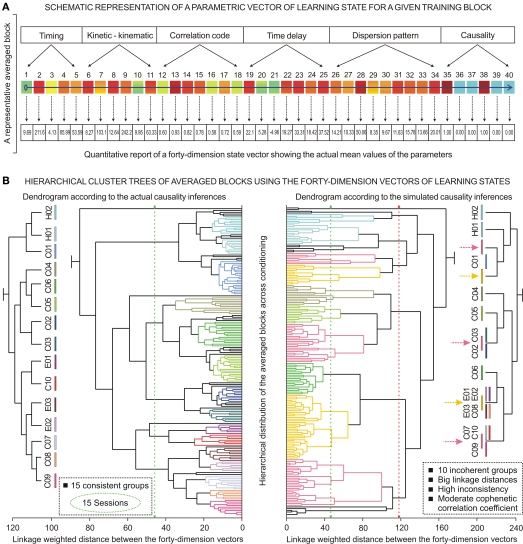
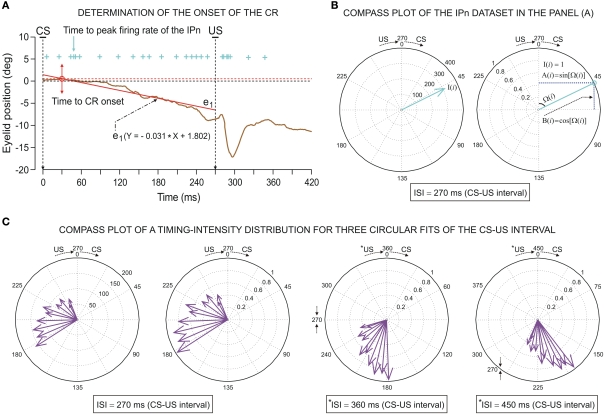
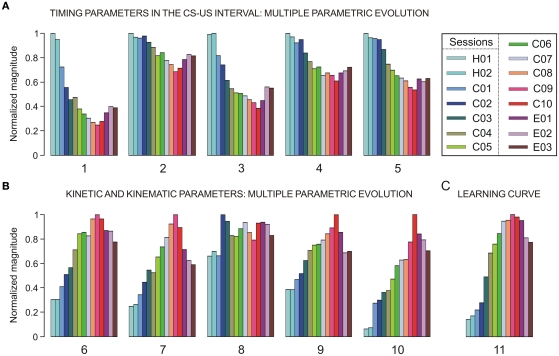
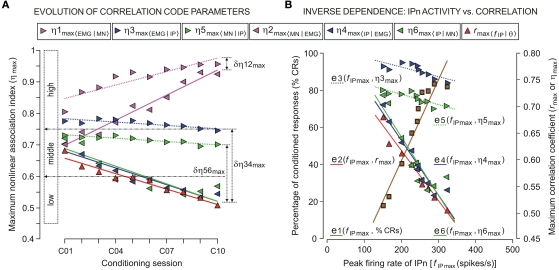
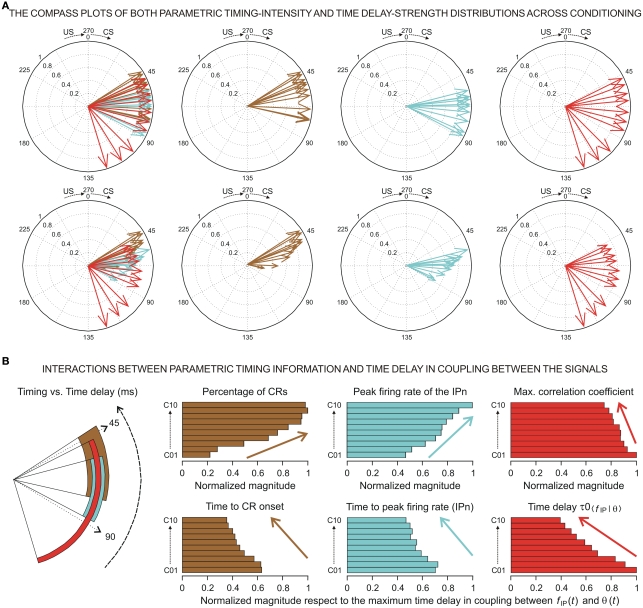
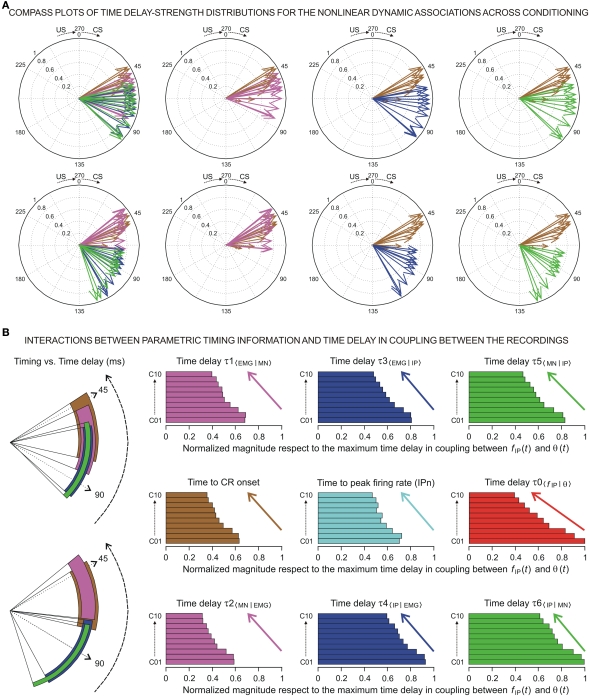
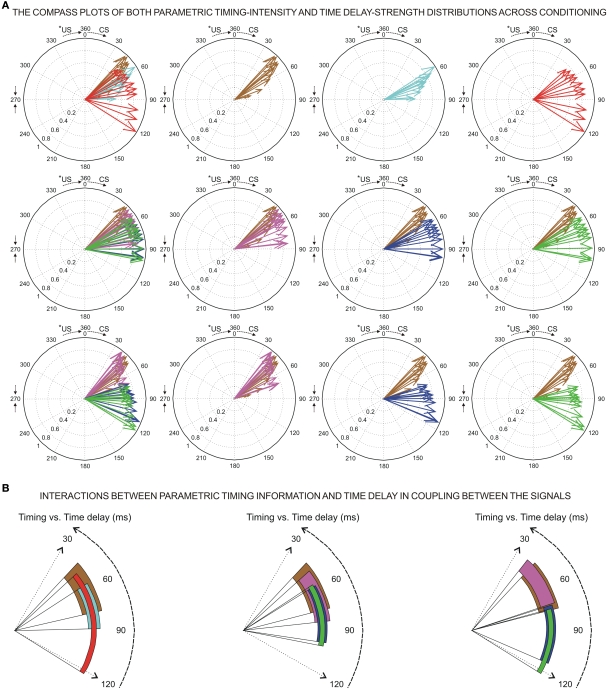
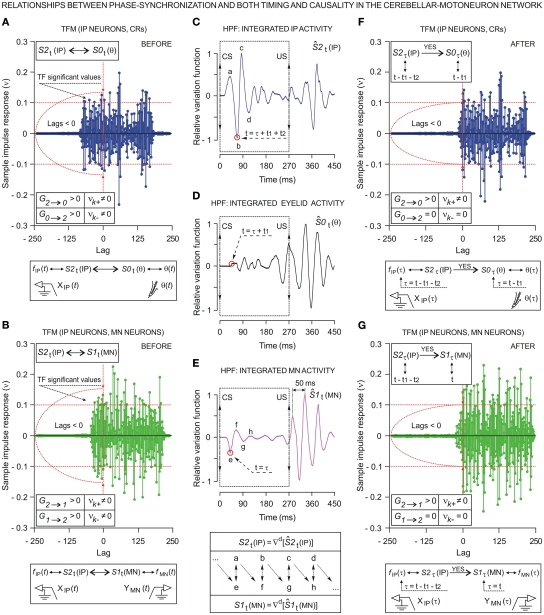
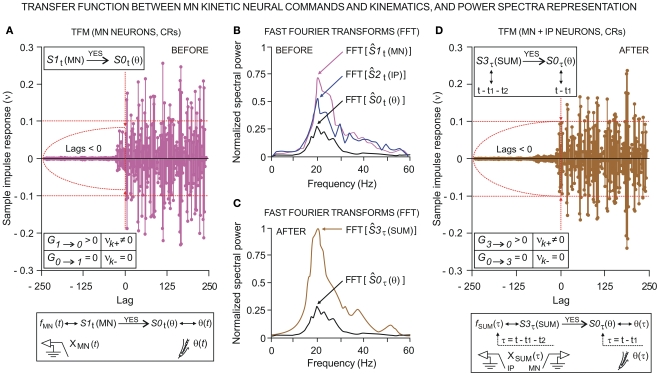
The cerebellum-red nucleus-facial motoneuron (Mn) pathway has been reported as being involved in the proper timing of classically conditioned eyelid responses. This special type of associative learning serves as a model of event timing for studying the role of the cerebellum in dynamic motor control. Here, we have re-analyzed the firing activities of cerebellar posterior interpositus (IP) neurons and orbicularis oculi (OO) Mns in alert behaving cats during classical eyeblink conditioning, using a delay paradigm. The aim was to revisit the hypothesis that the IP neurons (IPns) can be considered a neuronal phase-modulating device supporting OO Mns firing with an emergent timing mechanism and an explicit correlation code during learned eyelid movements. Optimized experimental and computational tools allowed us to determine the different causal relationships (temporal order and correlation code) during and between trials. These intra- and inter-trial timing strategies expanding from sub-second range (millisecond timing) to longer-lasting ranges (interval timing) expanded the functional domain of cerebellar timing beyond motor control. Interestingly, the results supported the above-mentioned hypothesis. The causal inferences were influenced by the precise motor and pre-motor spike timing in the cause-effect interval, and, in addition, the timing of the learned responses depended on cerebellar-Mn network causality. Furthermore, the timing of CRs depended upon the probability of simulated causal conditions in the cause-effect interval and not the mere duration of the inter-stimulus interval. In this work, the close relation between timing and causality was verified. It could thus be concluded that the firing activities of IPns may be related more to the proper performance of ongoing CRs (i.e., the proper timing as a consequence of the pertinent causality) than to their generation and/or initiation.
小脑-红核-面运动神经元(Mn)通路已被报道参与了经典条件反射性眼睑反应的适当定时。这种特殊类型的联想学习作为研究小脑在动态运动控制中的作用的事件定时模型。在这里,我们使用延迟范式,重新分析了在经典眨眼条件反射过程中警觉行为猫的小脑后间位核(IP)神经元和面神经眼轮匝肌(OO)Mn 的放电活动。目的是重新检验以下假说,即 IP 神经元(IPns)可以被视为一种神经元相位调制装置,通过在学习性眼睑运动中出现的定时机制和明确的相关代码,支持 OO Mn 的放电。优化的实验和计算工具使我们能够确定在试验内和试验间的不同因果关系(时间顺序和相关代码)。这些从亚秒级范围(毫秒定时)扩展到更长持续时间范围(间隔定时)的内-外试验定时策略扩展了小脑定时的功能域,超出了运动控制。有趣的是,结果支持了上述假说。因果推断受到因果间隔内精确的运动和前运动尖峰定时的影响,此外,学习反应的定时取决于小脑-Mn 网络的因果关系。此外,CR 的定时取决于因果间隔内模拟因果条件的概率,而不仅仅是刺激间间隔的持续时间。在这项工作中,验证了定时和因果关系之间的密切关系。因此,可以得出结论,IPns 的放电活动可能与正在进行的 CR 的适当表现(即,由于相关的因果关系而产生的适当定时)更相关,而不是与它们的产生和/或启动更相关。