Kaur Parvinder, Aschner Michael, Syversen Tore
Department of Neuroscience, Norwegian University of Science and Technology, 7489 Trondheim, Norway.
J Toxicol. 2011;2011:721987. doi: 10.1155/2011/721987. Epub 2011 Sep 20.
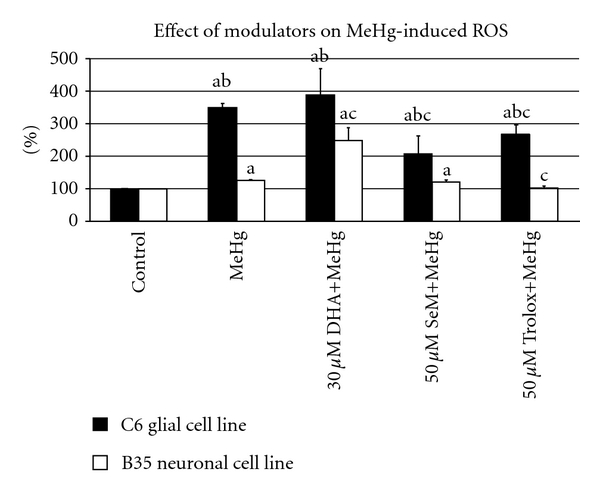
Methylmercury (MeHg), an environmental toxicant primarily found in fish and seafood, poses a dilemma to both consumers and regulatory authorities, given the nutritional benefits of fish consumption versus the possible adverse neurological damage. Several studies have shown that MeHg toxicity is influenced by a number of biochemical factors, such as glutathione (GSH), fatty acids, vitamins, and essential elements, but the cellular mechanisms underlying these complex interactions have not yet been fully elucidated. The objective of this paper is to outline the cellular response to dietary nutrients, as well as to describe the neurotoxic exposures to MeHg. In order to determine the cellular mechanism(s) of toxicity, the effect of pretreatment with biochemical factors (e.g., N-acetyl cysteine, (NAC); diethyl maleate, (DEM); docosahexaenoic acid, (DHA); selenomethionine, SeM; Trolox) and MeHg treatment on intercellular antioxidant status, MeHg content, and other endpoints was evaluated. This paper emphasizes that the protection against oxidative stress offered by these biochemical factors is among one of the major mechanisms responsible for conferring neuroprotection. It is therefore critical to ascertain the cellular mechanisms associated with various dietary nutrients as well as to determine the potential effects of neurotoxic exposures for accurately assessing the risks and benefits associated with fish consumption.
甲基汞(MeHg)是一种主要存在于鱼类和海鲜中的环境毒物,鉴于食用鱼类的营养益处与可能的神经损伤风险,它给消费者和监管机构都带来了两难困境。多项研究表明,甲基汞的毒性受多种生化因素影响,如谷胱甘肽(GSH)、脂肪酸、维生素和必需元素,但这些复杂相互作用背后的细胞机制尚未完全阐明。本文的目的是概述细胞对膳食营养素的反应,并描述甲基汞的神经毒性暴露情况。为了确定毒性的细胞机制,评估了用生化因素(如N - 乙酰半胱氨酸(NAC)、马来酸二乙酯(DEM)、二十二碳六烯酸(DHA)、硒代蛋氨酸(SeM)、Trolox)预处理以及甲基汞处理对细胞内抗氧化状态、甲基汞含量和其他指标的影响。本文强调,这些生化因素提供的抗氧化应激保护是赋予神经保护作用的主要机制之一。因此,确定与各种膳食营养素相关的细胞机制以及确定神经毒性暴露的潜在影响对于准确评估食用鱼类相关的风险和益处至关重要。