Spermatech AS, Forskningsveien 2A, 0373 Oslo, Norway.
Hum Reprod. 2011 Dec;26(12):3249-63. doi: 10.1093/humrep/der317. Epub 2011 Sep 23.
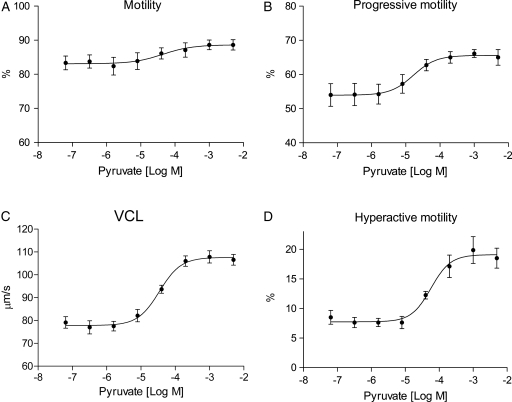
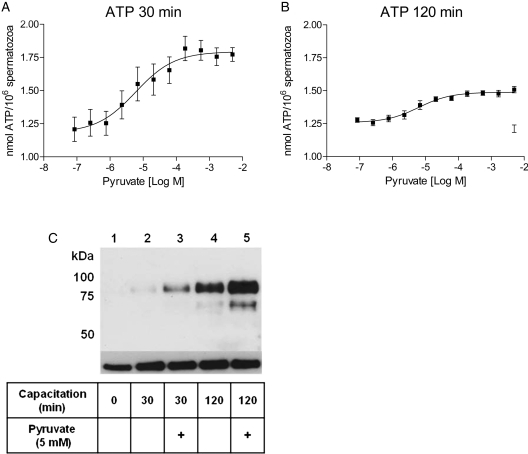
There has been an ongoing debate in the reproductive field about whether mammalian spermatozoa rely on glycolysis, oxidative phosphorylation or both for their energy production. Recent studies have proposed that human spermatozoa depend mainly on glucose for motility and fertilization but the mechanism behind an efficient glycolysis in human spermatozoa is not well understood. Here, we demonstrate how human spermatozoa utilize exogenous pyruvate to enhance glycolytic ATP production, motility, hyperactivation and capacitation, events that are crucial for male fertility.
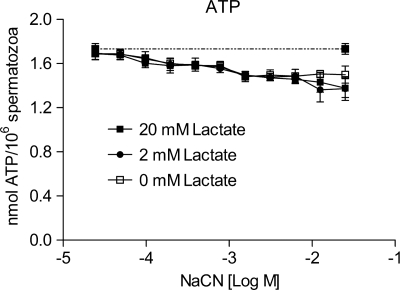
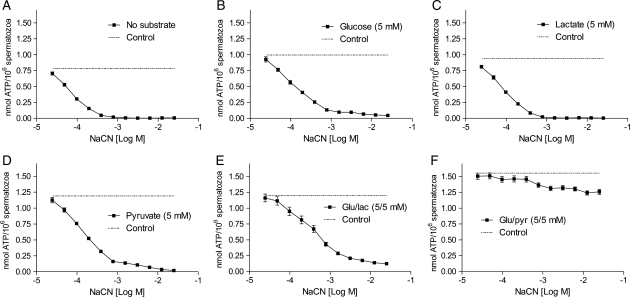
Purified human spermatozoa from healthy donors were incubated under capacitating conditions (including albumin, bicarbonate and glucose) and tested for changes in ATP levels, motility, hyperactivation and tyrosine phosphorylation after treatment with pyruvate. The experiments were repeated in the presence of sodium cyanide in order to assess the contribution from mitochondrial respiration. The metabolism of (13)C labeled glucose and pyruvate was traced by a combination of liquid chromatography and mass spectrometry.
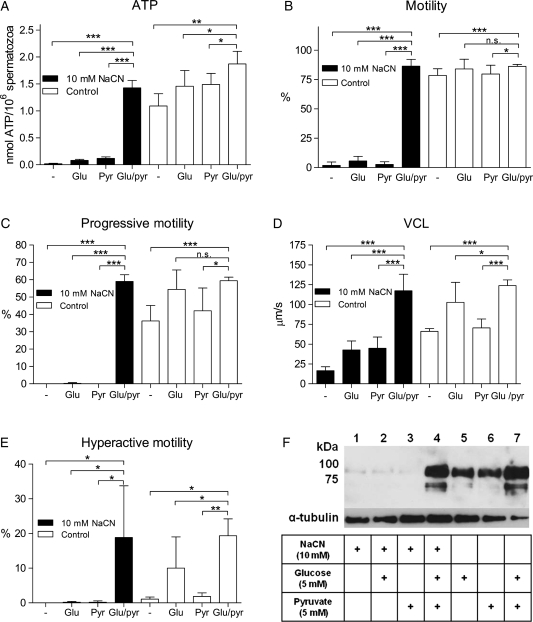
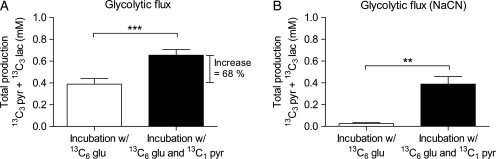
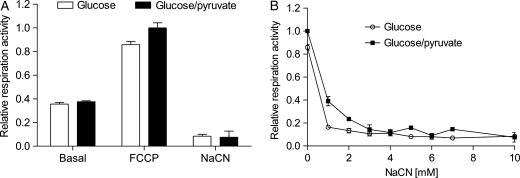
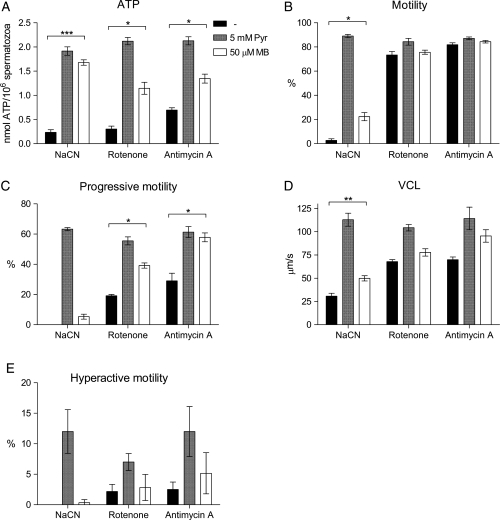
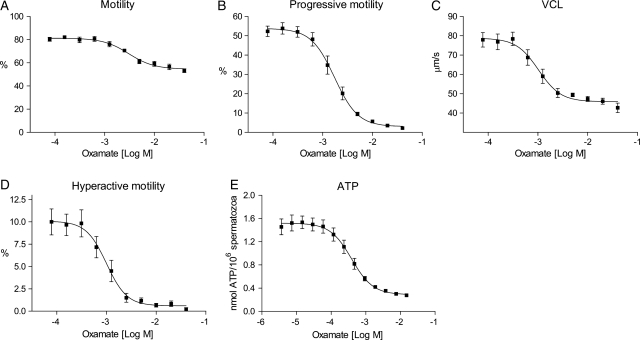
The treatment of human spermatozoa with exogenous pyruvate increased intracellular ATP levels, progressive motility and hyperactivation by 56, 21 and 130%, respectively. In addition, added pyruvate induced a significant increase in tyrosine phosphorylation levels. Blocking of the electron transport chain did not markedly affect the results, indicating that the mechanism is independent of oxidative phosphorylation. However, the observed effects could be counteracted by oxamate, an inhibitor of lactate dehydrogenase (LDH). Metabolic tracing experiments revealed that the observed rise in ATP concentration resulted from an enhanced glycolytic flux, which was increased by more than 50% in the presence of exogenous pyruvate. Moreover, all consumed (13)C labeled pyruvate added was converted to lactate rather than oxidized in the tricarboxylic acid cycle.
Human spermatozoa seem to rely mainly, if not entirely, on glycolysis as the source of ATP fueling the energy-demanding processes of motility and capacitation. The efficient glycolysis is dependent on exogenous pyruvate, which indirectly feeds the accelerated glycolysis with NAD(+) through the LDH-mediated conversion of pyruvate to lactate. Pyruvate is present in the human female reproductive tract at concentrations in accordance with our results. As seen in other mammals, the motility and fertility of human spermatozoa seem to be dictated by the available energy substrates present in the conspecific female.
在生殖领域,一直存在着哺乳动物精子是依赖糖酵解、氧化磷酸化还是两者都依赖来产生能量的争论。最近的研究表明,人类精子主要依赖葡萄糖来产生动力和受精,但人类精子中高效糖酵解的机制尚不清楚。在这里,我们展示了人类精子如何利用外源性丙酮酸来增强糖酵解 ATP 的产生、运动、超激活和获能,这些事件对男性生育能力至关重要。
从健康供体中纯化的人类精子在获能条件下(包括白蛋白、碳酸氢盐和葡萄糖)孵育,并在丙酮酸处理后检测 ATP 水平、运动、超激活和酪氨酸磷酸化的变化。为了评估线粒体呼吸的贡献,在存在氰化钠的情况下重复了实验。通过液相色谱和质谱联用追踪(13)C 标记的葡萄糖和丙酮酸的代谢。
外源性丙酮酸处理人类精子可使细胞内 ATP 水平、进行性运动和超激活分别增加 56%、21%和 130%。此外,添加丙酮酸可显著增加酪氨酸磷酸化水平。电子传递链的阻断对结果没有明显影响,表明该机制独立于氧化磷酸化。然而,观察到的效应可以被 oxamate(乳酸脱氢酶 (LDH) 的抑制剂)抵消。代谢追踪实验表明,观察到的 ATP 浓度升高是由于糖酵解通量增强所致,在外源丙酮酸存在下,糖酵解通量增加了 50%以上。此外,所有消耗的添加的(13)C 标记丙酮酸都转化为乳酸而不是在三羧酸循环中氧化。
人类精子似乎主要(如果不是完全的话)依赖糖酵解作为为运动和获能等耗能过程提供能量的 ATP 燃料。高效的糖酵解依赖于外源性丙酮酸,丙酮酸通过 LDH 介导的丙酮酸转化为乳酸来间接为加速糖酵解提供 NAD(+)。丙酮酸在人类女性生殖道中的浓度与我们的结果相符。与其他哺乳动物一样,人类精子的运动和生育能力似乎取决于同种雌性体内存在的可用能量底物。