Department of Medicine, University of Massachusetts Medical School, 364 Plantation Street, Worcester, MA 01605, USA.
BMC Immunol. 2011 Sep 30;12:55. doi: 10.1186/1471-2172-12-55.
Prolonged alcohol consumption is a significant co-factor in the progression of chronic viral infections including hepatitis C and HIV, which are both single-stranded RNA viruses. Toll like receptor 8 (TLR8), a pattern recognition receptor expressed in monocytes, senses viral single stranded RNA as a danger signal and leads to the induction of Type I interferon (IFN) as well as the pro-inflammatory cytokine, tumor necrosis factor alpha (TNF alpha). Lipopolysaccharide (LPS), a Toll like receptor 4 (TLR4) ligand, was shown to affect inflammatory cell activation after alcohol consumption and in HIV and HCV infections. Here we hypothesized that alcohol exposure modulates TLR8- and TLR4-ligand-induced monocyte activation and affects both type I IFN and inflammatory cytokine induction.
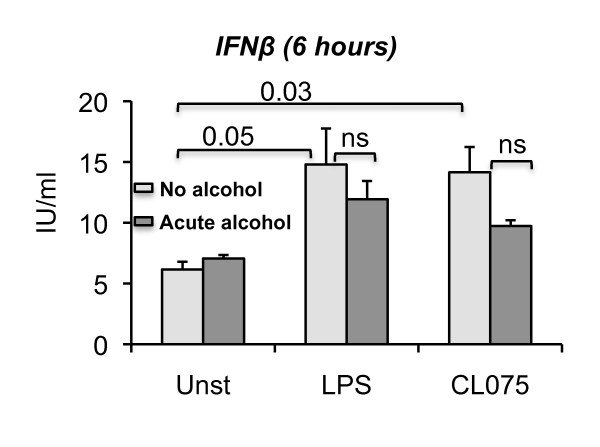
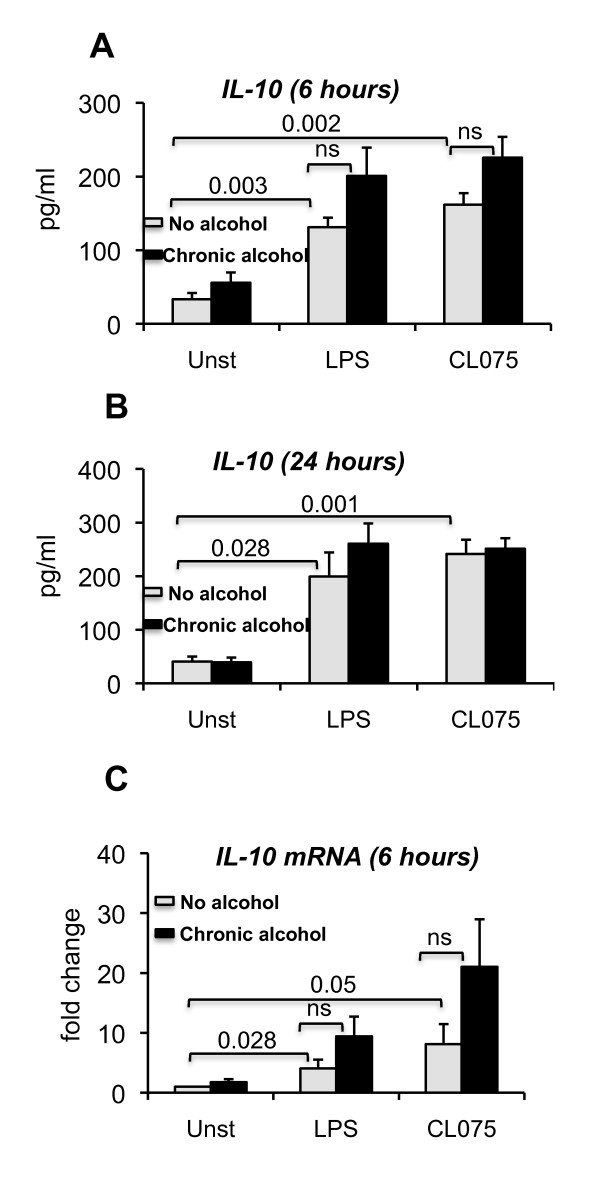
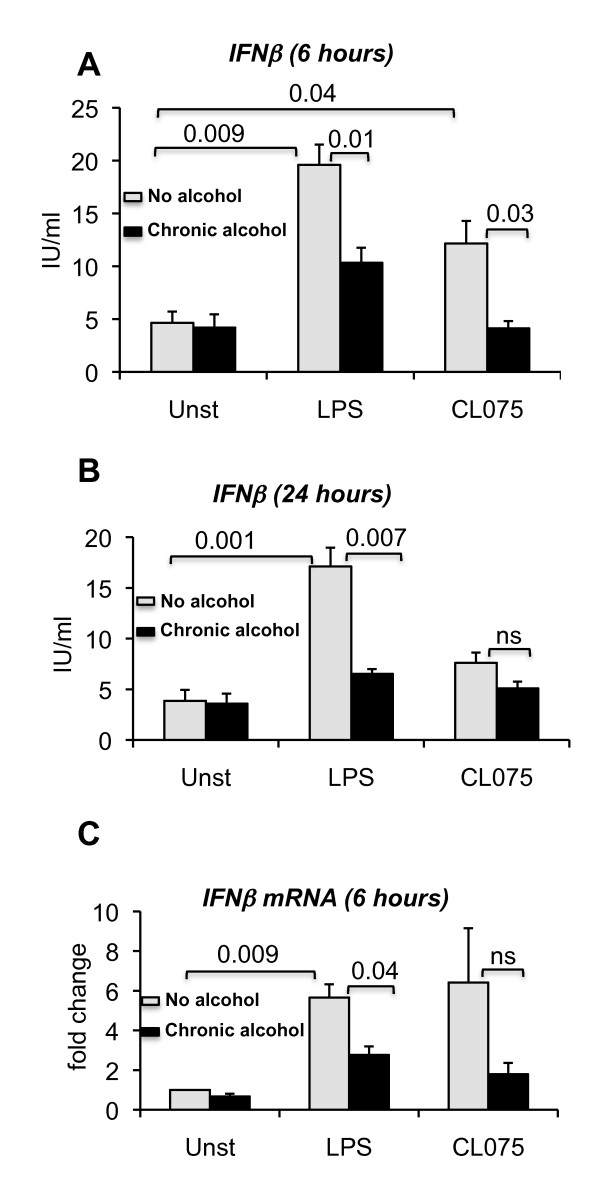
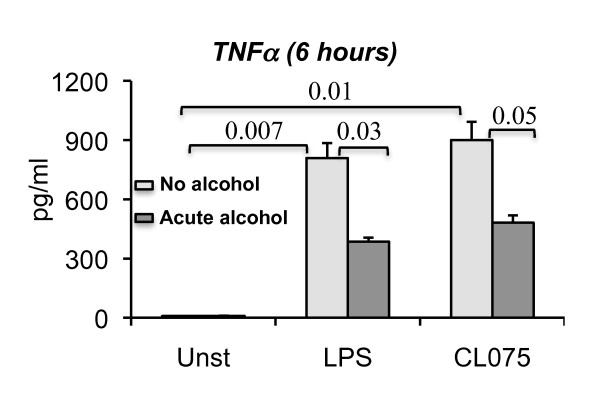
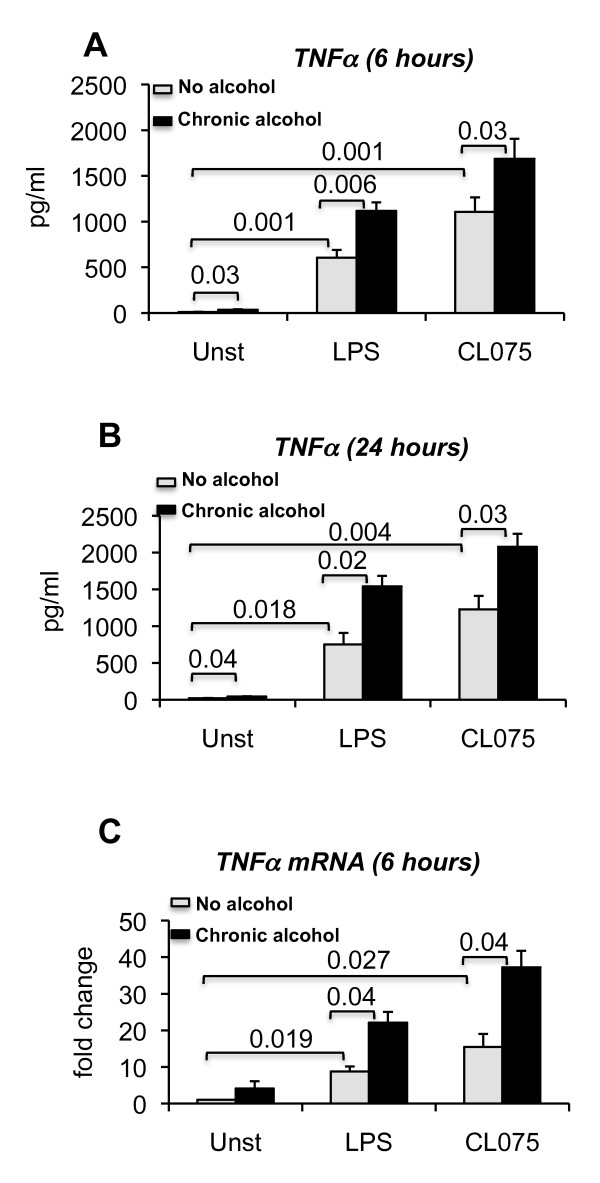
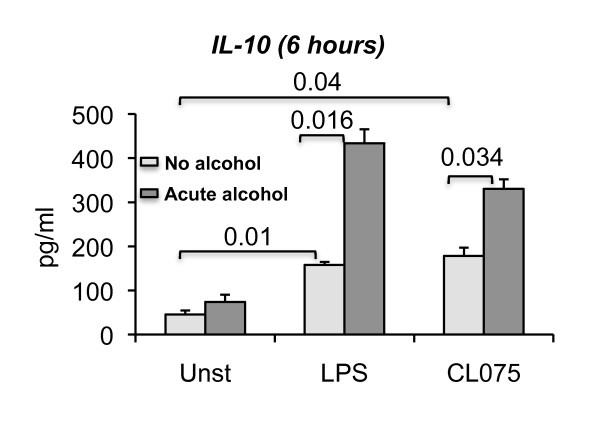
The TLR8 ligand, CL075, as well as the TLR4 ligand, LPS, resulted in a significant induction of TNF alpha both at the mRNA and protein levels in human monocytes. We found that both acute and prolonged alcohol treatment resulted in inhibition of type I IFN induction by either TLR8 or TLR4 ligands in human monocytes at the protein and mRNA levels. In contrast to Type I IFN production, the effects of acute and prolonged alcohol were different on inflammatory cytokine activation after TLR8 or TLR4 ligand stimulation. Acute alcohol inhibited TLR8- or TLR4-induced TNF alpha protein and mRNA induction while it augmented IL-10 production in monocytes. In contrast, prolonged alcohol treatment augmented TNF alpha without affecting IL-10 production significantly in response to either TLR8 or TLR4 ligand stimulation.
These novel results suggest first, that alcohol has a profound inhibitory effect on Type I IFN induction regardless of intracellular (TLR8) or cell surface-derived (TLR4) danger signals. Second, both acute and prolonged alcohol exposure can inhibit antiviral Type I IFN pathway activation. Third, the opposite effects of acute (inhibitory) and prolonged alcohol (augmentation) treatment on pro-inflammatory cytokine activation extend to TLR8-induced signals beyond the previously shown TLR4/LPS pathway.
长期饮酒是慢性病毒感染(包括丙型肝炎和 HIV)进展的重要协同因素,这两种病毒都是单链 RNA 病毒。Toll 样受体 8(TLR8)是一种在单核细胞中表达的模式识别受体,它将病毒单链 RNA 识别为危险信号,导致 I 型干扰素(IFN)和促炎细胞因子肿瘤坏死因子-α(TNF-α)的诱导。脂多糖(LPS)是 Toll 样受体 4(TLR4)的配体,研究表明,它在饮酒后以及在 HIV 和 HCV 感染中影响炎症细胞的激活。在这里,我们假设酒精暴露调节 TLR8 和 TLR4 配体诱导的单核细胞激活,并影响 I 型 IFN 和炎症细胞因子的诱导。
TLR8 配体 CL075 以及 TLR4 配体 LPS 在人类单核细胞中均导致 TNF-α的 mRNA 和蛋白水平显著诱导。我们发现,无论是 TLR8 还是 TLR4 配体,急性和长期的酒精处理都导致人单核细胞中 I 型 IFN 诱导的蛋白和 mRNA 水平抑制。与 I 型 IFN 产生相反,急性和长期酒精对 TLR8 或 TLR4 配体刺激后炎症细胞因子激活的影响不同。急性酒精抑制 TLR8 或 TLR4 诱导的 TNF-α蛋白和 mRNA 诱导,但增强单核细胞中 IL-10 的产生。相比之下,长期酒精处理在 TLR8 或 TLR4 配体刺激时,增强 TNF-α的产生,而对 IL-10 的产生没有显著影响。
这些新的结果表明,首先,无论细胞内(TLR8)还是细胞表面衍生的(TLR4)危险信号,酒精对 I 型 IFN 诱导都有深远的抑制作用。其次,急性和长期酒精暴露均可抑制抗病毒 I 型 IFN 通路的激活。第三,急性(抑制)和长期(增强)酒精处理对促炎细胞因子激活的相反作用,超出了先前显示的 TLR4/LPS 途径,扩展到 TLR8 诱导的信号。