Australian Research Council Centre of Excellence for Coral Reef Studies, James Cook University, Townsville, Australia.
PLoS One. 2011;6(9):e25447. doi: 10.1371/journal.pone.0025447. Epub 2011 Sep 28.
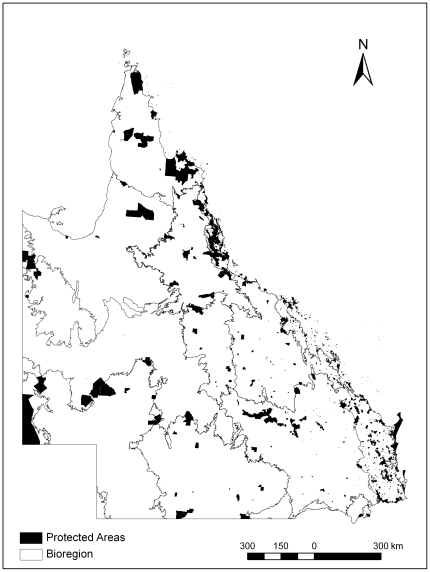
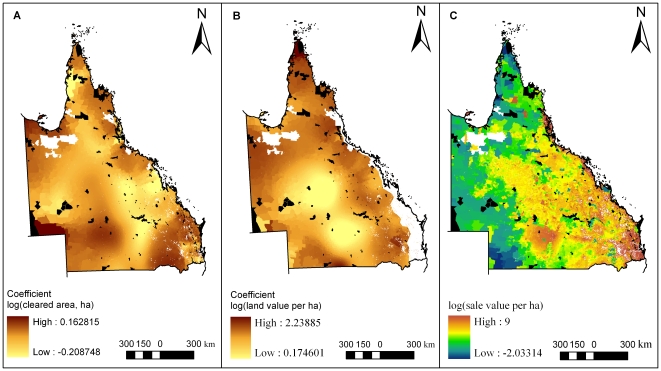
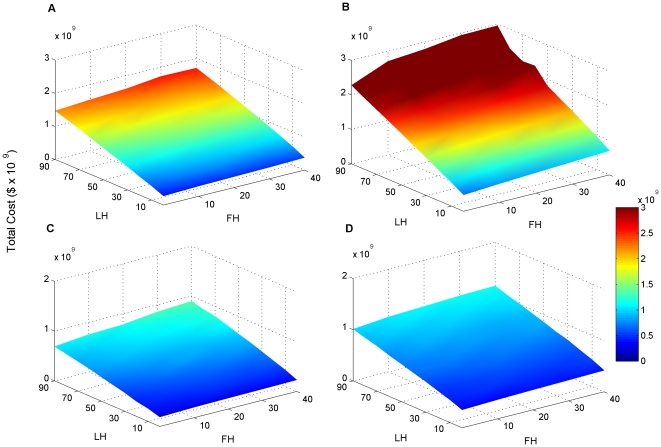
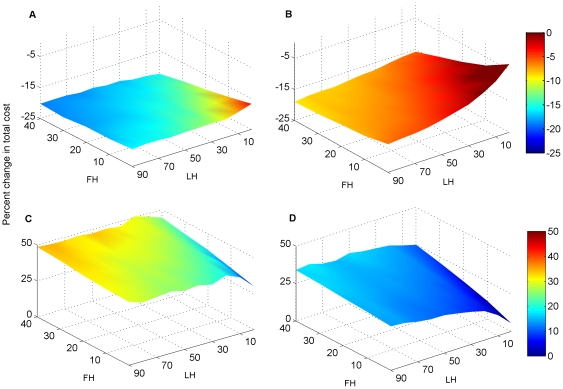
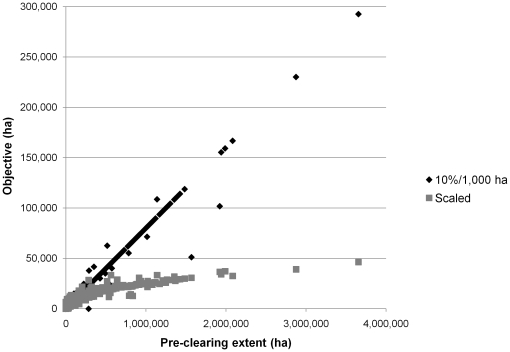
Many governments have recently gone on record promising large-scale expansions of protected areas to meet global commitments such as the Convention on Biological Diversity. As systems of protected areas are expanded to be more comprehensive, they are more likely to be implemented if planners have realistic budget estimates so that appropriate funding can be requested. Estimating financial budgets a priori must acknowledge the inherent uncertainties and assumptions associated with key parameters, so planners should recognize these uncertainties by estimating ranges of potential costs. We explore the challenge of budgeting a priori for protected area expansion in the face of uncertainty, specifically considering the future expansion of protected areas in Queensland, Australia. The government has committed to adding ∼12 million ha to the reserve system, bringing the total area protected to 20 million ha by 2020. We used Marxan to estimate the costs of potential reserve designs with data on actual land value, market value, transaction costs, and land tenure. With scenarios, we explored three sources of budget variability: size of biodiversity objectives; subdivision of properties; and legal acquisition routes varying with tenure. Depending on the assumptions made, our budget estimates ranged from $214 million to $2.9 billion. Estimates were most sensitive to assumptions made about legal acquisition routes for leasehold land. Unexpected costs (costs encountered by planners when real-world costs deviate from assumed costs) responded non-linearly to inability to subdivide and percentage purchase of private land. A financially conservative approach--one that safeguards against large cost increases while allowing for potential financial windfalls--would involve less optimistic assumptions about acquisition and subdivision to allow Marxan to avoid expensive properties where possible while meeting conservation objectives. We demonstrate how a rigorous analysis can inform discussions about the expansion of systems of protected areas, including the identification of factors that influence budget variability.
许多政府最近承诺大规模扩大保护区,以履行《生物多样性公约》等全球承诺。随着保护区系统的扩大变得更加全面,如果规划者有现实的预算估计,以便能够申请适当的资金,那么它们更有可能得到实施。在进行预先财务预算时,必须承认与关键参数相关的固有不确定性和假设,因此规划者应该通过估计潜在成本范围来认识到这些不确定性。我们探讨了在不确定的情况下对保护区扩张进行预先预算的挑战,特别是考虑了澳大利亚昆士兰州未来的保护区扩张。政府已承诺到 2020 年将保护区系统增加约 1200 万公顷,使保护区总面积达到 2000 万公顷。我们使用 Marxan 根据实际土地价值、市场价值、交易成本和土地保有权数据来估算潜在保护区设计的成本。通过情景分析,我们探讨了预算变化的三个来源:生物多样性目标的规模;财产细分;以及随着保有权的不同而变化的合法获取途径。根据所做的假设,我们的预算估计从 2.14 亿美元到 29 亿美元不等。估计对租赁土地的合法获取途径的假设最为敏感。意外成本(当现实世界的成本偏离假设成本时,规划者遇到的成本)对无法细分和私人土地购买比例的响应是非线性的。一种保守的财务方法——一种既能防止成本大幅增加,又能为潜在的财务意外之财留出空间的方法——将涉及对收购和细分的更为乐观的假设,以使 Marxan 尽可能避免昂贵的物业,同时满足保护目标。我们展示了严格的分析如何为系统的保护地扩张的讨论提供信息,包括确定影响预算变化的因素。