Department of Pathology, The University of Texas Medical Branch, Galveston, TX 77555-0609, USA.
Virology. 2011 Dec 20;421(2):87-95. doi: 10.1016/j.virol.2011.09.013. Epub 2011 Oct 8.
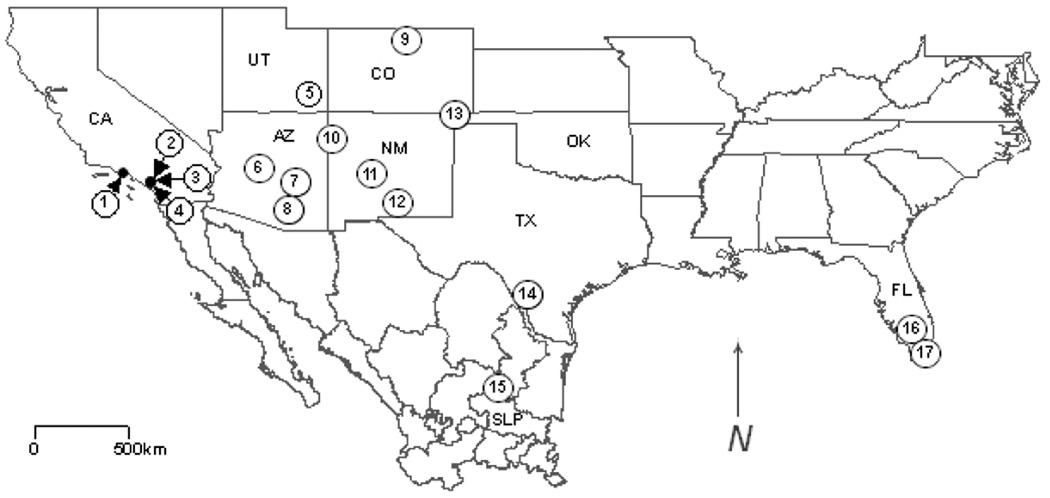
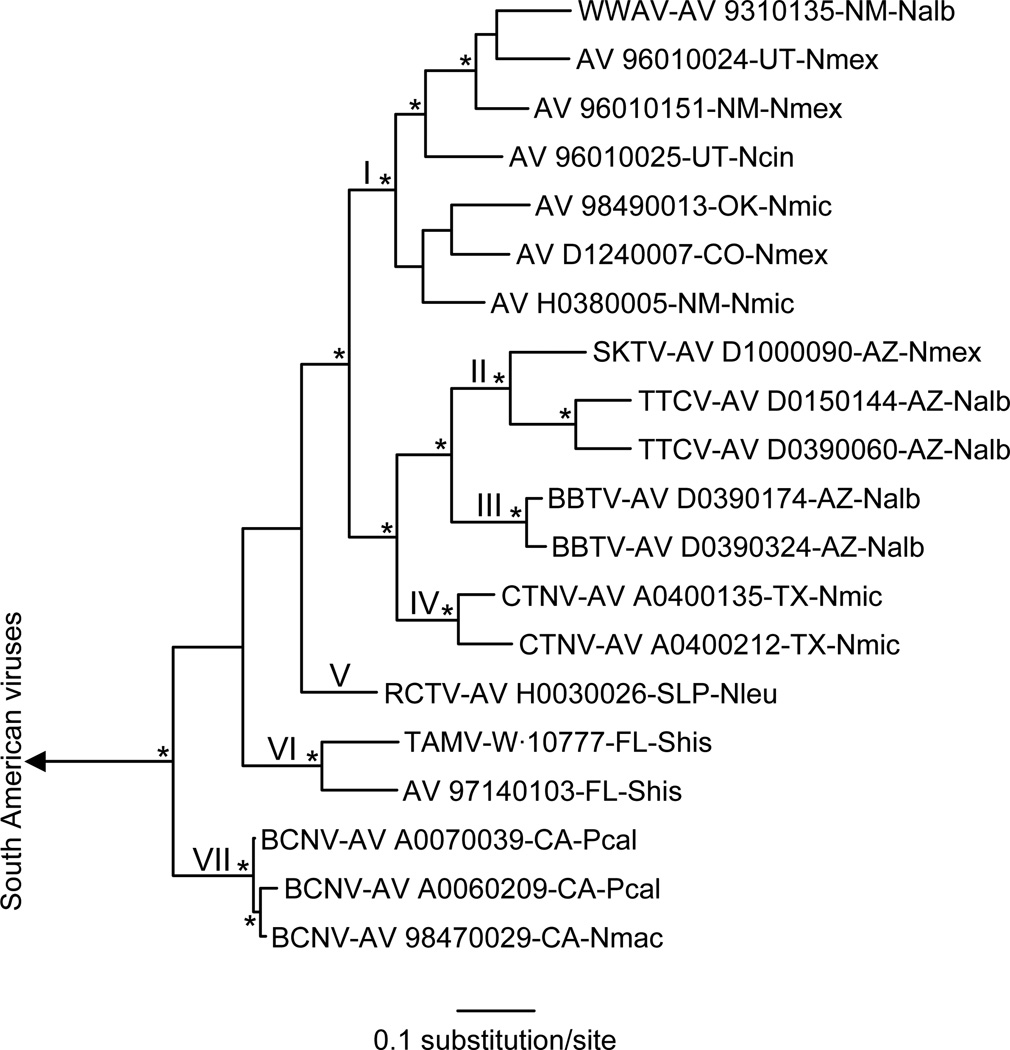
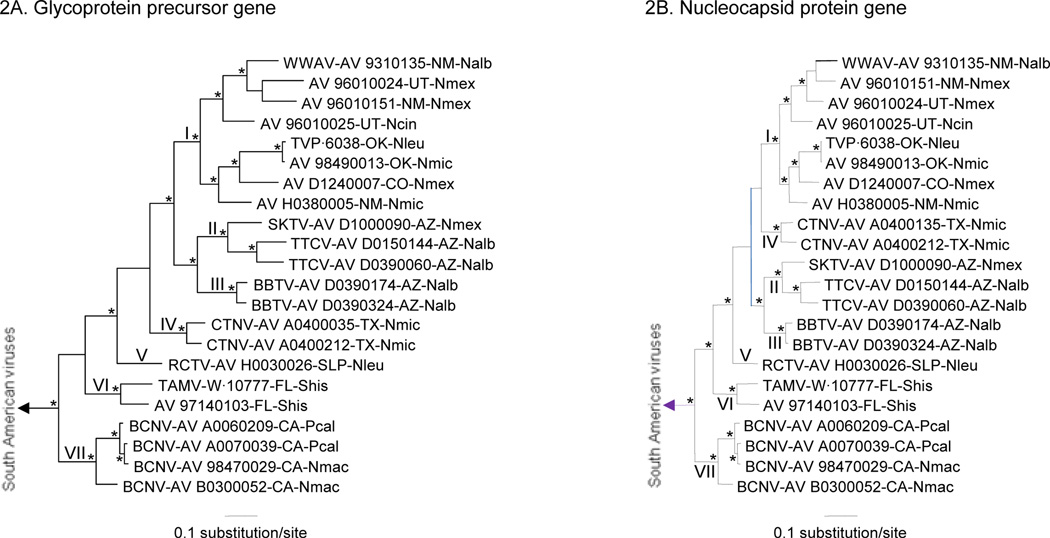
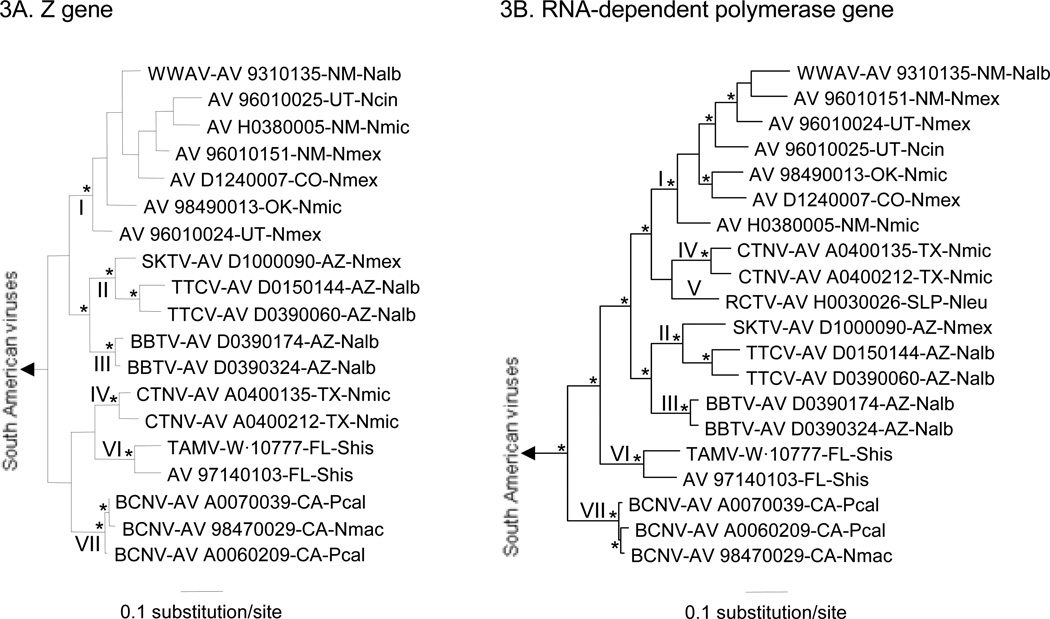
The purpose of this study was to extend our knowledge of the genetic diversity and phylogenetic relationships among the North American Tacaribe serocomplex viruses. Analyses of glycoprotein precursor gene sequence data separated the North American arenaviruses into 7 major phylogenetic groups. The results of analyses of Z gene and nucleocapsid protein gene sequence data were not remarkably different from the glycoprotein precursor gene tree. In contrast, the tree generated from RNA-dependent RNA polymerase gene sequences differed from the glycoprotein precursor gene tree with regard to phylogenetic relationships among the viruses associated with woodrats captured in the western United States, Texas, or northern Mexico. Further analyses of the polymerase gene sequence data set suggested that the difference in topology was a consequence of incongruence among the gene tree data sets or chance rather than genetic reassortment or recombination between arenaviruses.
本研究旨在扩展我们对北美的塔卡里伯血清复合物病毒的遗传多样性和系统发育关系的认识。糖蛋白前体基因序列数据分析将北美的沙粒病毒分为 7 个主要的系统发育群。Z 基因和核衣壳蛋白基因序列数据分析的结果与糖蛋白前体基因树没有明显的不同。相比之下,从 RNA 依赖性 RNA 聚合酶基因序列生成的树与糖蛋白前体基因树在与在美国西部、德克萨斯州或墨西哥北部捕获的木鼠相关的病毒之间的系统发育关系上有所不同。对聚合酶基因序列数据集的进一步分析表明,拓扑结构的差异是基因树数据集之间不一致或偶然的结果,而不是沙粒病毒之间的遗传重组或重组。