Cancer Research UK Cambridge Research Institute, Li Ka Shing Centre, Cambridge, UK.
Nat Genet. 2011 Oct 9;43(11):1147-53. doi: 10.1038/ng.971.
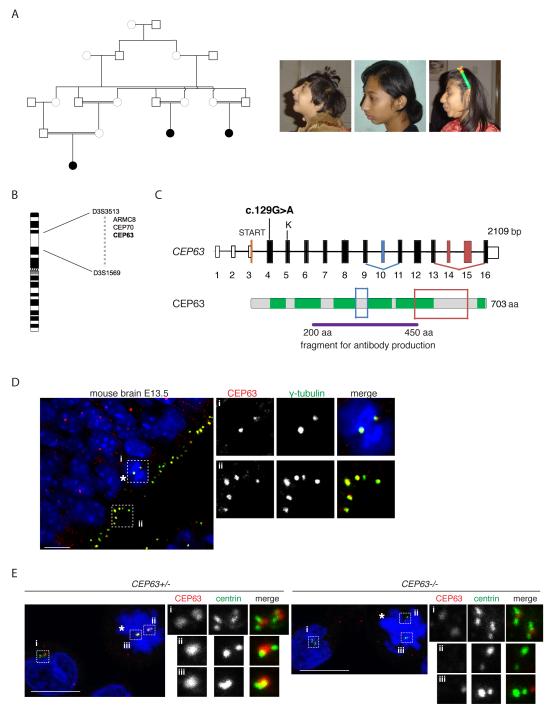
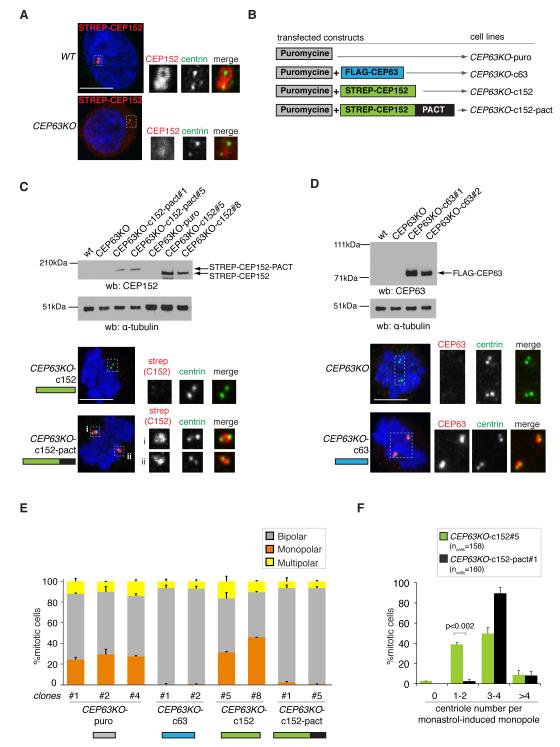
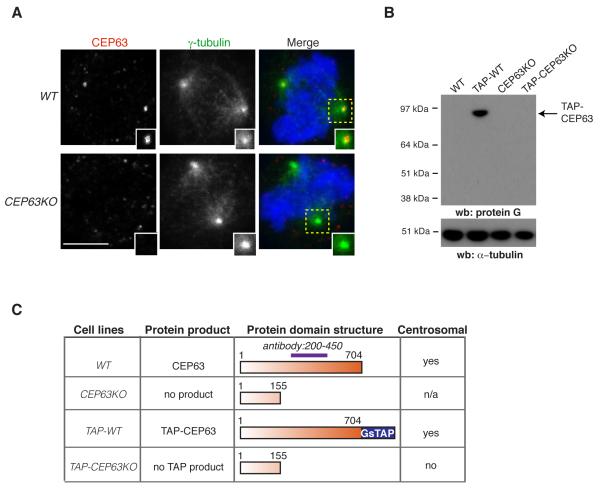
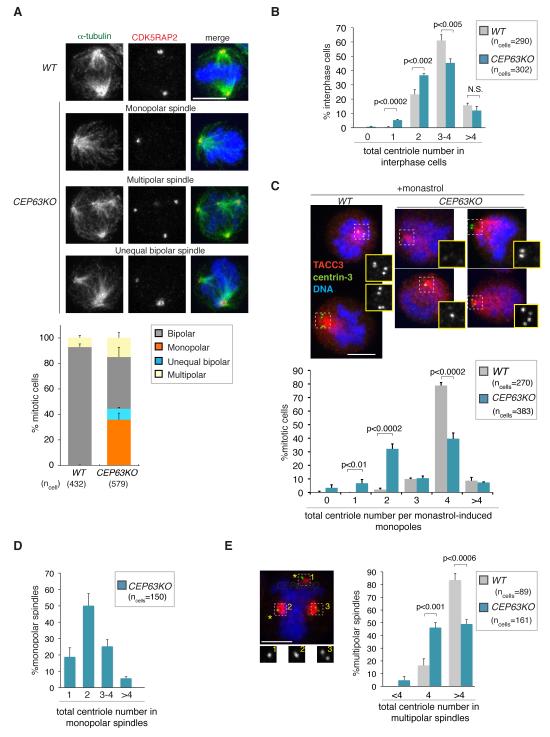
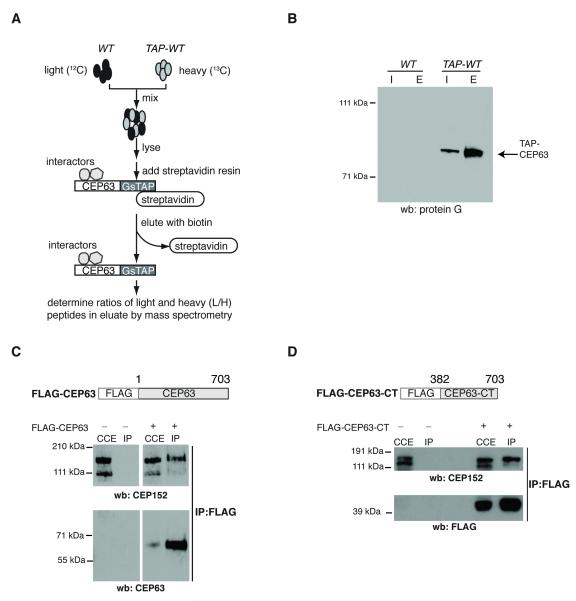
Autosomal recessive primary microcephaly (MCPH) is characterized by a substantial reduction in prenatal human brain growth without alteration of the cerebral architecture and is caused by biallelic mutations in genes coding for a subset of centrosomal proteins. Although at least three of these proteins have been implicated in centrosome duplication, the nature of the centrosome dysfunction that underlies the neurodevelopmental defect in MCPH is unclear. Here we report a homozygous MCPH-causing mutation in human CEP63. CEP63 forms a complex with another MCPH protein, CEP152, a conserved centrosome duplication factor. Together, these two proteins are essential for maintaining normal centrosome numbers in cells. Using super-resolution microscopy, we found that CEP63 and CEP152 co-localize in a discrete ring around the proximal end of the parental centriole, a pattern specifically disrupted in CEP63-deficient cells derived from patients with MCPH. This work suggests that the CEP152-CEP63 ring-like structure ensures normal neurodevelopment and that its impairment particularly affects human cerebral cortex growth.
常染色体隐性小头畸形(MCPH)的特征是产前人脑生长明显减少,而大脑结构没有改变,是由编码中心体蛋白亚群的基因的双等位基因突变引起的。尽管这些蛋白中至少有三种与中心体复制有关,但导致 MCPH 神经发育缺陷的中心体功能障碍的性质尚不清楚。在这里,我们报道了人类 CEP63 中的一个纯合 MCPH 致病突变。CEP63 与另一个 MCPH 蛋白 CEP152 形成复合物,CEP152 是一种保守的中心体复制因子。这两种蛋白共同作用对于维持细胞内正常的中心体数量是必需的。通过超分辨率显微镜,我们发现 CEP63 和 CEP152 在亲本中心粒的近端周围形成一个离散的环共定位,这一模式在源自 MCPH 患者的 CEP63 缺陷细胞中被特异性破坏。这项工作表明,CEP152-CEP63 环状结构确保了正常的神经发育,其损伤特别影响人类大脑皮层的生长。