CNRS UPR 1142, Institute of Human Genetics, 141, rue de la Cardonille, 34396 Montpellier Cedex 05, France.
BMC Neurosci. 2011 Oct 10;12:99. doi: 10.1186/1471-2202-12-99.
The adult central nervous system (CNS) contains different populations of immature cells that could possibly be used to repair brain and spinal cord lesions. The diversity and the properties of these cells in the human adult CNS remain to be fully explored. We previously isolated Nestin+ Sox2+ neural multipotential cells from the adult human spinal cord using the neurosphere method (i.e. non adherent conditions and defined medium).
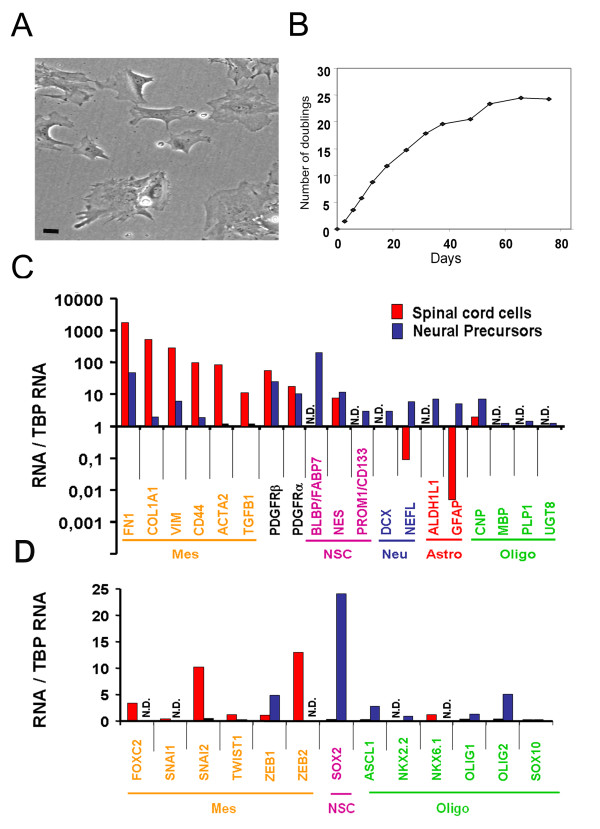
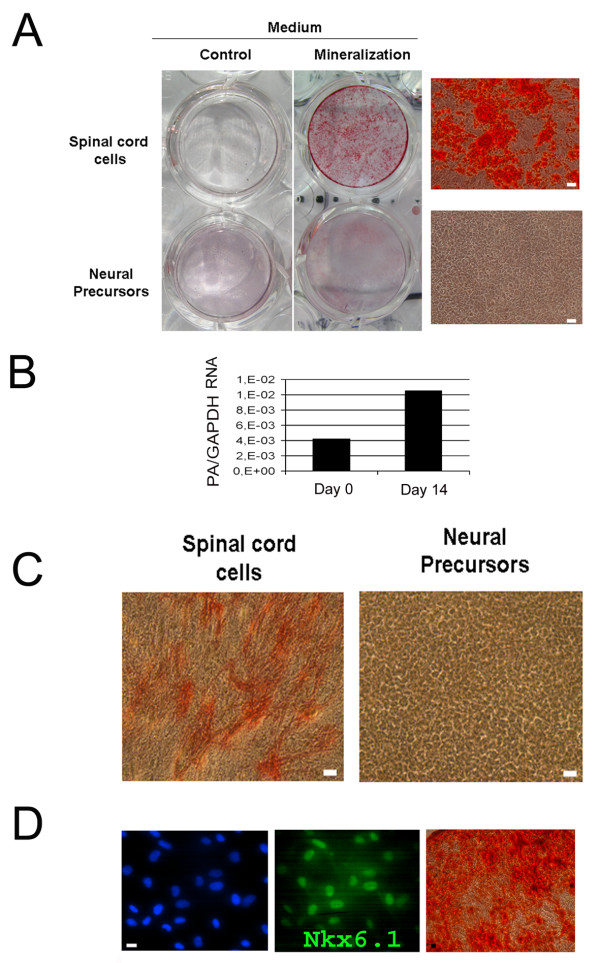
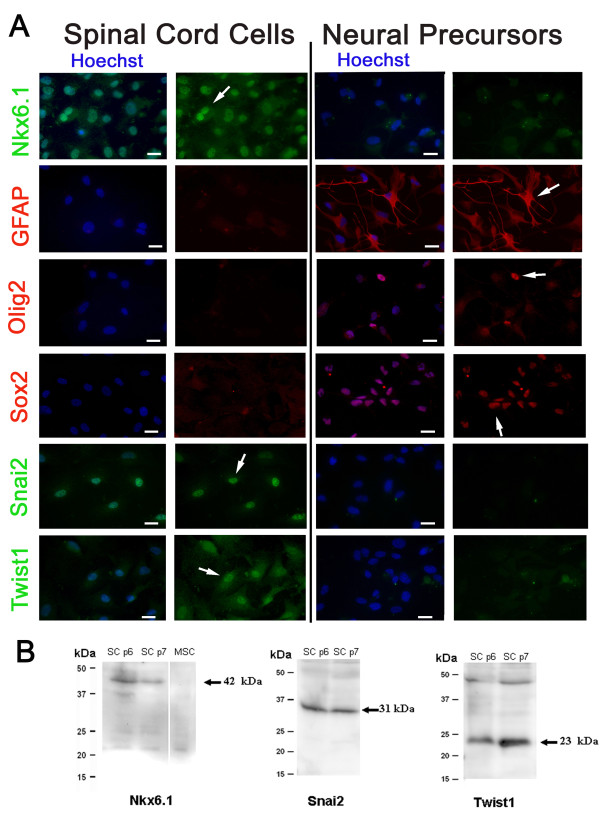
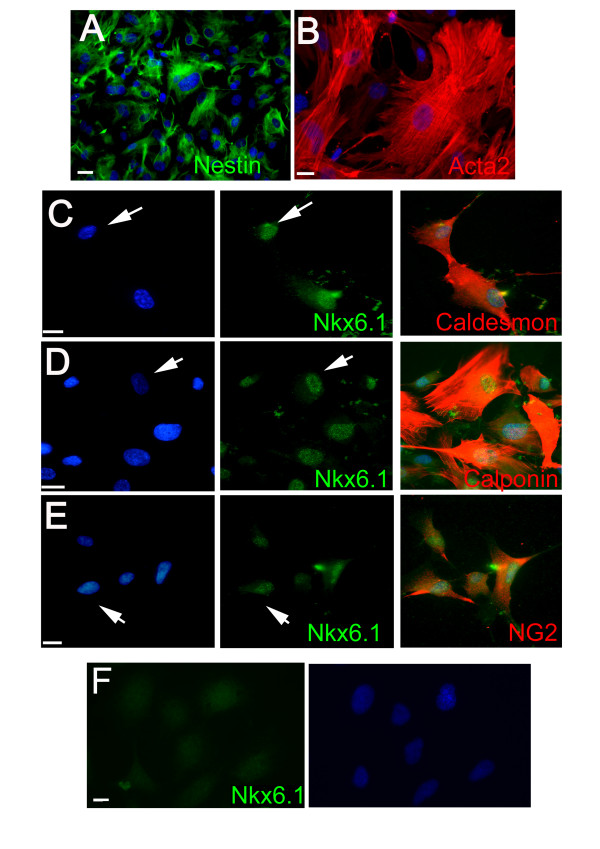
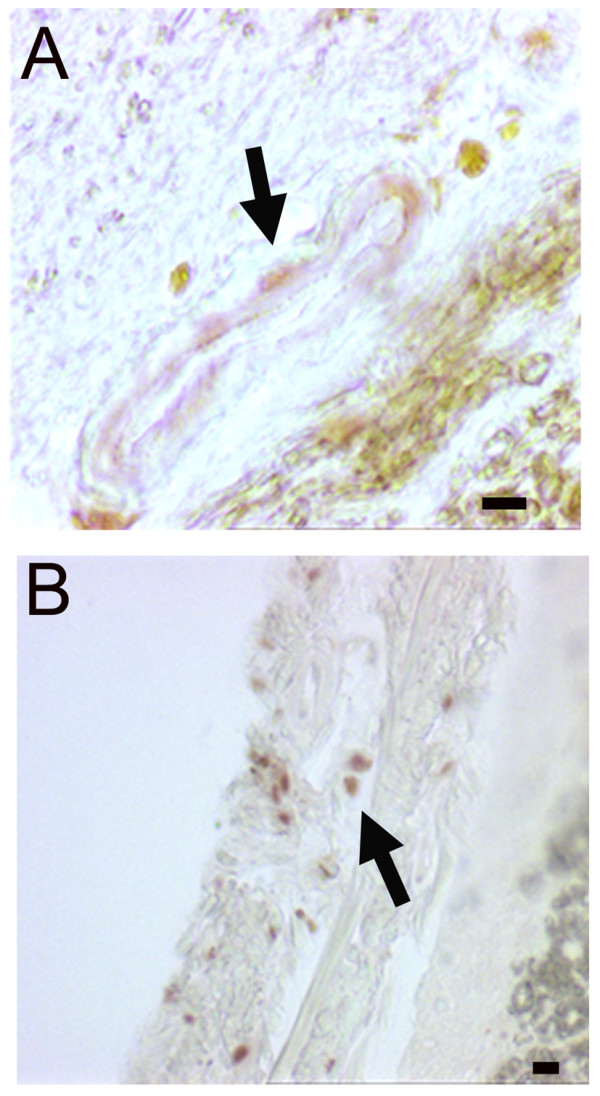
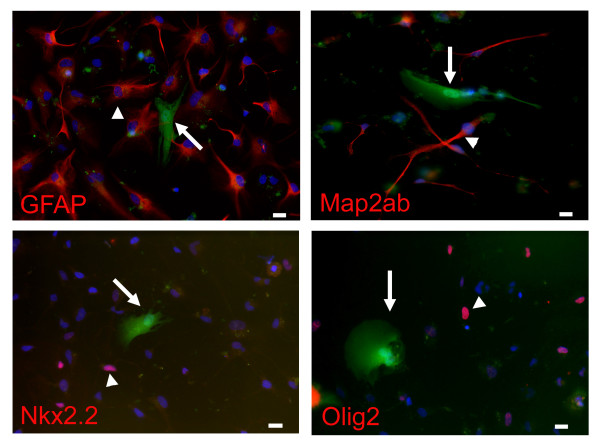
Here we report the isolation and long term propagation of another population of Nestin+ cells from this tissue using adherent culture conditions and serum. QPCR and immunofluorescence indicated that these cells had mesenchymal features as evidenced by the expression of Snai2 and Twist1 and lack of expression of neural markers such as Sox2, Olig2 or GFAP. Indeed, these cells expressed markers typical of smooth muscle vascular cells such as Calponin, Caldesmone and Acta2 (Smooth muscle actin). These cells could not differentiate into chondrocytes, adipocytes, neuronal and glial cells, however they readily mineralized when placed in osteogenic conditions. Further characterization allowed us to identify the Nkx6.1 transcription factor as a marker for these cells. Nkx6.1 was expressed in vivo by CNS vascular muscular cells located in the parenchyma and the meninges.
Smooth muscle cells expressing Nestin and Nkx6.1 is the main cell population derived from culturing human spinal cord cells in adherent conditions with serum. Mineralization of these cells in vitro could represent a valuable model for studying calcifications of CNS vessels which are observed in pathological situations or as part of the normal aging. In addition, long term propagation of these cells will allow the study of their interaction with other CNS cells and their implication in scar formation during spinal cord injury.
成人中枢神经系统(CNS)包含不同的未成熟细胞群体,这些细胞可能被用于修复脑和脊髓损伤。这些细胞在成人中枢神经系统中的多样性和特性仍有待充分探索。我们之前使用神经球方法(即非贴壁条件和定义的培养基)从成人脊髓中分离出巢蛋白+Sox2+多能神经细胞。
在这里,我们报告了使用贴壁培养条件和血清从该组织中分离和长期培养另一种巢蛋白+细胞群体。QPCR 和免疫荧光表明,这些细胞具有间充质特征,表现为 Snai2 和 Twist1 的表达以及神经标记物如 Sox2、Olig2 或 GFAP 的缺乏表达。事实上,这些细胞表达平滑肌血管细胞的典型标记物,如 Calponin、Caldesmone 和 Acta2(平滑肌肌动蛋白)。这些细胞不能分化为软骨细胞、脂肪细胞、神经元和神经胶质细胞,但是当置于成骨条件下时,它们很容易矿化。进一步的特征鉴定使我们能够鉴定出 Nkx6.1 转录因子作为这些细胞的标记物。Nkx6.1 在体内由位于实质和脑膜中的 CNS 血管平滑肌细胞表达。
在贴壁条件下用血清培养人脊髓细胞可得到主要的巢蛋白和 Nkx6.1 表达的平滑肌细胞群体。这些细胞在体外矿化可作为研究 CNS 血管钙化的有价值模型,这些血管钙化在病理情况下或作为正常衰老的一部分观察到。此外,这些细胞的长期培养将允许研究它们与其他 CNS 细胞的相互作用及其在脊髓损伤期间形成疤痕的作用。