Bioinformatics and Computational Life Sciences Laboratory, ITTC, Department of Electrical Engineering and Computer Science, The University of Kansas, 1520 West 15th Street, Lawrence, KS 66045, USA.
BMC Genomics. 2011;12 Suppl 2(Suppl 2):S9. doi: 10.1186/1471-2164-12-S2-S9. Epub 2011 Jul 27.
Detecting epistatic interactions plays a significant role in improving pathogenesis, prevention, diagnosis and treatment of complex human diseases. A recent study in automatic detection of epistatic interactions shows that Markov Blanket-based methods are capable of finding genetic variants strongly associated with common diseases and reducing false positives when the number of instances is large. Unfortunately, a typical dataset from genome-wide association studies consists of very limited number of examples, where current methods including Markov Blanket-based method may perform poorly.
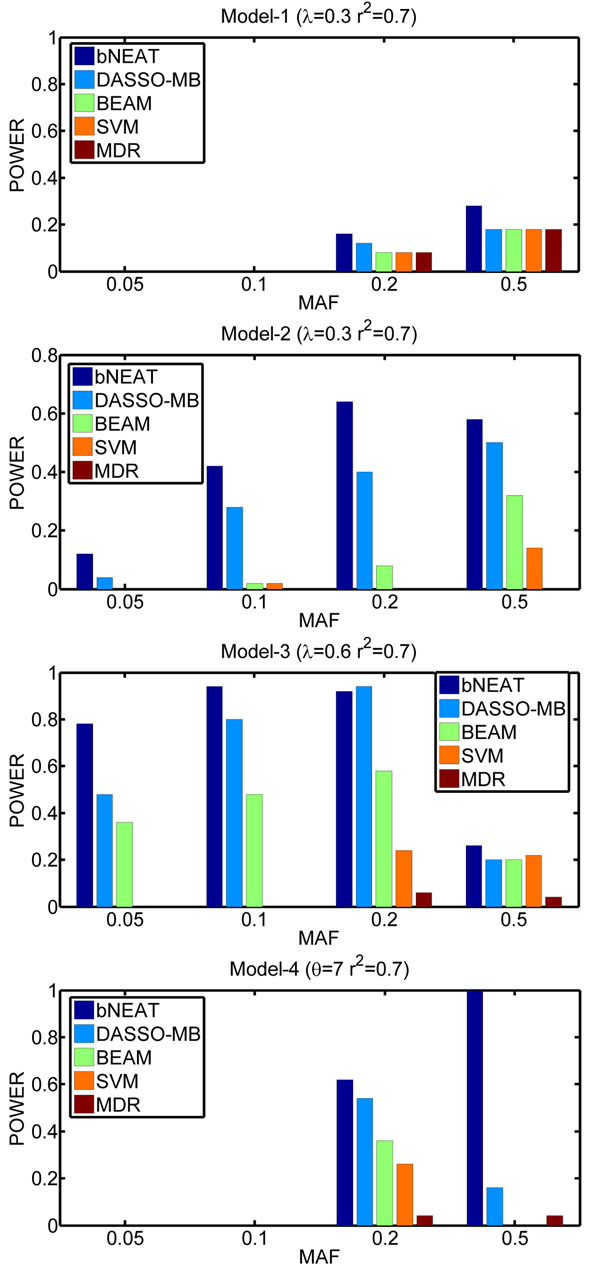
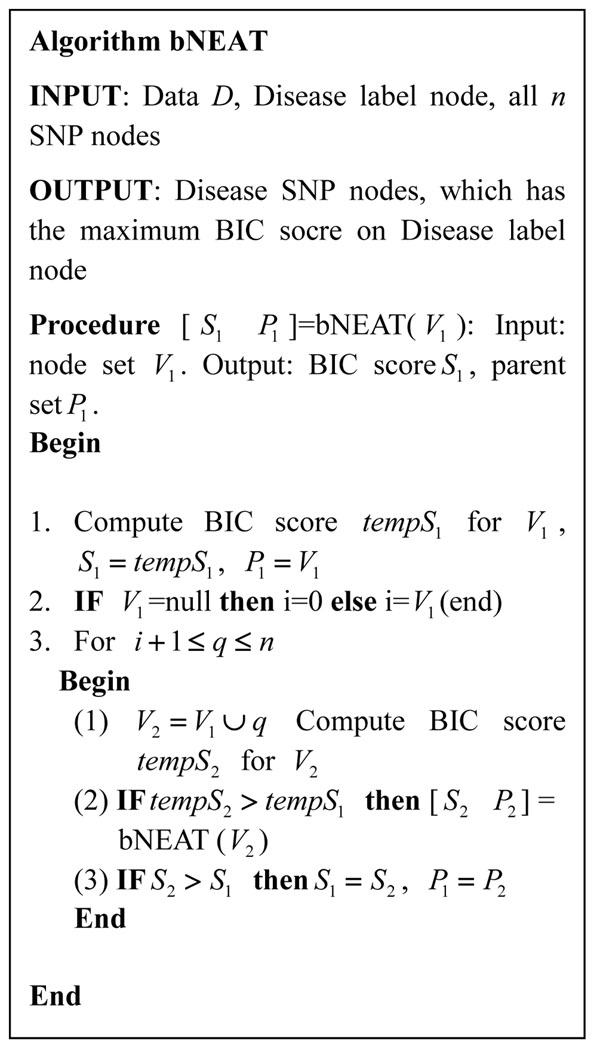
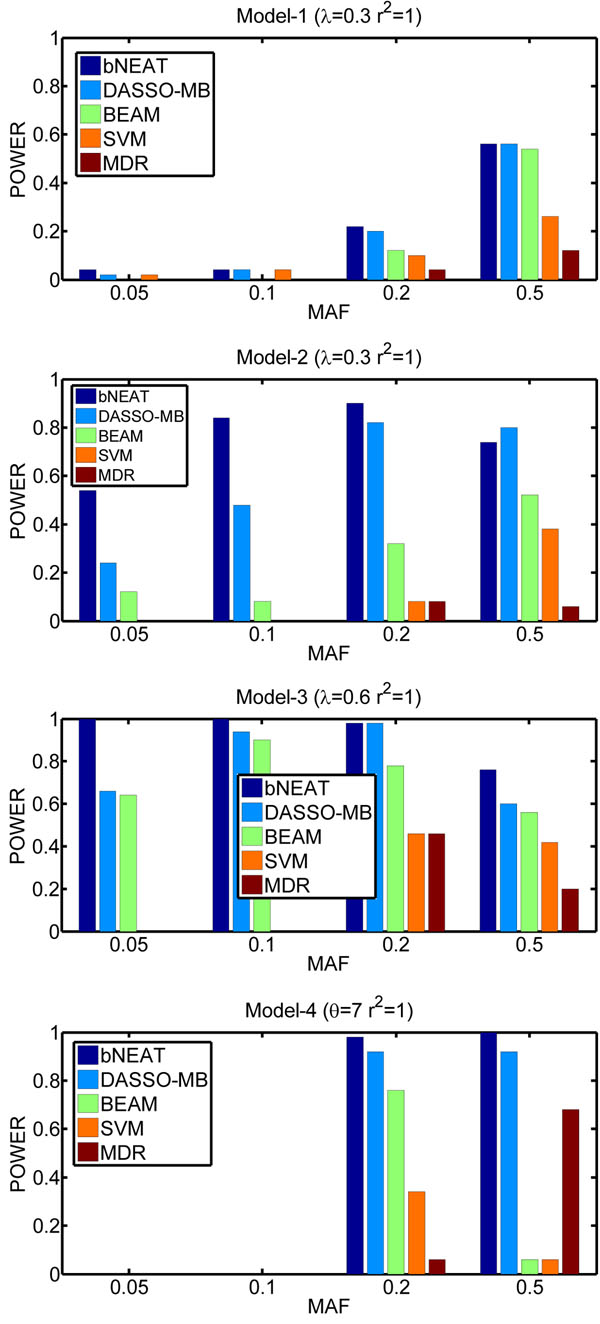
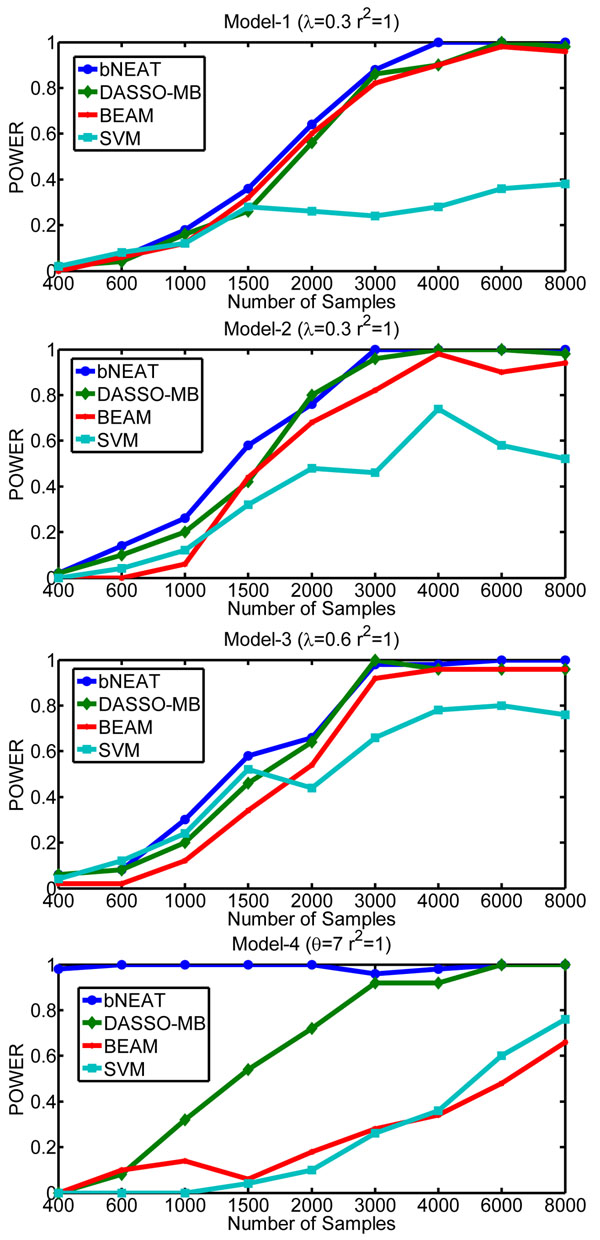
To address small sample problems, we propose a Bayesian network-based approach (bNEAT) to detect epistatic interactions. The proposed method also employs a Branch-and-Bound technique for learning. We apply the proposed method to simulated datasets based on four disease models and a real dataset. Experimental results show that our method outperforms Markov Blanket-based methods and other commonly-used methods, especially when the number of samples is small.
Our results show bNEAT can obtain a strong power regardless of the number of samples and is especially suitable for detecting epistatic interactions with slight or no marginal effects. The merits of the proposed approach lie in two aspects: a suitable score for Bayesian network structure learning that can reflect higher-order epistatic interactions and a heuristic Bayesian network structure learning method.
检测上位性相互作用在提高复杂人类疾病的发病机制、预防、诊断和治疗方面起着重要作用。最近一项关于上位性相互作用自动检测的研究表明,基于马尔可夫毯的方法能够发现与常见疾病强烈相关的遗传变异,并在实例数量较大时减少假阳性。不幸的是,全基因组关联研究的典型数据集包含非常有限数量的实例,包括基于马尔可夫毯的方法在内的当前方法在这种情况下可能表现不佳。
为了解决小样本问题,我们提出了一种基于贝叶斯网络的方法(bNEAT)来检测上位性相互作用。所提出的方法还采用了分支定界技术进行学习。我们将所提出的方法应用于基于四个疾病模型和一个真实数据集的模拟数据集。实验结果表明,与基于马尔可夫毯的方法和其他常用方法相比,我们的方法表现更好,尤其是在样本数量较少的情况下。
我们的结果表明,bNEAT 无论样本数量多少都能获得较强的功效,特别适合检测边际效应较小或没有边际效应的上位性相互作用。所提出方法的优点在于两个方面:一个适合贝叶斯网络结构学习的分数,能够反映高阶上位性相互作用;一种启发式贝叶斯网络结构学习方法。