Department of Plant Molecular Biology, University of Lausanne, 1015 Lausanne, Switzerland.
J Exp Bot. 2012 Jan;63(2):727-37. doi: 10.1093/jxb/err308. Epub 2011 Oct 11.
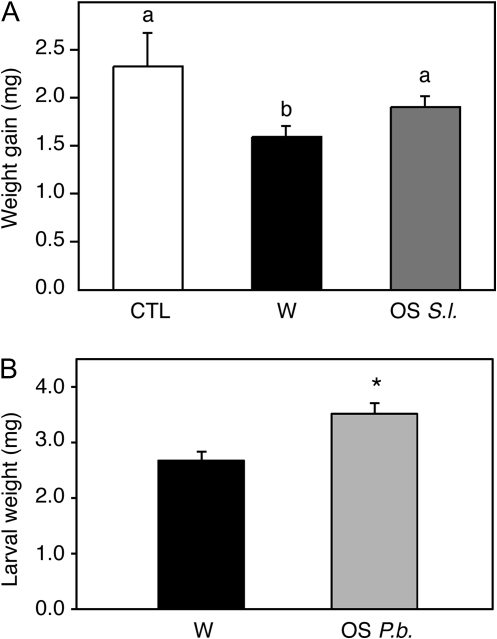
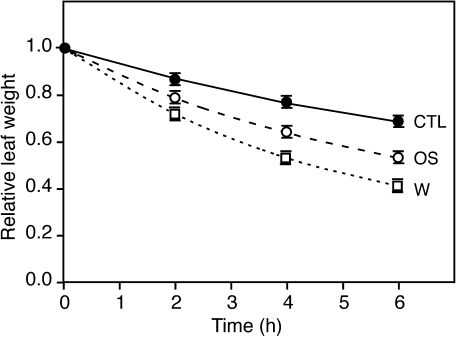
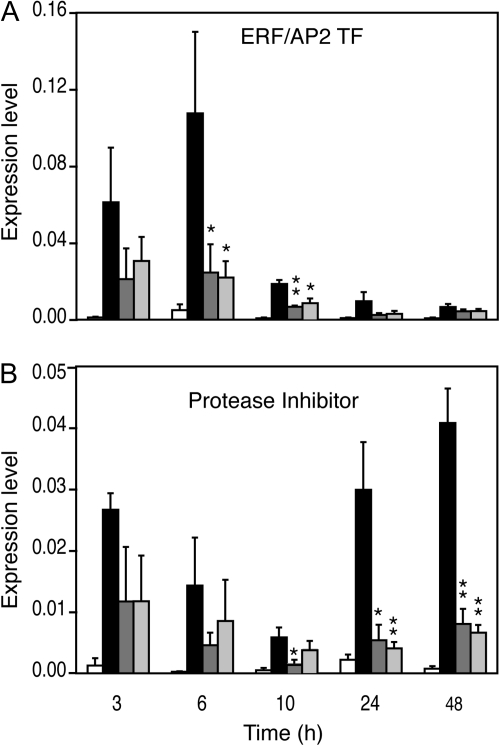
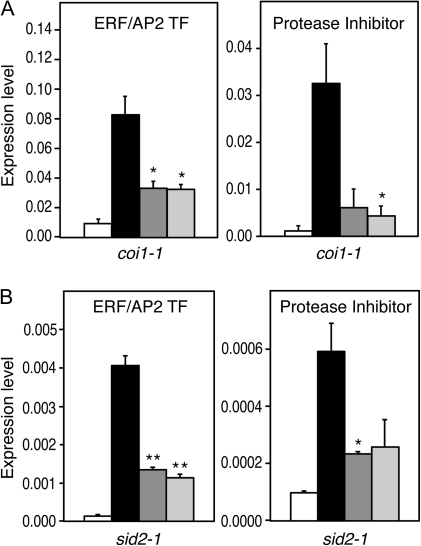
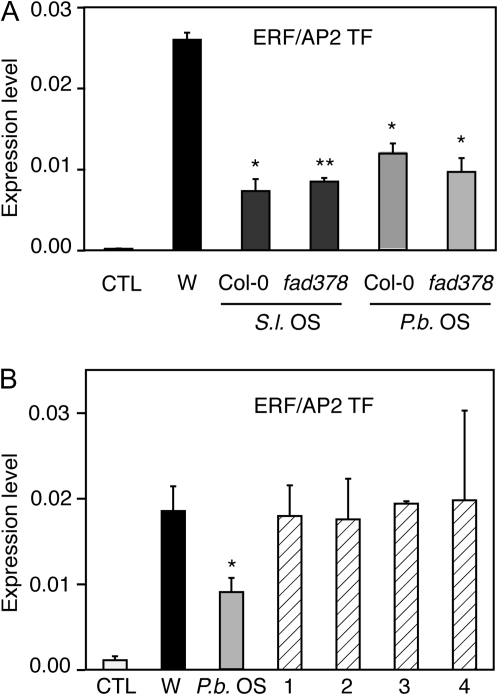
The induction of plant defences and their subsequent suppression by insects is thought to be an important factor in the evolutionary arms race between plants and herbivores. Although insect oral secretions (OS) contain elicitors that trigger plant immunity, little is known about the suppressors of plant defences. The Arabidopsis thaliana transcriptome was analysed in response to wounding and OS treatment. The expression of several wound-inducible genes was suppressed after the application of OS from two lepidopteran herbivores, Pieris brassicae and Spodoptera littoralis. This inhibition was correlated with enhanced S. littoralis larval growth, pointing to an effective role of insect OS in suppressing plant defences. Two genes, an ERF/AP2 transcription factor and a proteinase inhibitor, were then studied in more detail. OS-induced suppression lasted for at least 48 h, was independent of the jasmonate or salicylate pathways, and was not due to known elicitors. Interestingly, insect OS attenuated leaf water loss, suggesting that insects have evolved mechanisms to interfere with the induction of water-stress-related defences.
植物防御的诱导及其随后被昆虫抑制被认为是植物和草食性动物之间进化军备竞赛的一个重要因素。虽然昆虫口腔分泌物(OS)中含有触发植物免疫的激发子,但对于植物防御的抑制剂知之甚少。分析了拟南芥转录组对创伤和 OS 处理的反应。两种鳞翅目草食性昆虫,粉纹夜蛾和斜纹夜蛾的 OS 处理后,几个伤诱导基因的表达受到抑制。这种抑制与斜纹夜蛾幼虫生长的增强相关,表明昆虫 OS 在抑制植物防御方面具有有效的作用。然后进一步研究了两个基因,一个 ERF/AP2 转录因子和一个蛋白酶抑制剂。OS 诱导的抑制至少持续 48 小时,不依赖于茉莉酸或水杨酸途径,也不是由于已知的激发子。有趣的是,昆虫 OS 减弱了叶片水分流失,表明昆虫已经进化出了干扰与水分胁迫相关防御诱导的机制。