Clinic for Orthopedics and Trauma Surgery, University Hospital Bonn, 53127 Bonn, Germany.
Microscopy Core Facility, Medical Faculty, Bonn Technology Campus Life Sciences, University of Bonn, 53127 Bonn, Germany.
Mediators Inflamm. 2020 Dec 3;2020:3824593. doi: 10.1155/2020/3824593. eCollection 2020.
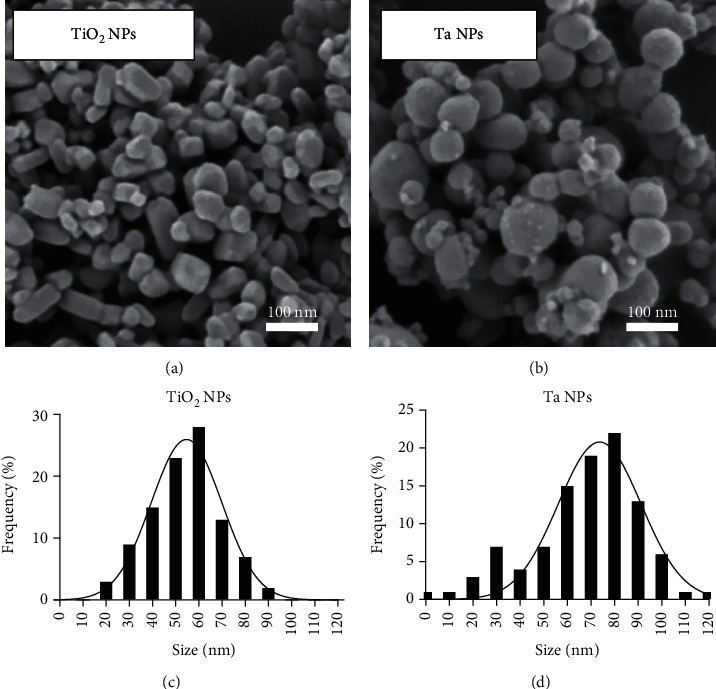
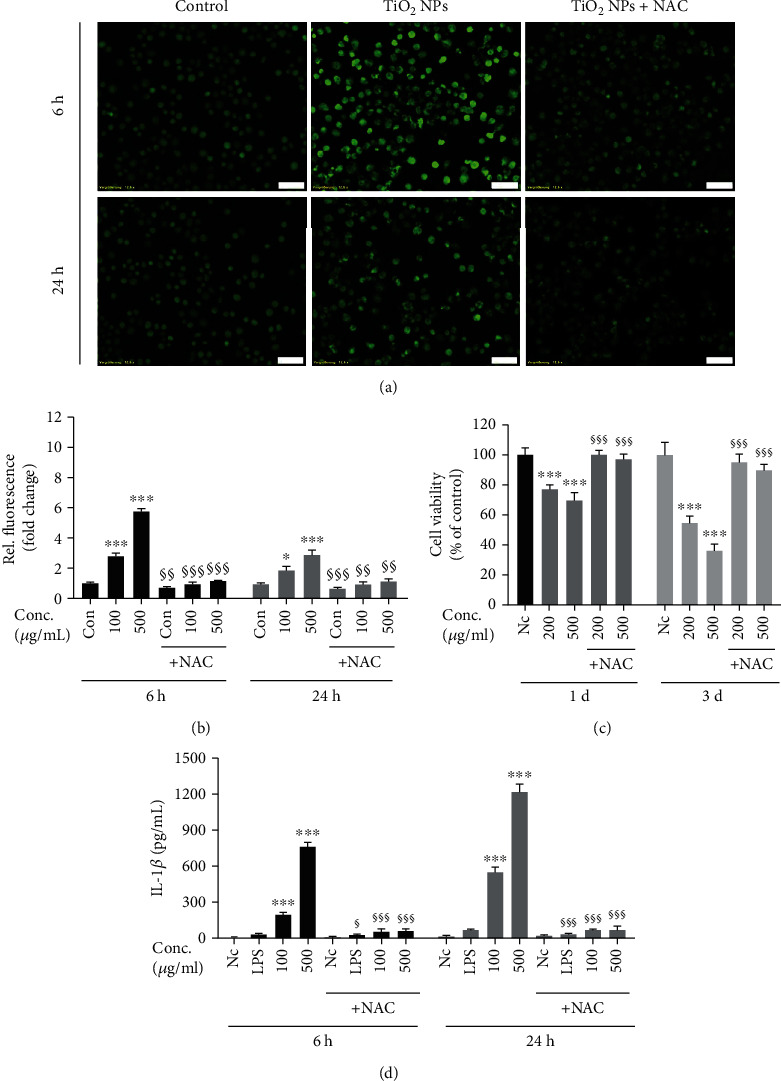
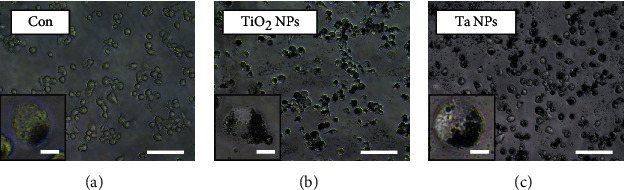
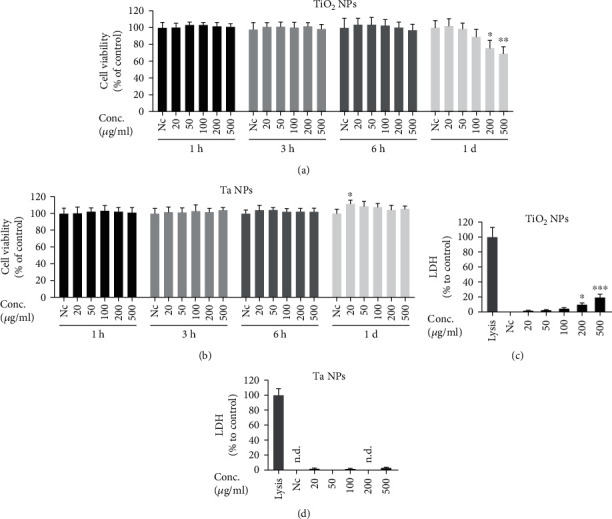
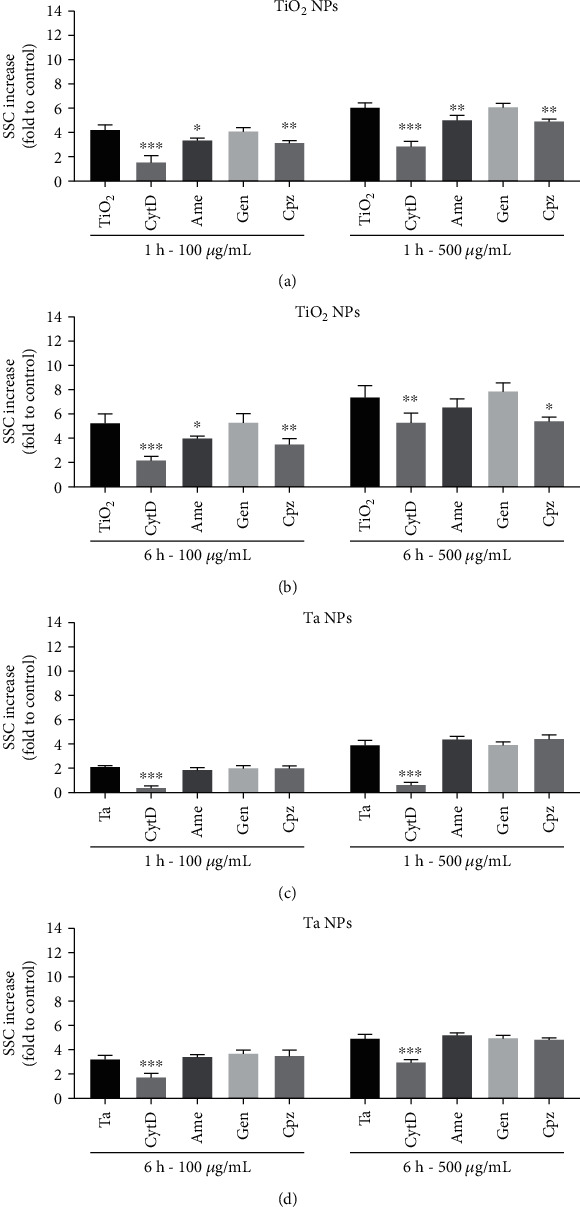
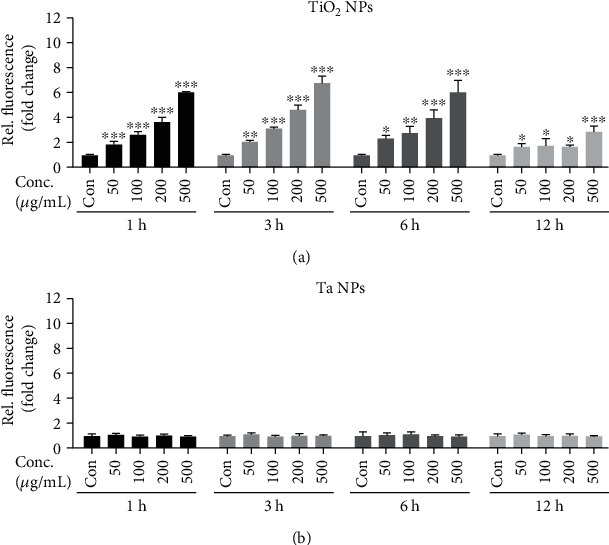
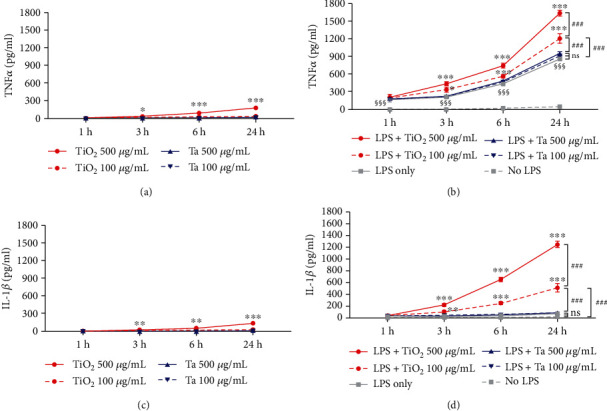
Tantalum (Ta) is gaining attention as a biomaterial in bone tissue engineering. Although the clinical advantage of Ta-based implants for primary and revision total joint replacement (TJA) has been well documented, few studies investigated the effect of wear products of Ta implants on peri-implant cells, and their potential contribution to aseptic implant loosening. This study is aimed at examining the cytotoxicity, oxidative stress, and proinflammatory potential of Ta and TiO nanoparticles (NPs) on macrophages . NPs were characterized using scanning electron microscopy, dynamic light scattering, and energy-dispersive X-ray. To test the NP-mediated cellular response in macrophages, THP-1-derived macrophages were challenged with both NPs, and cytotoxicity was analyzed using CCK-8 and LDH assays. Flow cytometry was used to investigate particle uptake and their internalization routes. NP-mediated oxidative stress was investigated by measuring the production of reactive oxygen species, and their proinflammatory potential was determined by quantifying the production of TNF and IL-1 in cell culture supernatants using ELISA. We found that both Ta and TiO NPs were taken up through actin-dependent phagocytosis, although TiO NPs did also show some involvement of macropinocytosis and clathrin-mediated endocytosis. Ta NPs caused no apparent toxicity, while TiO NPs demonstrated significant cytotoxicity at a concentration of over 100g/mL at 24 h. Ta NPs induced negligible ROS generation and proinflammatory cytokines (TNF, IL-1) in macrophages. In contrast, TiO NPs markedly induced these effects in a dose-dependent manner. Our findings indicate that Ta NPs are inert, nontoxic, and noninflammatory. Therefore, Ta could be considered an excellent biomaterial in primary and revision joint arthroplasty implants.
钽(Ta)作为骨组织工程中的生物材料受到关注。虽然 Ta 基植入物在初次和翻修全关节置换术(TJA)中的临床优势已得到充分证实,但很少有研究调查 Ta 植入物磨损产物对植入物周围细胞的影响,以及它们对无菌性植入物松动的潜在贡献。本研究旨在研究 Ta 和 TiO 纳米颗粒(NPs)对巨噬细胞的细胞毒性、氧化应激和促炎潜力。使用扫描电子显微镜、动态光散射和能量色散 X 射线对 NPs 进行了表征。为了测试巨噬细胞中 NP 介导的细胞反应,用两种 NPs 刺激 THP-1 衍生的巨噬细胞,并使用 CCK-8 和 LDH 测定法分析细胞毒性。使用流式细胞术研究颗粒摄取及其内化途径。通过测量活性氧(ROS)的产生来研究 NP 介导的氧化应激,并通过 ELISA 定量测定细胞培养上清液中 TNF 和 IL-1 的产生来确定其促炎潜力。我们发现 Ta 和 TiO NPs 都是通过肌动蛋白依赖性吞噬作用被摄取的,尽管 TiO NPs 也显示出一些巨胞饮作用和网格蛋白介导的内吞作用的参与。Ta NPs 没有明显的毒性,而 TiO NPs 在 24 小时时浓度超过 100μg/ml 时表现出明显的细胞毒性。Ta NPs 诱导巨噬细胞中产生的 ROS 和促炎细胞因子(TNF、IL-1)可忽略不计。相比之下,TiO NPs 以剂量依赖性方式显著诱导这些效应。我们的研究结果表明 Ta NPs 是惰性的、无毒的和非炎症性的。因此,Ta 可被认为是初次和翻修关节置换植入物的一种优秀生物材料。