Department of General Practice, Royal College of Surgeons in Ireland, Dublin, Republic of Ireland.
BMC Med Inform Decis Mak. 2011 Oct 14;11:62. doi: 10.1186/1472-6947-11-62.
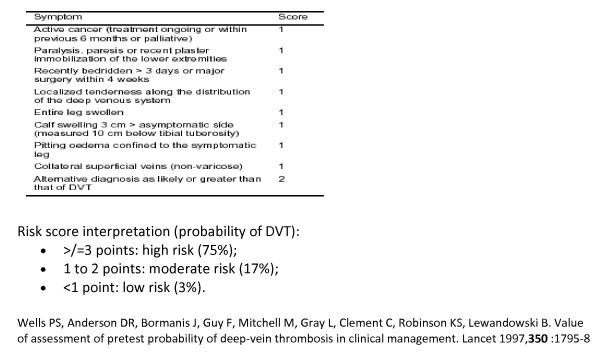
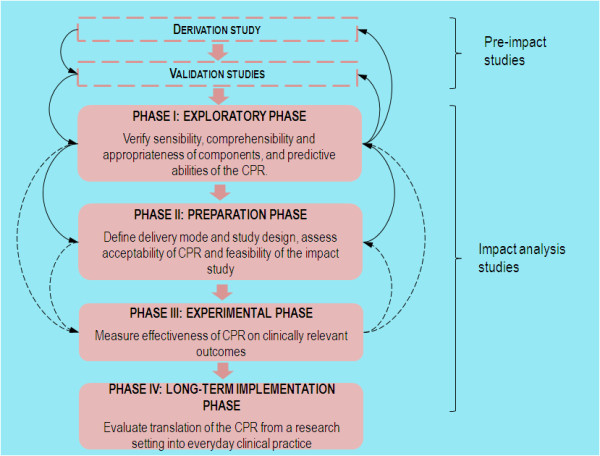
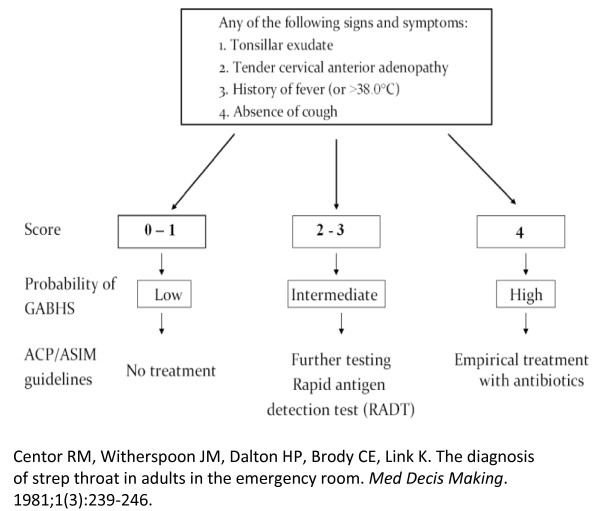
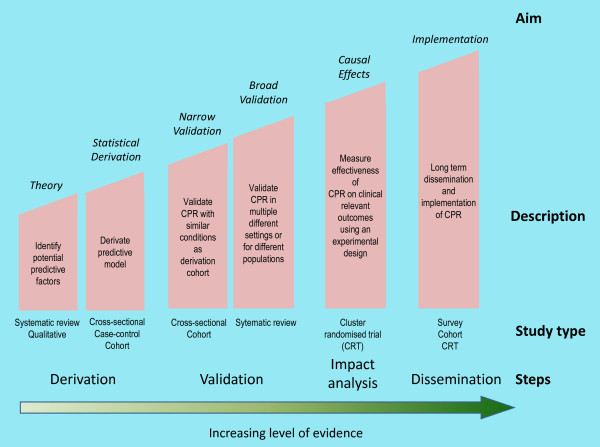
Clinical Prediction Rules (CPRs) are tools that quantify the contribution of symptoms, clinical signs and available diagnostic tests, and in doing so stratify patients according to the probability of having a target outcome or need for a specified treatment. Most focus on the derivation stage with only a minority progressing to validation and very few undergoing impact analysis. Impact analysis studies remain the most efficient way of assessing whether incorporating CPRs into a decision making process improves patient care. However there is a lack of clear methodology for the design of high quality impact analysis studies.We have developed a sequential four-phased framework based on the literature and the collective experience of our international working group to help researchers identify and overcome the specific challenges in designing and conducting an impact analysis of a CPR.There is a need to shift emphasis from deriving new CPRs to validating and implementing existing CPRs. The proposed framework provides a structured approach to this topical and complex area of research.
临床预测规则(CPRs)是一种工具,用于量化症状、临床体征和现有诊断测试的贡献,并根据目标结果的发生概率或特定治疗的需求对患者进行分层。大多数 CPR 都集中在推导阶段,只有少数进展到验证阶段,极少数进行影响分析。影响分析研究仍然是评估将 CPR 纳入决策过程是否能改善患者护理的最有效方法。然而,目前缺乏用于设计高质量影响分析研究的明确方法。我们根据文献和我们国际工作组的集体经验,开发了一个四阶段的顺序框架,以帮助研究人员识别和克服设计和实施 CPR 影响分析中的具体挑战。需要将重点从推导新的 CPR 转移到验证和实施现有的 CPR 上。所提出的框架为这一热门而复杂的研究领域提供了一种结构化的方法。