Chulalongkorn University, Bangkok, Thailand.
Emerg Infect Dis. 2011 Oct;17(10):1799-806. doi: 10.3201/eid1710.110349.
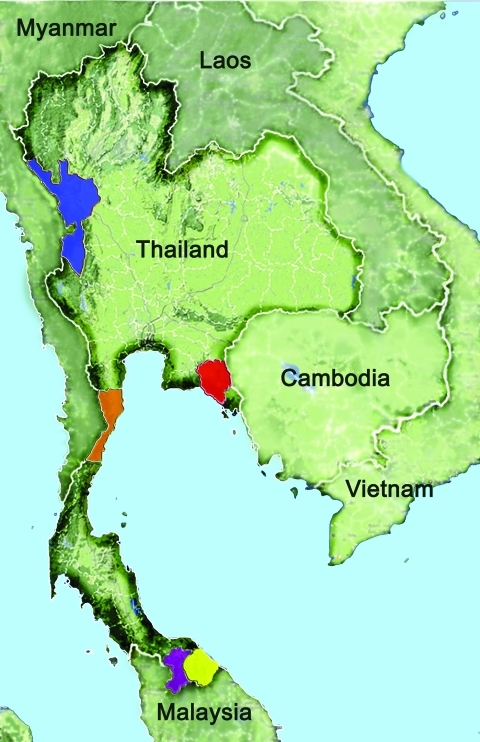
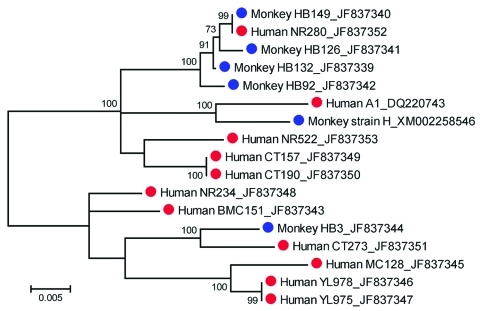
Naturally acquired human infections with Plasmodium knowlesi are endemic to Southeast Asia. To determine the prevalence of P. knowlesi malaria in malaria-endemic areas of Thailand, we analyzed genetic characteristics of P. knowlesi circulating among naturally infected macaques and humans. This study in 2008-2009 and retrospective analysis of malaria species in human blood samples obtained in 1996 from 1 of these areas showed that P. knowlesi accounted for 0.67% and 0.48% of human malaria cases, respectively, indicating that this simian parasite is not a newly emergent human pathogen in Thailand. Sequence analysis of the complete merozoite surface protein 1 gene of P. knowlesi from 10 human and 5 macaque blood samples showed considerable genetic diversity among isolates. The sequence from 1 patient was identical with that from a pig-tailed macaque living in the same locality, suggesting cross-transmission of P. knowlesi from naturally infected macaques to humans.
人体感染疟原虫库蚊自然发生于东南亚。为了确定在泰国疟疾流行地区间日疟原虫疟疾的流行率,我们分析了自然感染猕猴和人类之间循环的间日疟原虫的遗传特征。本研究于 2008 年至 2009 年进行,并对来自这些地区之一的 1996 年获得的人类血液样本中的疟疾种类进行回顾性分析,结果表明,间日疟原虫分别占人类疟疾病例的 0.67%和 0.48%,表明这种灵长类寄生虫并非泰国新出现的人类病原体。对 10 个人类和 5 只猕猴血液样本中的完整裂殖子表面蛋白 1 基因的间日疟原虫序列分析显示,分离株之间存在相当大的遗传多样性。来自 1 位患者的序列与生活在同一地区的猪尾猕猴的序列相同,提示间日疟原虫从自然感染的猕猴向人类的交叉传播。