Molecular Haematology and Cancer Biology Unit, UCL Institute of Child Health, London, UK.
Cell Death Dis. 2011 Oct 20;2(10):e219. doi: 10.1038/cddis.2011.99.
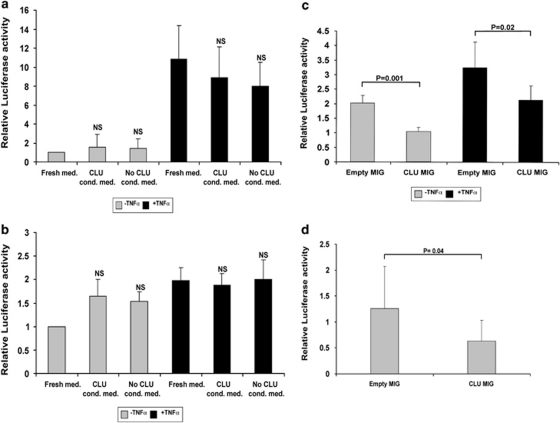
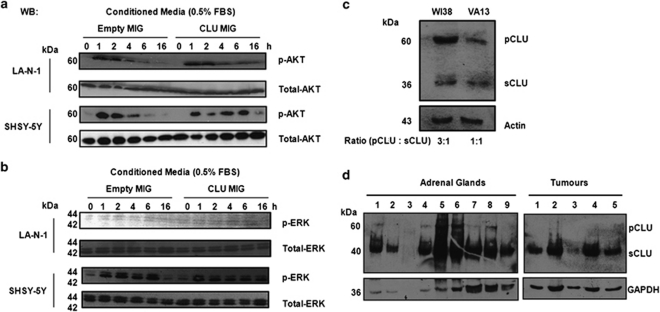
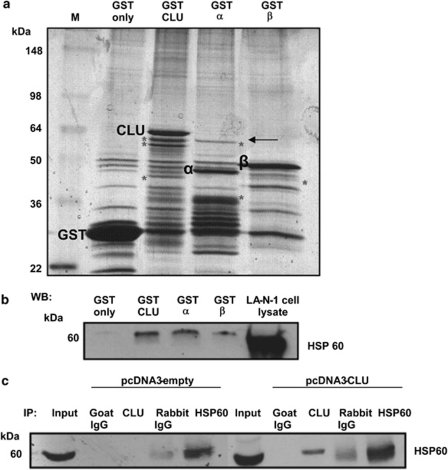
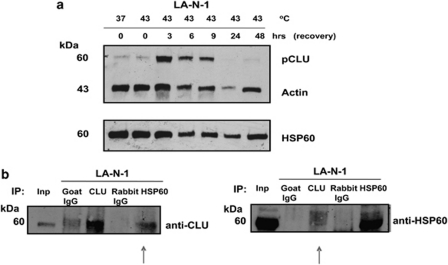
The product of the CLU gene promotes or inhibits tumourigenesis in a context-dependent manner. It has been hypothesised that different CLU isoforms have different and even opposing biological functions, but this theory has not been experimentally validated. Here we show that molecules involved in survival pathways are differentially modulated by the intracellular or secreted forms of CLU. Secreted CLU, which is selectively increased after transformation, activates the survival factor AKT, whereas intracellular CLU inhibits the activity of the oncogenic transcription factor nuclear factor kappa B. Furthermore, intracellular CLU is inactivated by the pro-proliferative and pro-survival activity of the chaperone protein HSP60 in neuroblastoma cells by forming a physical complex. Thus, localisation is key for CLU physiology, explaining the wide range of effects in cell survival and transformation.
CLU 基因的产物以依赖于上下文的方式促进或抑制肿瘤发生。有人假设不同的 CLU 异构体具有不同的甚至相反的生物学功能,但这一理论尚未得到实验验证。在这里,我们表明,参与生存途径的分子被 CLU 的细胞内或分泌形式差异调节。分泌的 CLU,其在转化后选择性增加,激活生存因子 AKT,而细胞内 CLU 抑制致癌转录因子核因子 kappa B 的活性。此外,在神经母细胞瘤细胞中,伴侣蛋白 HSP60 的促增殖和促生存活性使细胞内 CLU 失活,形成物理复合物。因此,定位是 CLU 生理学的关键,解释了细胞存活和转化中广泛的影响。