Department for Molecular Biomedical Research, VIB, Ghent, Belgium.
Cell Death Dis. 2011 Oct 20;2(10):e220. doi: 10.1038/cddis.2011.101.
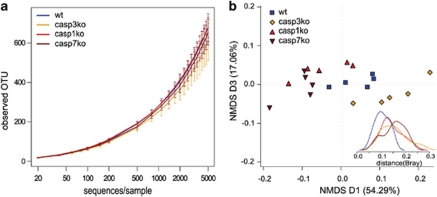
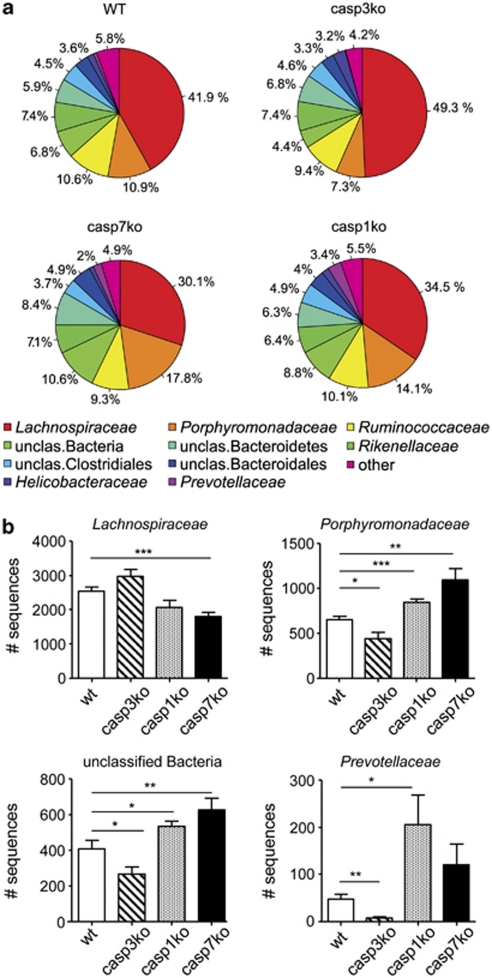
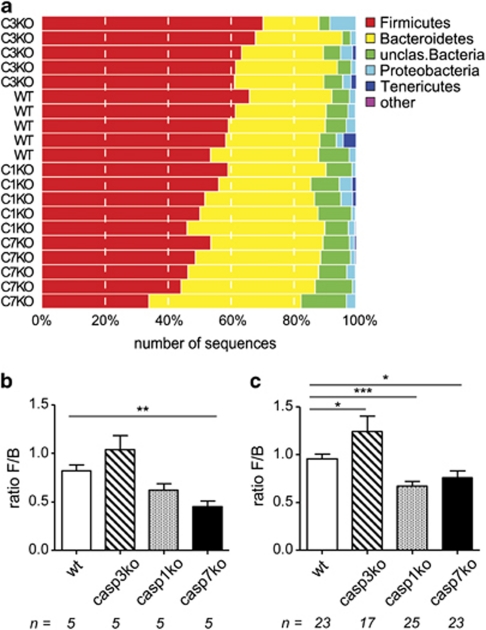
Caspases are aspartate-specific cysteine proteases that have an essential role in apoptosis and inflammation, and contribute to the maintenance of homeostasis in the intestine. These facts, together with the knowledge that caspases are implicated in host-microbe crosstalk, prompted us to investigate the effect of caspase (Casp)1, -3 and -7 deficiency on the composition of the murine gut microbiota. We observed significant changes in the abundance of the Firmicutes and Bacteroidetes phyla, in particular the Lachnospiraceae, Porphyromonodaceae and Prevotellacea families, when comparing Casp-1, -7 and -3 knockout mice with wild-type mice. Our data point toward an intricate relationship between these caspases and the composition of the murine gut microflora.
半胱天冬氨酸蛋白酶(caspases)是一类天冬氨酸特异性半胱氨酸蛋白酶,在细胞凋亡和炎症中具有重要作用,有助于维持肠道内的稳态。这些事实,以及 caspase 参与宿主-微生物相互作用的知识,促使我们研究 caspase(Casp)1、3 和 7 缺失对小鼠肠道微生物群组成的影响。与野生型小鼠相比,我们观察到 Casp-1、-7 和 -3 基因敲除小鼠的厚壁菌门和拟杆菌门丰度发生了显著变化,特别是lachnospiraceae、porphyromonodaceae 和 prevotellacea 科。我们的数据表明这些半胱天冬氨酸蛋白酶与小鼠肠道微生物群的组成之间存在复杂的关系。