Motor Control Laboratory, Research Center for Movement Control and Neuroplasticity, Group Biomedical Sciences, KU Leuven, Leuven-Heverlee, Belgium.
PLoS One. 2013 Apr 29;8(4):e62133. doi: 10.1371/journal.pone.0062133. Print 2013.
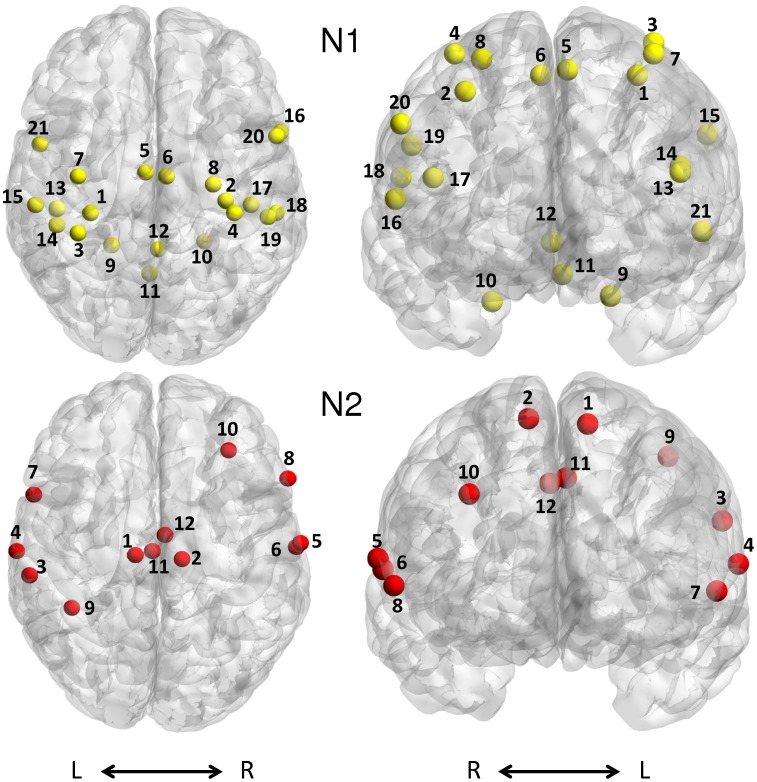
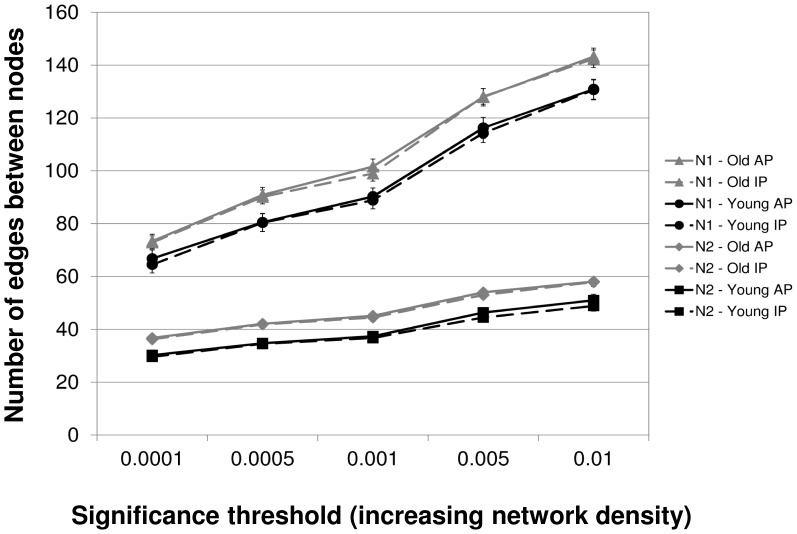
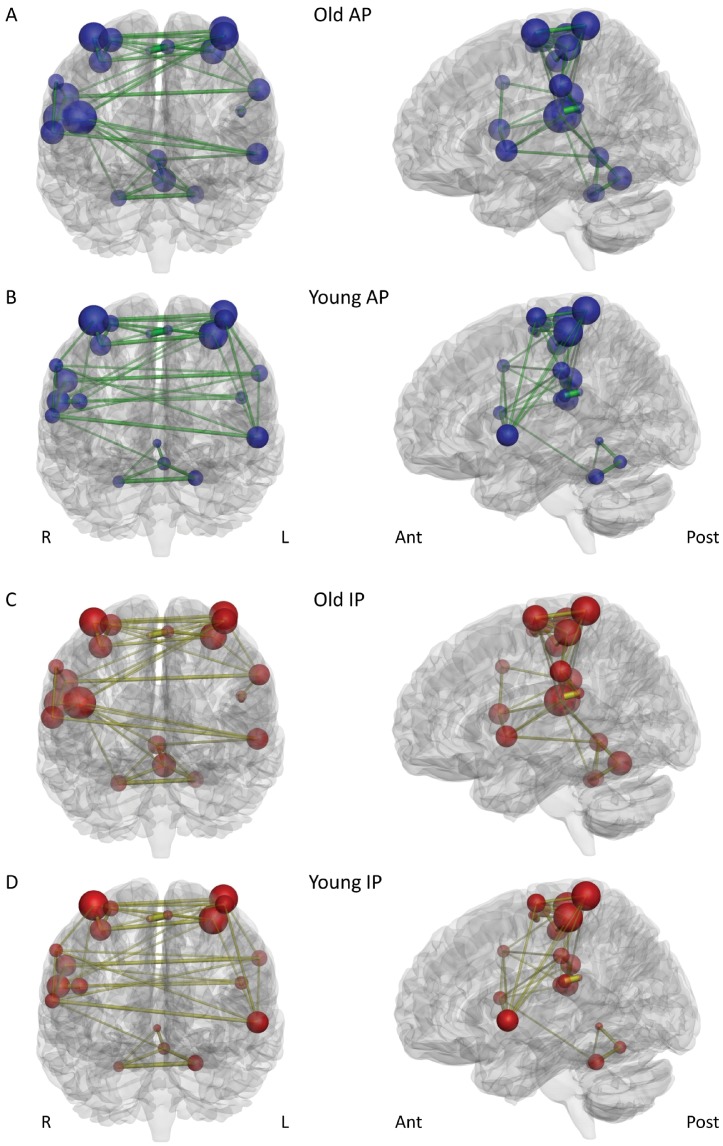
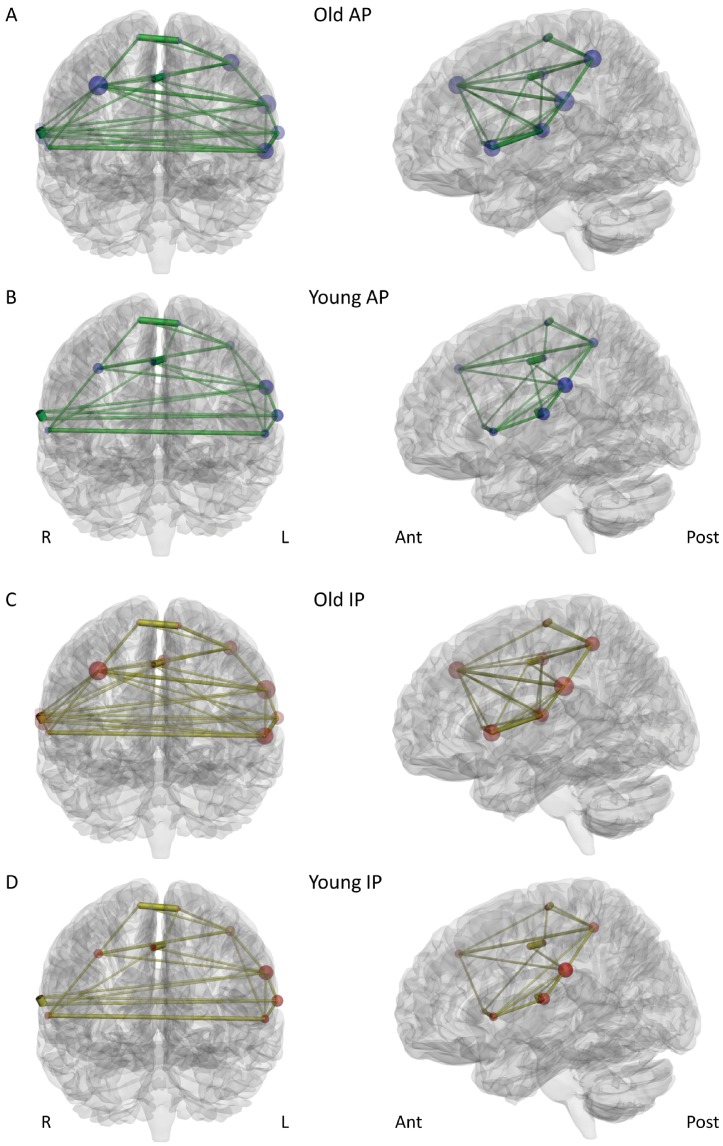
In bimanual coordination, older and younger adults activate a common cerebral network but the elderly also have additional activation in a secondary network of brain areas to master task performance. It remains unclear whether the functional connectivity within these primary and secondary motor networks differs between the old and the young and whether task difficulty modulates connectivity. We applied graph-theoretical network analysis (GTNA) to task-driven fMRI data in 16 elderly and 16 young participants using a bimanual coordination task including in-phase and anti-phase flexion/extension wrist movements. Network nodes for the GTNA comprised task-relevant brain areas as defined by fMRI activation foci. The elderly matched the motor performance of the young but showed an increased functional connectivity in both networks across a wide range of connectivity metrics, i.e., higher mean connectivity degree, connection strength, network density and efficiency, together with shorter mean communication path length between the network nodes and also a lower betweenness centrality. More difficult movements showed an increased connectivity in both groups. The network connectivity of both groups had "small world" character. The present findings indicate (a) that bimanual coordination in the aging brain is associated with a higher functional connectivity even between areas also activated in young adults, independently from task difficulty, and (b) that adequate motor coordination in the context of task-driven bimanual control in older adults may not be solely due to additional neural recruitment but also to aging-related changes of functional relationships between brain regions.
在双手协调中,老年人和年轻人激活共同的大脑网络,但老年人在掌握任务表现时,大脑区域的次要网络中也有额外的激活。目前尚不清楚这些主要和次要运动网络中的功能连接在老年人和年轻人之间是否存在差异,以及任务难度是否会调节连接。我们应用图论网络分析(GTNA),对 16 名老年人和 16 名年轻人使用双手协调任务(包括同相和反相的手腕屈伸运动)的任务驱动 fMRI 数据进行了分析。GTNA 的网络节点由 fMRI 激活焦点定义的与任务相关的大脑区域组成。老年人在运动表现上与年轻人相匹配,但在两个网络中都显示出广泛的连接度量上的功能连接增加,即更高的平均连接度、连接强度、网络密度和效率,以及网络节点之间的平均通信路径长度更短,同时也具有更低的介数中心性。更困难的运动在两个组中都显示出更高的连接。两组的网络连接都具有“小世界”特征。本研究结果表明:(a)即使在年轻人也被激活的区域之间,衰老大脑的双手协调与更高的功能连接有关,这与任务难度无关;(b)在任务驱动的双手控制背景下,老年人的运动协调可能不仅归因于额外的神经募集,还归因于与衰老相关的大脑区域之间功能关系的变化。