Ecosystem Sciences, Commonwealth Scientific and Industrial Research Organisation, Canberra, Australian Capital Territory, Australia.
PLoS One. 2011;6(10):e25695. doi: 10.1371/journal.pone.0025695. Epub 2011 Oct 10.
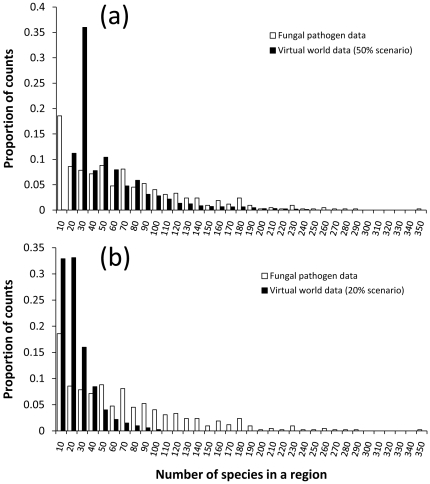
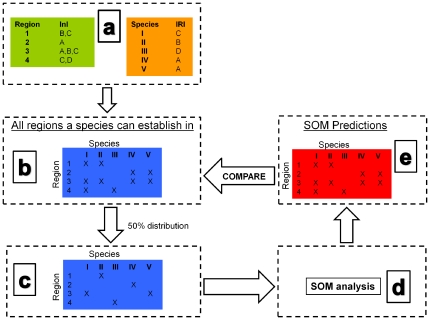
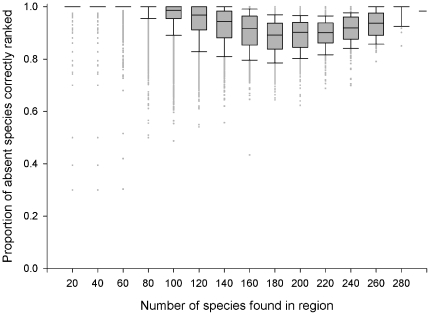
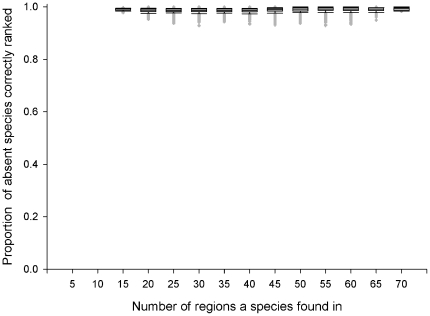
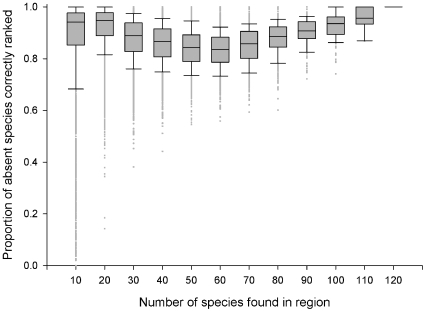
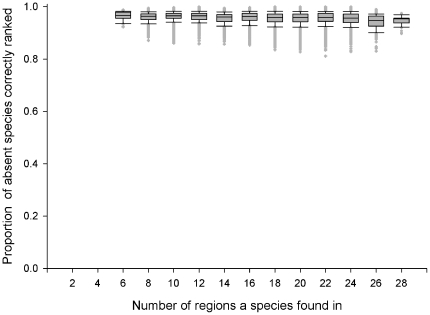
Predicting future species invasions presents significant challenges to researchers and government agencies. Simply considering the vast number of potential species that could invade an area can be insurmountable. One method, recently suggested, which can analyse large datasets of invasive species simultaneously is that of a self organising map (SOM), a form of artificial neural network which can rank species by establishment likelihood. We used this method to analyse the worldwide distribution of 486 fungal pathogens and then validated the method by creating a virtual world of invasive species in which to test the SOM. This novel validation method allowed us to test SOM's ability to rank those species that can establish above those that can't. Overall, we found the SOM highly effective, having on average, a 96-98% success rate (depending on the virtual world parameters). We also found that regions with fewer species present (i.e. 1-10 species) were more difficult for the SOM to generate an accurately ranked list, with success rates varying from 100% correct down to 0% correct. However, we were able to combine the numbers of species present in a region with clustering patterns in the SOM, to further refine confidence in lists generated from these sparsely populated regions. We then used the results from the virtual world to determine confidences for lists generated from the fungal pathogen dataset. Specifically, for lists generated for Australia and its states and territories, the reliability scores were between 84-98%. We conclude that a SOM analysis is a reliable method for analysing a large dataset of potential invasive species and could be used by biosecurity agencies around the world resulting in a better overall assessment of invasion risk.
预测未来的物种入侵对研究人员和政府机构来说是一个巨大的挑战。仅仅考虑到可能入侵一个地区的大量潜在物种就可能是无法克服的。最近提出的一种方法是使用自组织映射(SOM)来分析大量的入侵物种数据集,这是一种人工神经网络的形式,可以根据建立的可能性对物种进行排名。我们使用这种方法来分析 486 种真菌病原体的全球分布情况,然后通过创建一个虚拟的入侵物种世界来验证该方法,在这个虚拟世界中测试 SOM。这种新的验证方法使我们能够测试 SOM 对那些能够建立的物种进行排名的能力,而不是那些不能建立的物种。总的来说,我们发现 SOM 非常有效,平均成功率为 96-98%(取决于虚拟世界的参数)。我们还发现,对于 SOM 来说,那些物种数量较少的地区(即 1-10 种)更难以生成准确的排名列表,成功率从 100%正确到 0%正确不等。然而,我们能够将一个地区的物种数量与 SOM 中的聚类模式结合起来,进一步提高这些人口稀少地区生成的列表的可信度。然后,我们使用虚拟世界的结果来确定从真菌病原体数据集生成的列表的置信度。具体来说,对于为澳大利亚及其州和领地生成的列表,可靠性得分在 84-98%之间。我们得出结论,SOM 分析是分析大量潜在入侵物种数据集的可靠方法,全世界的生物安全机构都可以使用这种方法,从而更好地评估入侵风险。