Department of Sport, Nutrition and Health Sciences, University of Milan, Italy.
Lipids Health Dis. 2011 Oct 22;10:188. doi: 10.1186/1476-511X-10-188.
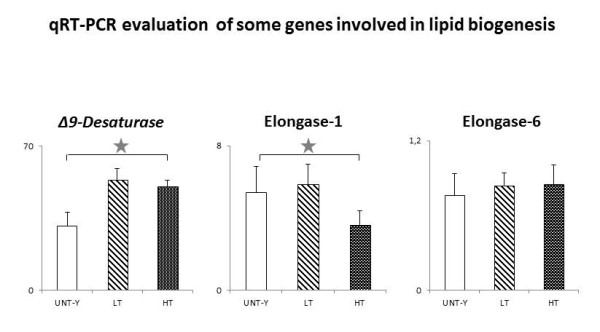
The effect of exercise training on the fatty acid composition of erythrocyte membranes was evaluated in an experimental animal model where rats were subjected to a ten-wk aerobic training. Five groups of rats were compared: sedentary rats at 19 or 23 wks of age, rats trained at moderate or high intensity sacrificed at 19 wks of age, and rats trained at high intensity, and sacrificed following 4 weeks of sedentary life. We had already demonstrated that cardioprotection correlates with training intensity and partially persists in detrained rats. Main findings are that rats trained at higher intensity display consistent signs of lipid peroxidation but a lower ω6/ω3 ratio and a lower content of trans fatty acids when compared to rats trained at lower intensity and to older sedentary rats. Trans fatty acids negatively affect cell membrane fluidity and permeability. Detrained rats showed intermediate values. Gene expression evaluation of selected enzymes involved in lipid biosynthesis revealed some of the adaptive mechanisms leading to the maintenance of membrane fatty acid homeostasis following exercise. The decrease in the amount of trans fatty and in the inflammatory pathways (i.e. ω6/ω3 ratio) in high-intensity trained rats underscores the protective effect of high intensity aerobic training.
研究人员建立了一个动物实验模型,对十周有氧运动训练对红细胞膜脂肪酸组成的影响进行了评估。实验比较了五组大鼠:19 或 23 周龄的久坐不动大鼠、19 周龄时进行中强度或高强度训练然后处死的大鼠、以及进行了 4 周的久坐不动训练后处死的高强度训练大鼠。我们已经证明,心脏保护作用与训练强度相关,并且在停止训练的大鼠中部分保留。主要发现是,与低强度训练的大鼠和年龄较大的久坐不动大鼠相比,高强度训练的大鼠表现出一致的脂质过氧化迹象,但 ω6/ω3 比值较低,反式脂肪酸含量较低。反式脂肪酸会降低细胞膜的流动性和通透性。停止训练的大鼠表现出中等水平。对参与脂质生物合成的选定酶的基因表达评估揭示了一些适应机制,这些机制可以在运动后维持膜脂肪酸的动态平衡。高强度训练的大鼠中转脂肪酸和炎症途径(即 ω6/ω3 比值)的减少突出了高强度有氧运动训练的保护作用。