Section of Infectious Diseases, Department of Internal Medicine, Yale University School of Medicine, New Haven, CT 06520-8022, USA.
Brain Behav Immun. 2012 Mar;26(3):407-13. doi: 10.1016/j.bbi.2011.10.001. Epub 2011 Oct 13.
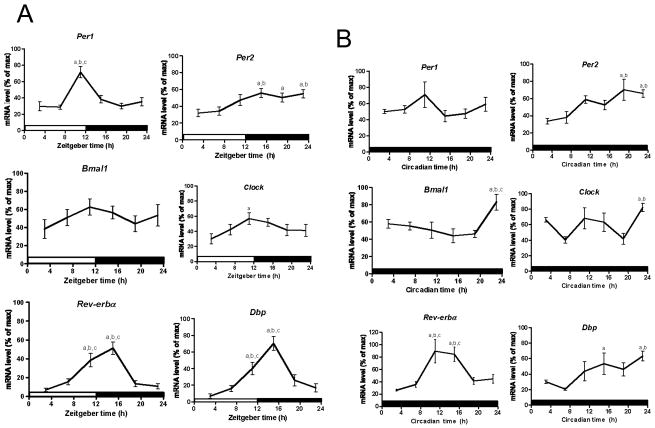
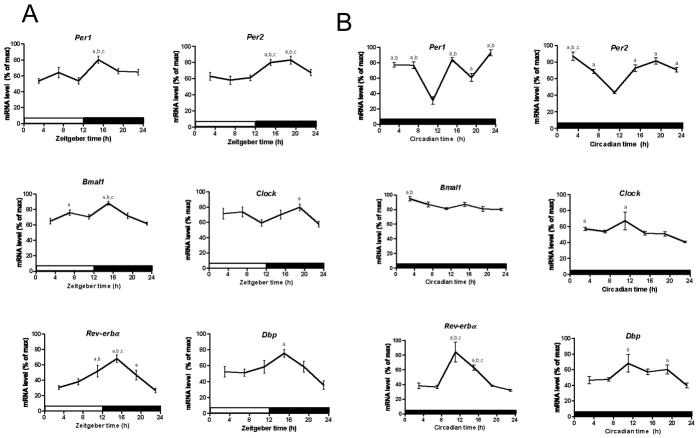
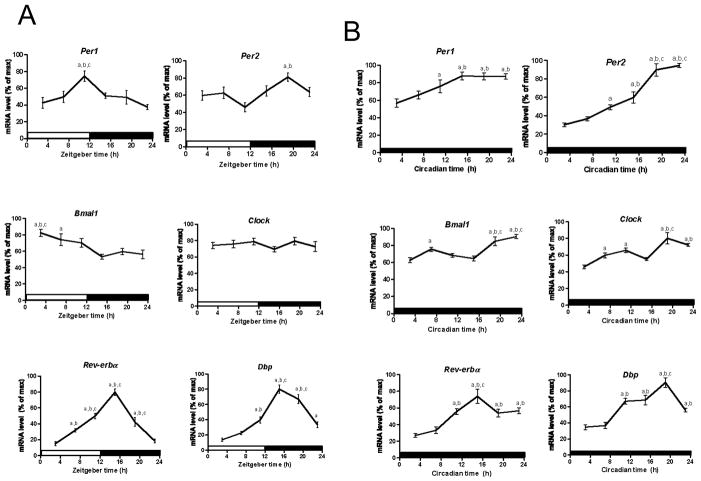
In mammals, circadian and daily rhythms influence nearly all aspects of physiology, ranging from behavior to gene expression. Functional molecular clocks have been described in the murine spleen and splenic NK cells. The aim of our study was to investigate the existence of molecular clock mechanisms in other immune cells. Therefore, we measured the circadian changes in gene expression of clock genes (Per1, Per2, Bmal1, and Clock) and clock-controlled transcription factors (Rev-erbα and Dbp) in splenic enriched macrophages, dendritic cells, and B cells in both mice entrained to a light-dark cycle and under constant environmental conditions. Our study reveals the existence of functional molecular clock mechanisms in splenic macrophages, dendritic cells, and B cells.
在哺乳动物中,昼夜节律和日常节律影响着生理学的几乎所有方面,从行为到基因表达。在鼠脾和脾自然杀伤细胞中已经描述了功能性分子钟。我们研究的目的是研究分子钟机制在其他免疫细胞中的存在。因此,我们测量了在光-暗循环和恒定环境条件下,受生物钟调节的小鼠脾富含巨噬细胞、树突状细胞和 B 细胞中时钟基因(Per1、Per2、Bmal1 和 Clock)和时钟控制的转录因子(Rev-erbα 和 Dbp)的昼夜变化。我们的研究揭示了功能性分子钟机制在脾巨噬细胞、树突状细胞和 B 细胞中的存在。