Hughes Michael E, DiTacchio Luciano, Hayes Kevin R, Vollmers Christopher, Pulivarthy S, Baggs Julie E, Panda Satchidananda, Hogenesch John B
Department of Pharmacology, Institute for Translational Medicine and Therapeutics, University of Pennsylvania School of Medicine, Philadelphia, Pennsylvania, United States of America.
PLoS Genet. 2009 Apr;5(4):e1000442. doi: 10.1371/journal.pgen.1000442. Epub 2009 Apr 3.
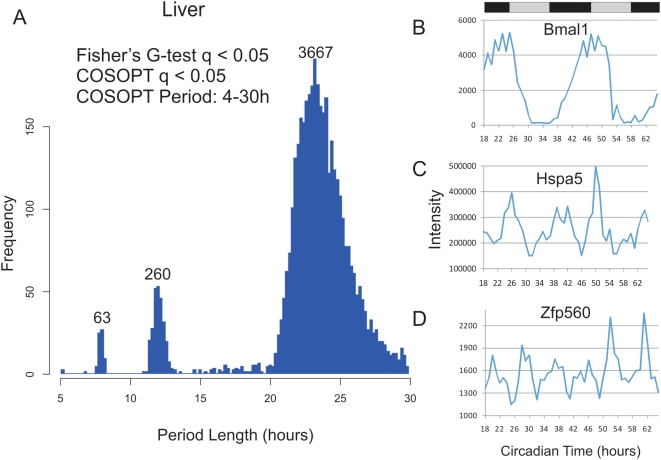
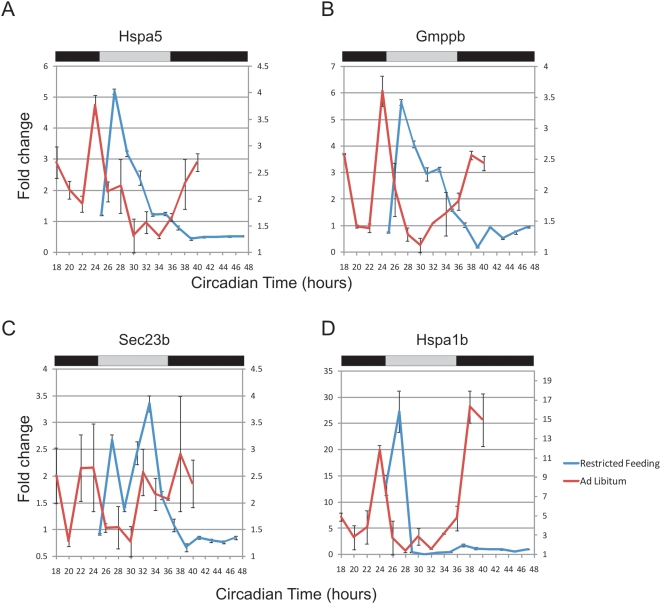
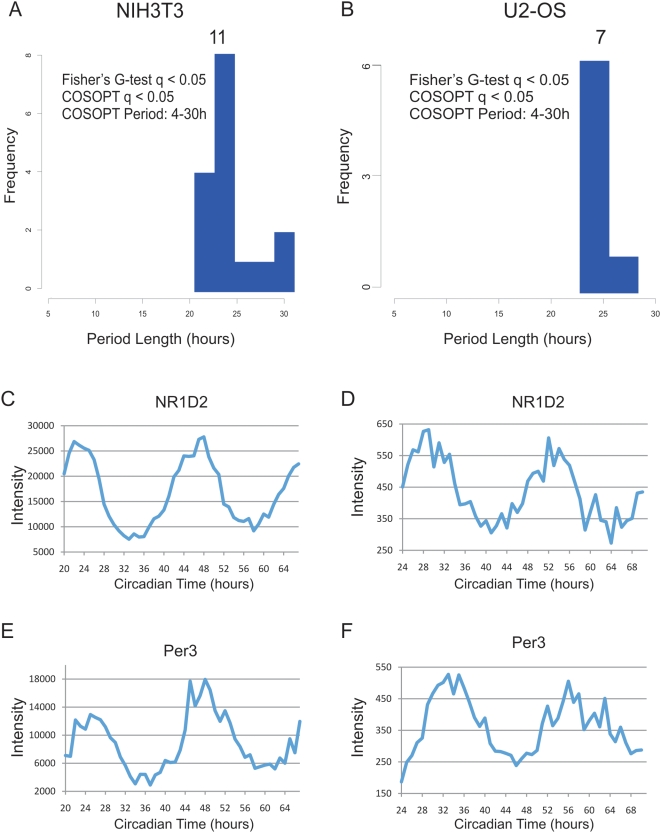
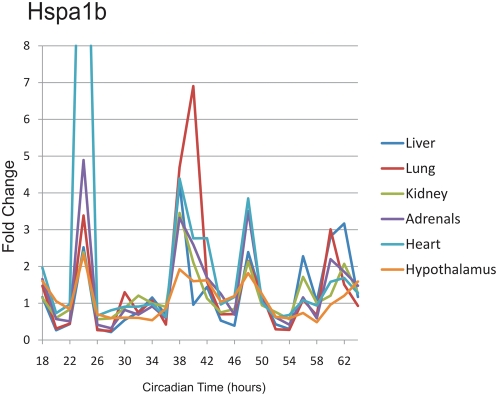
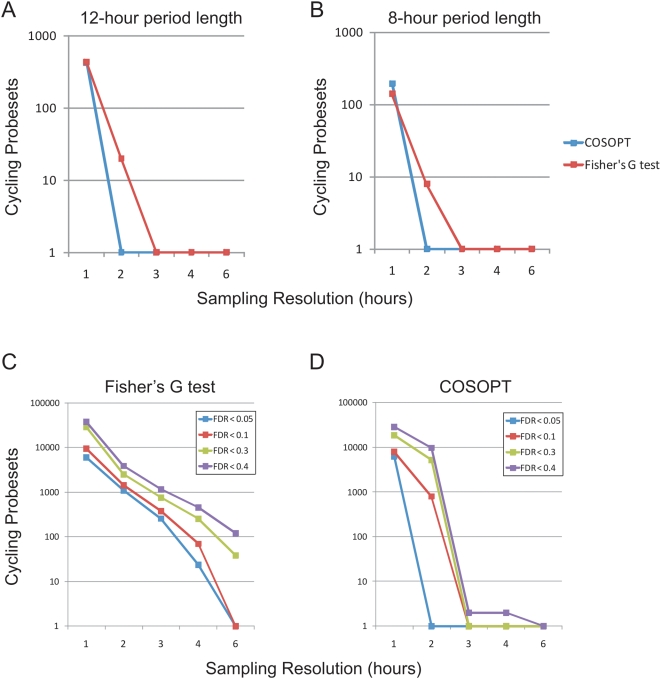
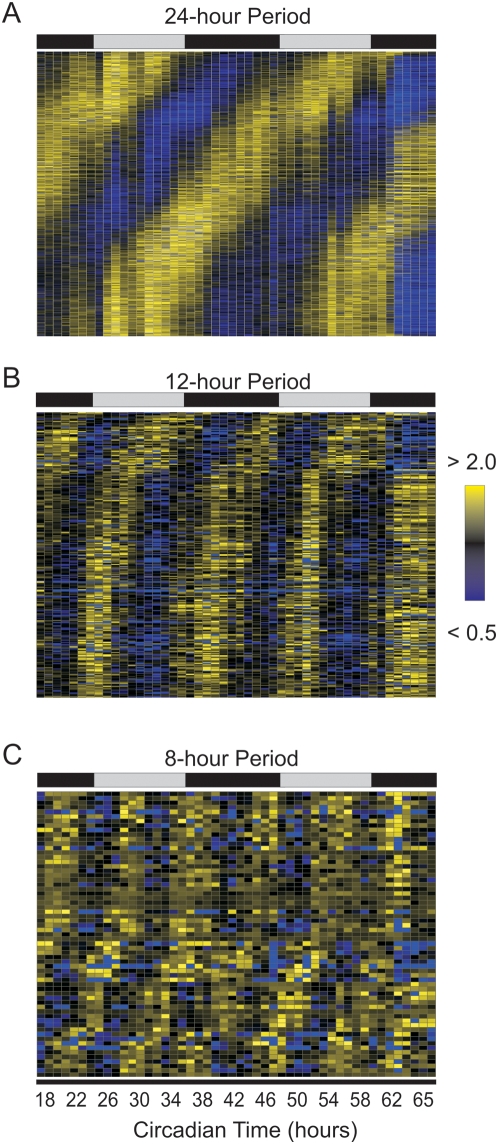
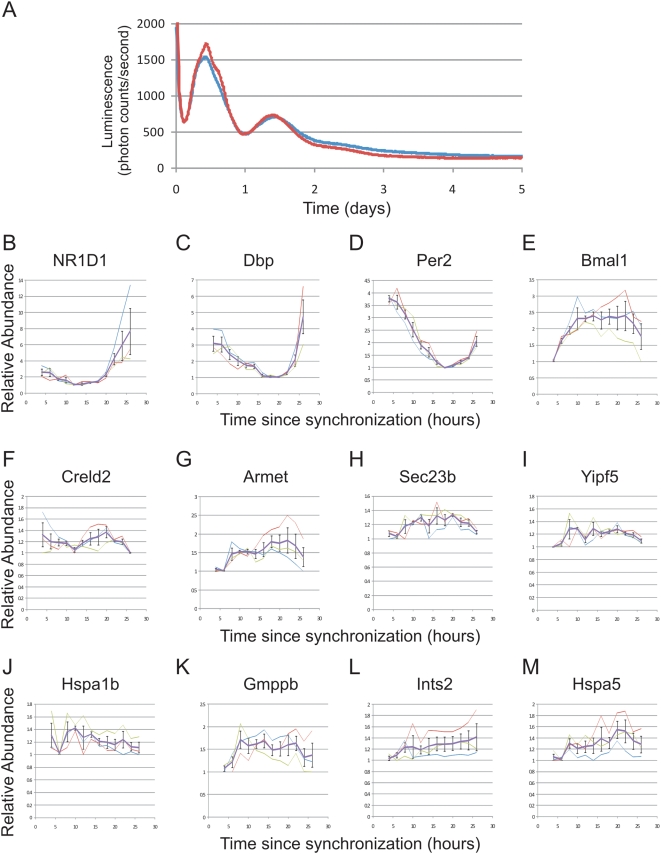
The circadian clock is a molecular and cellular oscillator found in most mammalian tissues that regulates rhythmic physiology and behavior. Numerous investigations have addressed the contribution of circadian rhythmicity to cellular, organ, and organismal physiology. We recently developed a method to look at transcriptional oscillations with unprecedented precision and accuracy using high-density time sampling. Here, we report a comparison of oscillating transcription from mouse liver, NIH3T3, and U2OS cells. Several surprising observations resulted from this study, including a 100-fold difference in the number of cycling transcripts in autonomous cellular models of the oscillator versus tissues harvested from intact mice. Strikingly, we found two clusters of genes that cycle at the second and third harmonic of circadian rhythmicity in liver, but not cultured cells. Validation experiments show that 12-hour oscillatory transcripts occur in several other peripheral tissues as well including heart, kidney, and lungs. These harmonics are lost ex vivo, as well as under restricted feeding conditions. Taken in sum, these studies illustrate the importance of time sampling with respect to multiple testing, suggest caution in use of autonomous cellular models to study clock output, and demonstrate the existence of harmonics of circadian gene expression in the mouse.
生物钟是一种分子和细胞振荡器,存在于大多数哺乳动物组织中,调节有节奏的生理和行为。众多研究探讨了昼夜节律对细胞、器官和机体生理的作用。我们最近开发了一种方法,通过高密度时间采样以前所未有的精度和准确性观察转录振荡。在此,我们报告了对小鼠肝脏、NIH3T3和U2OS细胞中振荡转录的比较。这项研究得出了几个惊人的发现,包括振荡器自主细胞模型与从完整小鼠采集的组织中循环转录本数量相差100倍。引人注目的是,我们发现两组基因在肝脏中以昼夜节律的二次和三次谐波循环,但在培养细胞中并非如此。验证实验表明,12小时振荡转录本也出现在其他几个外周组织中,包括心脏、肾脏和肺。这些谐波在体外以及在限制进食条件下都会消失。综上所述,这些研究说明了时间采样在多重检验方面的重要性,建议在使用自主细胞模型研究生物钟输出时谨慎行事,并证明了小鼠中昼夜节律基因表达谐波的存在。