Department of Pharmacology, K.L.E. University's College of Pharmacy, Hubli, India.
Indian J Pharmacol. 2011 Sep;43(5):507-11. doi: 10.4103/0253-7613.84952.
To investigate the preventive and curative role of ascorbic acid on doxorubicin (dox)-induced myocardial toxicity in rats.
Animals were divided into five groups of six animals each. Group I served as normal control and received saline 5 ml/kg/day intraperitoneal (i.p.) for a period of 15 days. Group II animals received ascorbic acid 20 mg/kg per oral (p.o.) for 15 days as a pretreatment control (PR). Group III animals received dox 2.5 mg/kg body weight (b.w.), i.p., in six equal injections for two weeks for a total cumulative dose of 15 mg/kg b.w. Group IV animals received ascorbic acid 20 mg/kg p.o. for 15 days as a pretreatment followed by dox 2.5 mg/kg b.w., i.p., in six equal injections for two weeks for a total cumulative dose of 15 mg/kg body weight. Group V animals received dox 2.5 mg/kg b.w., i.p., in six equal injections for two weeks for a total cumulative dose of 15 mg/kg b.w. followed by ascorbic acid 20 mg/kg p.o for 15 days as post-treatment control (CR). The biochemical parameters such as tissue glutathione (GSH), malondialdehyde (MDA), catalase (CAT), and superoxide dismutase (SOD), and enzyme biomarkers such as creatine phosphokinase (CPK), lactate dehydrogenase (LDH), aspartate aminotransferase (AST), and alanine aminotransferase (ALT) were monitored.
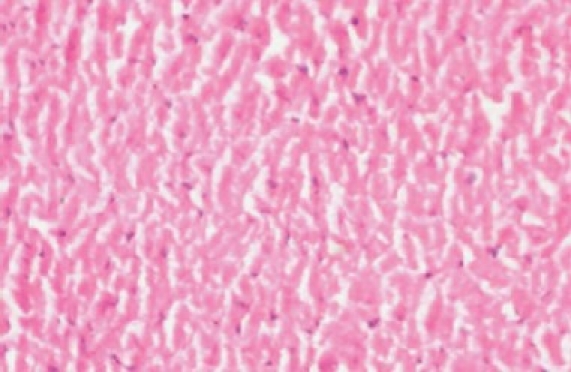
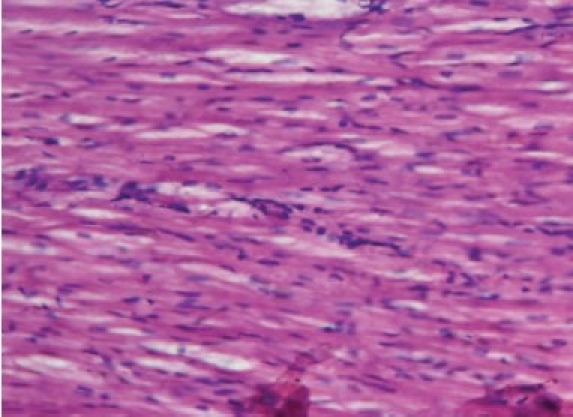
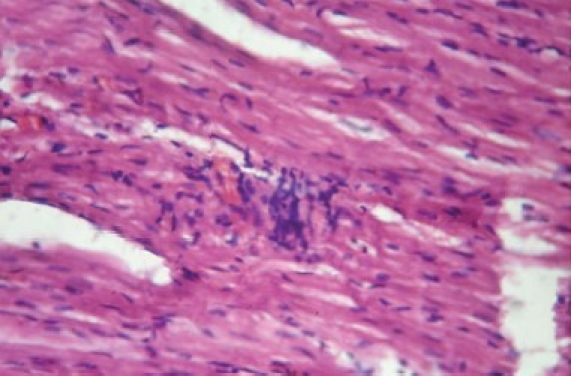
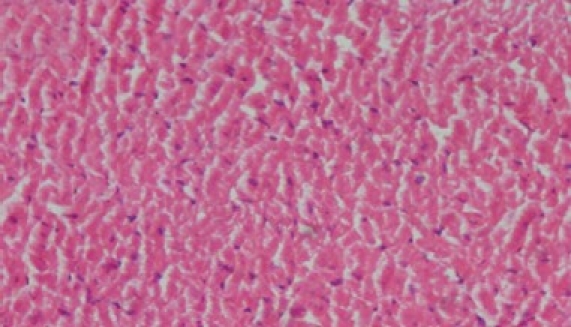
Pretreatment with ascorbic acid (20 mg/kg p.o.) significantly protected the myocardium from the toxic effect of dox (PR), by increasing the levels of antioxidant enzymes such as GSH, SOD, and CAT toward normal and decreased the levels of MDA, CPK, LDH, AST, and ALT as compared with dox-treated rats. Post-treatment with ascorbic acid to dox-treated group (CR) significantly increased the levels of tissue GSH, SOD, CAT and significantly decreased the level of MDA as compared with dox-treated group. It also reduced the severity of cellular damage of the myocardium as confirmed by histopathology. The restoration of the endogenous antioxidant system clearly depicts that ascorbic acid produced its protective effect by scavenging the reactive oxygen species.
The results obtained in this study provide evidence for the usefulness of the ascorbic acid as a cardioprotective agent.
研究抗坏血酸对阿霉素(DOX)诱导的大鼠心肌毒性的预防和治疗作用。
动物分为五组,每组六只。第 I 组作为正常对照组,腹腔内(i.p.)给予生理盐水 5 ml/kg/天,共 15 天。第 II 组动物给予抗坏血酸 20 mg/kg 口服(p.o.),作为预处理对照(PR)。第 III 组动物腹腔内给予 DOX 2.5 mg/kg 体重,共 6 次,每周 2 次,总累积剂量为 15 mg/kg 体重。第 IV 组动物给予抗坏血酸 20 mg/kg p.o.,共 15 天作为预处理,然后腹腔内给予 DOX 2.5 mg/kg 体重,共 6 次,每周 2 次,总累积剂量为 15 mg/kg 体重。第 V 组动物腹腔内给予 DOX 2.5 mg/kg 体重,共 6 次,每周 2 次,总累积剂量为 15 mg/kg 体重,然后给予抗坏血酸 20 mg/kg p.o.,共 15 天作为后处理对照(CR)。监测组织谷胱甘肽(GSH)、丙二醛(MDA)、过氧化氢酶(CAT)和超氧化物歧化酶(SOD)等生化参数,以及肌酸磷酸激酶(CPK)、乳酸脱氢酶(LDH)、天门冬氨酸氨基转移酶(AST)和丙氨酸氨基转移酶(ALT)等酶生物标志物。
与 DOX 处理组相比,抗坏血酸(20 mg/kg p.o.)预处理(PR)可显著提高 GSH、SOD 和 CAT 等抗氧化酶的水平,从而保护心肌免受 DOX 的毒性作用,降低 MDA、CPK、LDH、AST 和 ALT 的水平。与 DOX 处理组相比,DOX 处理后给予抗坏血酸(CR)可显著提高组织 GSH、SOD 和 CAT 的水平,显著降低 MDA 水平,减轻心肌细胞损伤的严重程度。组织病理学证实,内源性抗氧化系统的恢复表明抗坏血酸通过清除活性氧产生其保护作用。
本研究结果为抗坏血酸作为心脏保护剂的有效性提供了证据。