IBDML, UMR 6216 CNRS, Université Aix-Marseille, Marseille, France.
PLoS Pathog. 2011 Oct;7(10):e1002319. doi: 10.1371/journal.ppat.1002319. Epub 2011 Oct 13.
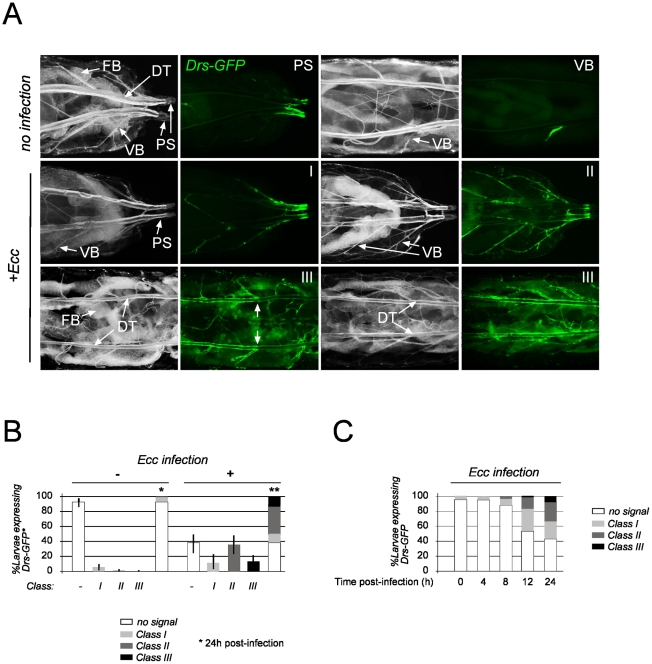
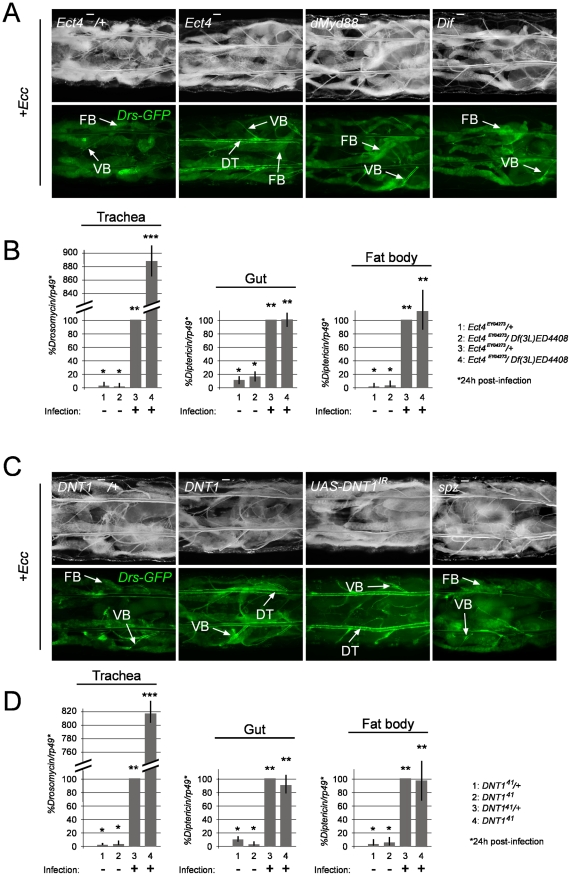
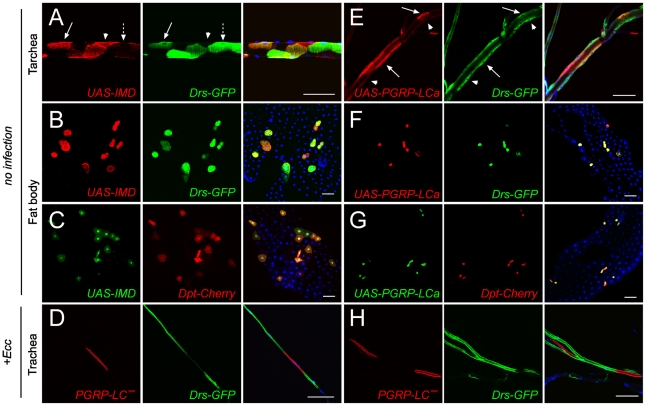
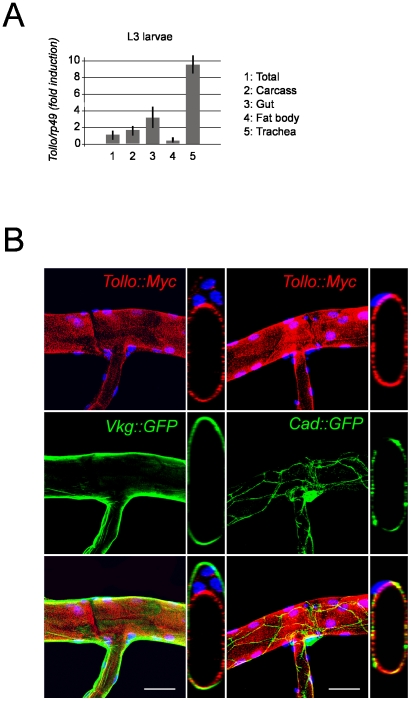
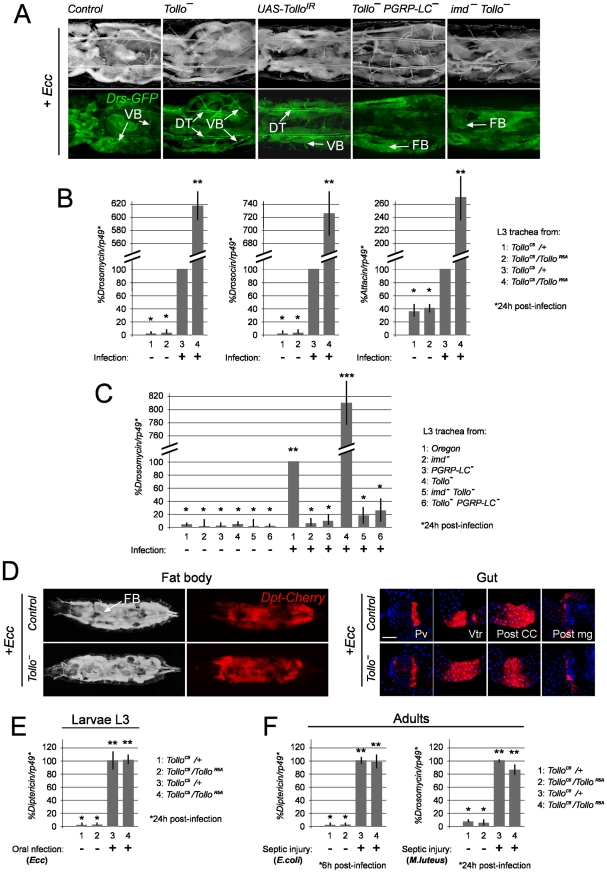
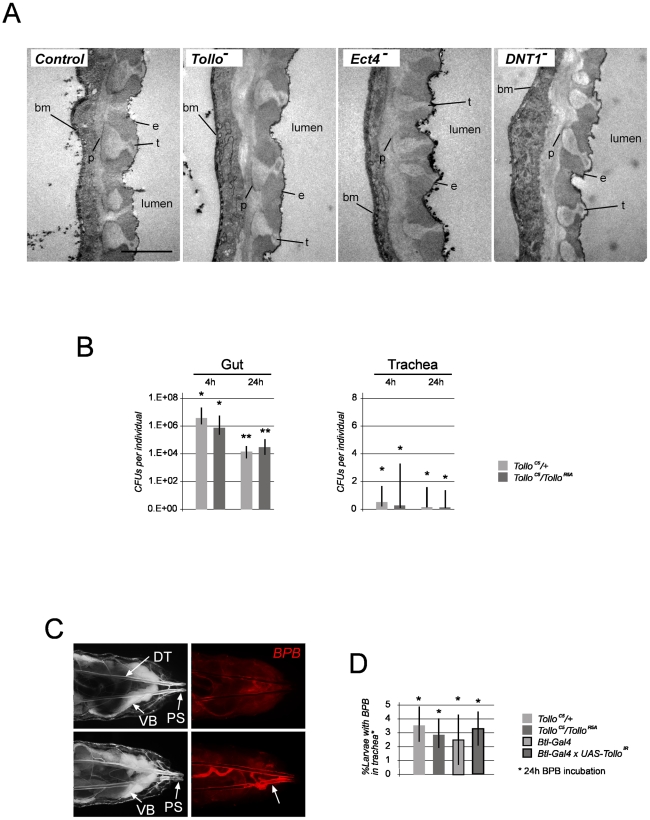
Barrier epithelia that are persistently exposed to microbes have evolved potent immune tools to eliminate such pathogens. If mechanisms that control Drosophila systemic responses are well-characterized, the epithelial immune responses remain poorly understood. Here, we performed a genetic dissection of the cascades activated during the immune response of the Drosophila airway epithelium i.e. trachea. We present evidence that bacteria induced-antimicrobial peptide (AMP) production in the trachea is controlled by two signalling cascades. AMP gene transcription is activated by the inducible IMD pathway that acts non-cell autonomously in trachea. This IMD-dependent AMP activation is antagonized by a constitutively active signalling module involving the receptor Toll-8/Tollo, the ligand Spätzle2/DNT1 and Ect-4, the Drosophila ortholog of the human Sterile alpha and HEAT/ARMadillo motif (SARM). Our data show that, in addition to Toll-1 whose function is essential during the systemic immune response, Drosophila relies on another Toll family member to control the immune response in the respiratory epithelium.
持续暴露于微生物的屏障上皮已经进化出强大的免疫工具来消除这些病原体。如果控制果蝇全身反应的机制得到很好的描述,那么上皮免疫反应仍然知之甚少。在这里,我们对果蝇气道上皮(即气管)免疫反应中激活的级联进行了遗传剖析。我们提供的证据表明,细菌诱导的抗菌肽 (AMP) 在气管中的产生受两个信号级联控制。AMP 基因转录由诱导型 IMD 途径激活,该途径在气管中非自主作用。这种 IMD 依赖性 AMP 激活被涉及受体 Toll-8/Tollo、配体 Spätzle2/DNT1 和 Ect-4(人类无菌α和 HEAT/ARMadillo 基序 (SARM) 的果蝇同源物)的组成性激活信号模块拮抗。我们的数据表明,除了在全身免疫反应中必不可少的 Toll-1 之外,果蝇还依赖于另一个 Toll 家族成员来控制呼吸上皮的免疫反应。